


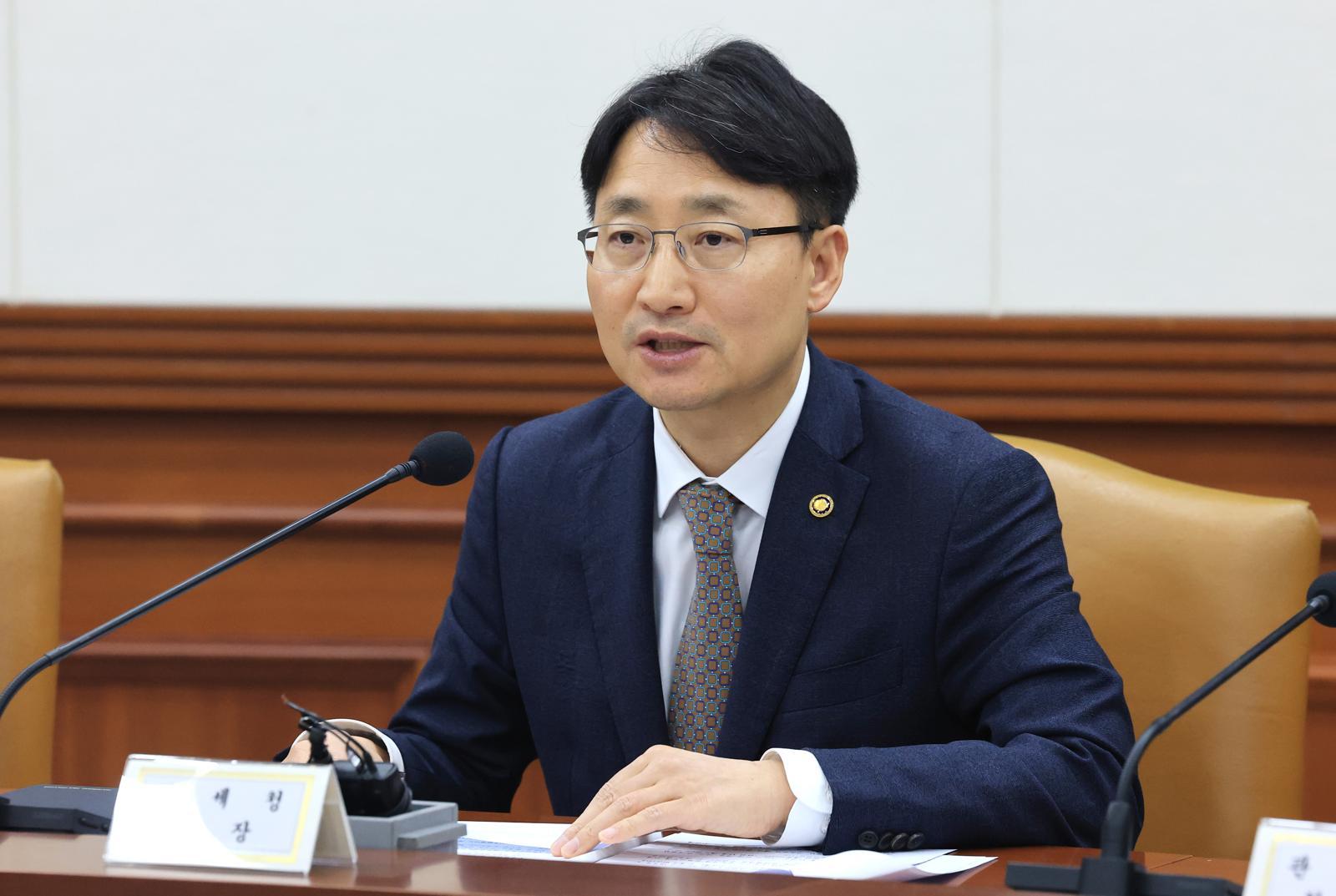
National Tax Service Chief: 'Gangnam 3 Districts Account for 78.6% of Special Tax Deductions... Taxes Must Be Fair'
Translated from Korean, summarized and contextualized by DistantNews.
At a glance
News
Sources not specified
Context piece
- The head of South Korea's National Tax Service criticized the current long-term holding special tax deduction (jangteukgongje) for being regressive.
- He argued that the system disproportionately benefits owners of high-value homes, particularly in Seoul's affluent Gangnam district.
- The official called for a review and potential revision of the system to ensure tax fairness.
The head of South Korea's National Tax Service has voiced strong criticism against the current long-term holding special tax deduction (jangteukgongje), labeling it as excessively regressive and in need of reform.
The current jangteukgongje is excessively regressive.
Im Kwang-hyun argued that the system, which allows up to 80% of capital gains to be deducted without limit for properties held for 10 years, disproportionately benefits owners of expensive homes. "The higher the house price, and thus the larger the capital gain, the more deduction one receives," he pointed out on X (formerly Twitter).
Data from the National Tax Service for 2024 revealed that of the 5.32 trillion won in total deductions granted to 24,816 households nationwide, 90% (4.5 trillion won) were concentrated in Seoul. The affluent Gangnam 3 districts (Gangnam, Seocho, Songpa) and Yongsan-gu accounted for 78.6% of Seoul's deductions, totaling 3.5 trillion won. In stark contrast, districts like Dobong, Geumcheon, and Gwanak received minimal benefits.
The higher the house price, and thus the larger the capital gain, the more deduction one receives.
Im highlighted that 99 out of the top 100 households receiving the largest deductions nationwide owned property in Seoul, with 87 concentrated in Gangnam and Seocho districts. He cited an instance where one homeowner in Gangnam received over 20 billion won in deductions for selling a single property, calling it the "epitome of regressiveness."
Taxes must be fair. The basic principle is progressivity, where those with higher incomes bear a greater tax burden.
Emphasizing the principle of tax fairness, Im stated, "Taxes must be fair. The basic principle is progressivity, where those with higher incomes bear a greater tax burden." He argued that the current system, by excessively reducing tax burdens for high-value property owners, effectively encourages holding onto single, expensive properties and distorts the market. He proposed setting deduction limits for ultra-high-priced homes and called for public discussion on revising a system that has remained largely unchanged since 2009.
It can be called the epitome of regressiveness.
DistantNews Editorial
Originally published by Dong-A Ilbo in Korean. Translated, summarized, and contextualized by our editorial team with added local perspective. Read our editorial standards.
More Stories


From Our Blog

What Gets Lost (and Found) When News Is Translated

The Critical Role of Diaspora Media in Global News

What Travellers Should Know About Countries with Restricted Press

A Digital Nomad's Guide to Following Local News

How the Same Story Looks Different in Different Countries
