

NATO approves drone acquisition plan at Ankara Summit amid Russian threat
Translated from Romanian, summarized and contextualized by DistantNews.
At a glance
News
Named sources
Approved/passed
- NATO approved a plan to jointly acquire five Triton surveillance drones at the Ankara Summit.
- This marks the first common drone acquisition for the alliance since 1949.
- The move comes amid rising concerns over Russian drone threats, particularly following incidents in Romania and Ukraine.
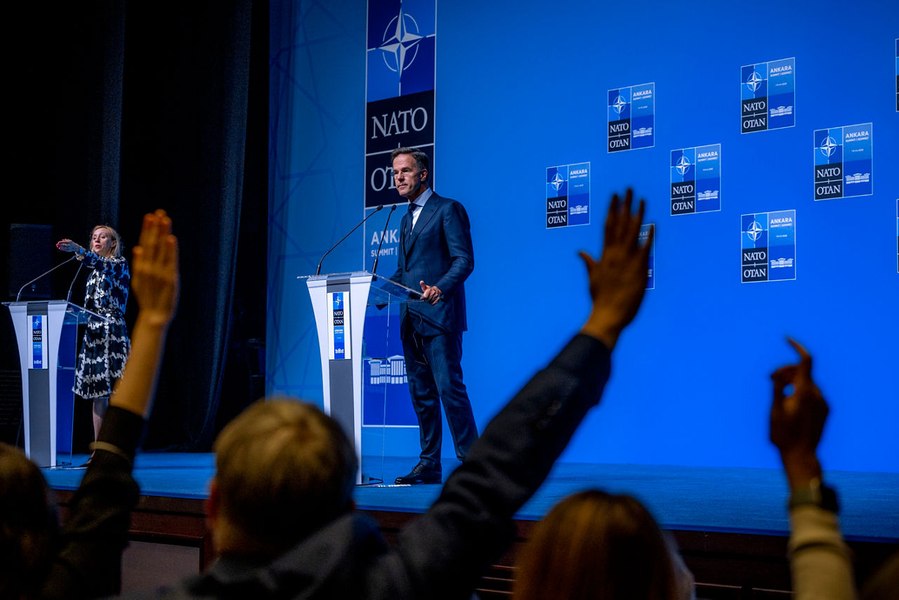
NATO has approved a significant joint procurement of five Triton surveillance drones, marking the alliance's first common drone acquisition since its founding in 1949. The decision, announced at the NATO Summit in Ankara, underscores the growing urgency within the alliance to bolster its capabilities against the increasing threat of unmanned aerial vehicles.
The acquisition comes weeks after a Romanian Air Force F-16 shot down a drone over Estonia and amidst ongoing Russian drone attacks on Ukraine. Secretary General Mark Rutte confirmed the plan to acquire the MQ-4C Triton drones at the Defense Industry Forum in Ankara. Norway, Finland, Germany, and Denmark are participating in this initiative, which aims to rapidly expand NATO's capacity to produce, operate, and neutralize drones on a large scale.
Romania is also involved in NATO's Drone Edge initiative, a program designed to enhance the alliance's drone and counter-drone capabilities. This initiative is seen as essential for NATO's deterrence and defense posture. Commitments made in Ankara include an investment of over $40 billion in counter-drone capabilities over the next five years, alongside the creation of a dedicated NATO market for counter-drone solutions.
Retired General Dorin Toma, former commander of NATO's Multinational Division Southeast, emphasized the lessons learned from Ukraine's daily experience with Russian drone attacks. He highlighted that not every aerial threat requires expensive weaponry. "The main lesson is that such threats can be effectively combated without using extremely expensive and sophisticated interceptors or missiles every time," Toma stated. He also noted that European defense industries are adapting to this conflict, collaborating with Ukrainian manufacturers of counter-drone systems.
The main lesson is that such threats can be effectively combated without using extremely expensive and sophisticated interceptors or missiles every time.
DistantNews Editorial
Originally published by Adevărul in Romanian. Translated, summarized, and contextualized by our editorial team with added local perspective. Read our editorial standards.
More Stories

From Our Blog

What Gets Lost (and Found) When News Is Translated

The Critical Role of Diaspora Media in Global News

What Travellers Should Know About Countries with Restricted Press

A Digital Nomad's Guide to Following Local News

How the Same Story Looks Different in Different Countries
