


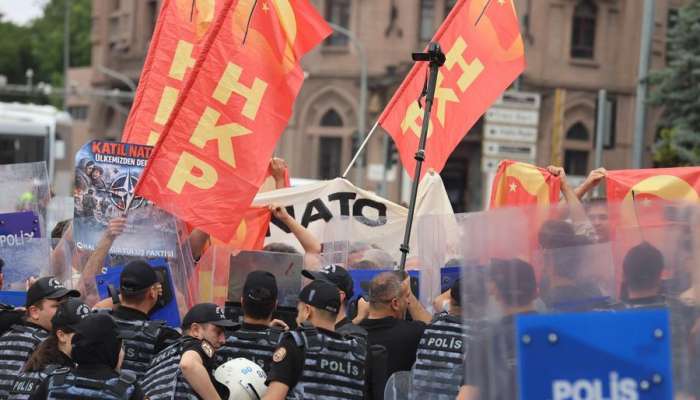
NATO Faces Deepening Fault Lines Ahead of Ankara Summit
Translated from English, summarized and contextualized by DistantNews.
At a glance
Analysis
Named sources
Context piece
- NATO leaders are meeting in Ankara amid growing disagreements over strategic priorities, defense spending, and the alliance's long-term purpose.
- Diverging approaches to recent US military actions in Iran and public criticism of NATO in Europe highlight internal fault lines.
- US President Donald Trump has criticized European allies for benefiting from security guarantees without sharing military risks, particularly regarding the Strait of Hormuz.
Leaders of the North Atlantic Treaty Organization (NATO) are converging in Ankara this week, aiming to project an image of unity despite increasingly apparent disagreements on key issues. The summit, scheduled for Tuesday and Wednesday, occurs against a backdrop of diverging strategic priorities, contentious debates over defense spending targets, and growing public skepticism toward the alliance in parts of Europe. Recent US military strikes against Iran have further exposed these fault lines. While several NATO allies offered political backing for Washington's objective of preventing Iran from acquiring nuclear weapons, none committed to a direct role in the operation. This reluctance, particularly concerning the US effort to "reopen" the Strait of Hormuz, drew sharp criticism from US President Donald Trump. He accused European allies of enjoying American security assurances while avoiding the risks associated with military action. Analysts suggest that many European members viewed the US strikes primarily through the lens of regional stability rather than alliance solidarity. A direct military role could have jeopardized energy supplies, increased migration pressures, and exposed them to retaliation, especially as many nations grapple with significant domestic challenges. Experiences in conflicts like Iraq, Afghanistan, and Libya have made European governments more cautious about engaging in military operations without broad international legitimacy and clearly defined objectives. This divergence indicates that Washington and its European partners no longer automatically share identical strategic priorities. European nations are increasingly distinguishing between NATO's collective defense commitments and US-initiated military actions outside the alliance's formal framework. The transatlantic relationship is perceived as becoming more transactional, with European countries exercising greater caution regarding military interventions with uncertain long-term consequences. While these disagreements over Iran do not signal an immediate crisis for NATO, they underscore the growing difficulty in achieving consensus within the alliance as security priorities become more fragmented.
A direct military role could have exposed them to retaliation, disrupted energy supplies, and increased migration pressures at a time when many countries are already facing significant domestic challenges.
DistantNews Editorial
Originally published by Times of Oman in English. Translated, summarized, and contextualized by our editorial team with added local perspective. Read our editorial standards.
More Stories


From Our Blog

What Gets Lost (and Found) When News Is Translated

The Critical Role of Diaspora Media in Global News

What Travellers Should Know About Countries with Restricted Press

A Digital Nomad's Guide to Following Local News

How the Same Story Looks Different in Different Countries
