


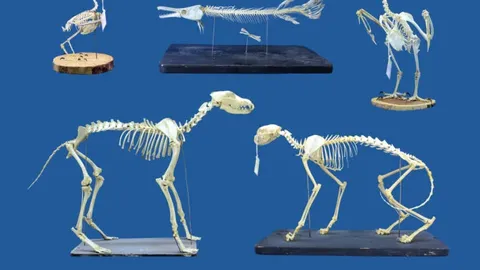
Nature's Cleaners: Museums Turn to Insects for Skeleton Preparation
Translated from Estonian, summarized and contextualized by DistantNews.
At a glance
News
Sources not specified
Context piece
- Museum curators have discovered a new, cost-effective, and less risky method for cleaning animal skeletons for display.
- Instead of using chemicals or enzymes, scientists are turning to nature itself, specifically insect colonies, to remove organic material from bones.
- This natural approach offers a more efficient and safer alternative to traditional cleaning methods in natural history museums.
Natural history museums often display animal skeletons, but cleaning the bones of organic material presents a challenge. Traditional methods involve harsh chemicals or enzymes to dissolve remaining flesh, or relying on colonies of dermestid beetles to consume it. Now, a new study suggests a more natural and efficient solution.
Researchers have found that nature itself can provide an effective answer. By utilizing specific insect colonies, the process of removing organic matter from bones can be achieved with less risk and cost. This discovery offers a promising alternative for museums seeking to prepare and exhibit skeletal remains.
This innovative approach not only promises to be more economical but also reduces the potential hazards associated with chemical treatments. The reliance on natural processes aligns with a growing trend in scientific and conservation practices, emphasizing sustainability and minimizing environmental impact.
DistantNews Editorial
Originally published by Postimees in Estonian. Translated, summarized, and contextualized by our editorial team with added local perspective. Read our editorial standards.
More Stories
/nginx/o/2026/07/06/17767369t1hd6cc.jpg)

/nginx/o/2022/03/30/14456305t1h8383.jpg)
From Our Blog

What Gets Lost (and Found) When News Is Translated

The Critical Role of Diaspora Media in Global News

What Travellers Should Know About Countries with Restricted Press

A Digital Nomad's Guide to Following Local News

How the Same Story Looks Different in Different Countries
