


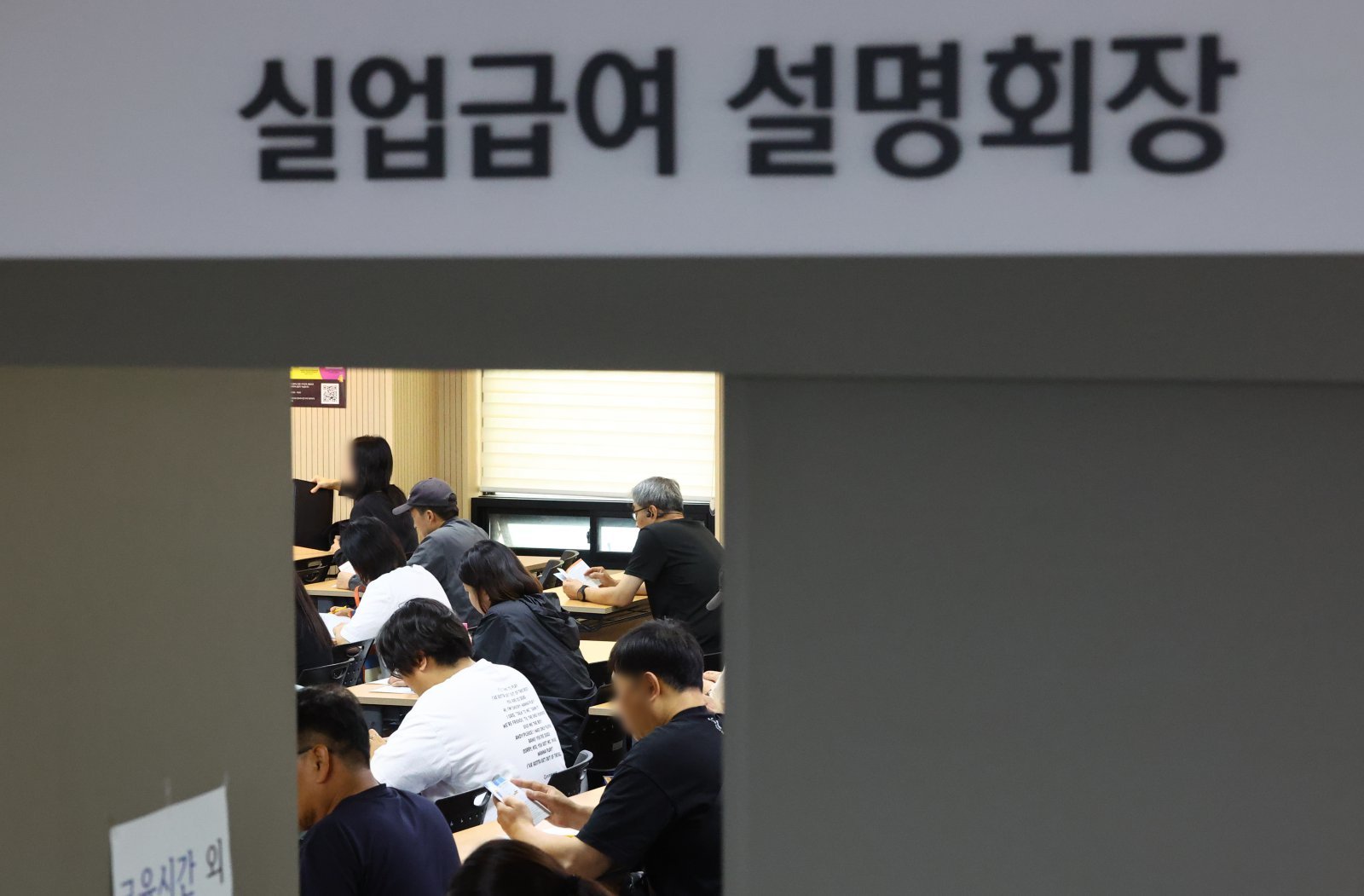
Nearly 30% of South Korean Unemployment Benefit Recipients Are Repeat Claimants
Translated from Korean, summarized and contextualized by DistantNews.
At a glance
News
Sources not specified
Context piece
- Nearly 30% of unemployment benefit recipients in South Korea received benefits multiple times within five years, totaling 496,000 individuals.
- The total payout for unemployment benefits reached a five-year high of 12.36 trillion won last year.
- A lawmaker criticized the system, calling it an "unemployment bonus" and advocating for stricter limitations on repeated claims.
A significant portion of unemployment benefit recipients in South Korea are repeat claimants, with nearly 30% receiving benefits more than twice within a five-year period. Last year, the total payout for these benefits reached a five-year high of 12.36 trillion won, underscoring a growing trend of repeated claims.
Data reveals that the number of individuals classified as "repeat recipients" has been steadily increasing for three consecutive years. In the past four years, this group has grown by 51,000 people, reaching 496,000 individuals. Despite a slight decrease in the overall number of recipients during the same period, the proportion of repeat claimants has risen by 3.7 percentage points to 28.8%.
The fact that benefit payouts exceeded 12 trillion won, while the number of recipients decreased, is clear evidence that the current system has devolved from a 're-employment ladder' into an 'unemployment bonus.'
This trend has drawn criticism from lawmakers, with Kim So-hee of the People Power Party labeling the system an "unemployment bonus" rather than a ladder for re-employment. She argues that the current framework is being exploited and calls for concrete measures to limit habitual repeat claims. The increase in payouts, despite a decrease in recipients, is partly attributed to the rise in the minimum unemployment benefit, which is linked to the minimum wage.
However, some analyses suggest that repeat claims are not solely due to recipient choice. The prevalence of short-term and fixed-term contracts can lead to cyclical unemployment and re-employment, necessitating a review of both benefit limitations and employment stability measures. The debate highlights a tension between providing a safety net for the unemployed and preventing potential abuse of the system.
Concrete measures are needed to break the pattern of habitual repeat claims.
DistantNews Editorial
Originally published by Dong-A Ilbo in Korean. Translated, summarized, and contextualized by our editorial team with added local perspective. Read our editorial standards.
More Stories


From Our Blog

What Gets Lost (and Found) When News Is Translated

The Critical Role of Diaspora Media in Global News

What Travellers Should Know About Countries with Restricted Press

A Digital Nomad's Guide to Following Local News

How the Same Story Looks Different in Different Countries
