


Nearly 40,000 Ride Seoul Subway First Trains on Weekdays, Seoul National University Station Leads
Translated from Korean and summarized by DistantNews. Read the original for the full story.
At a glance
News
Official statement
Context piece
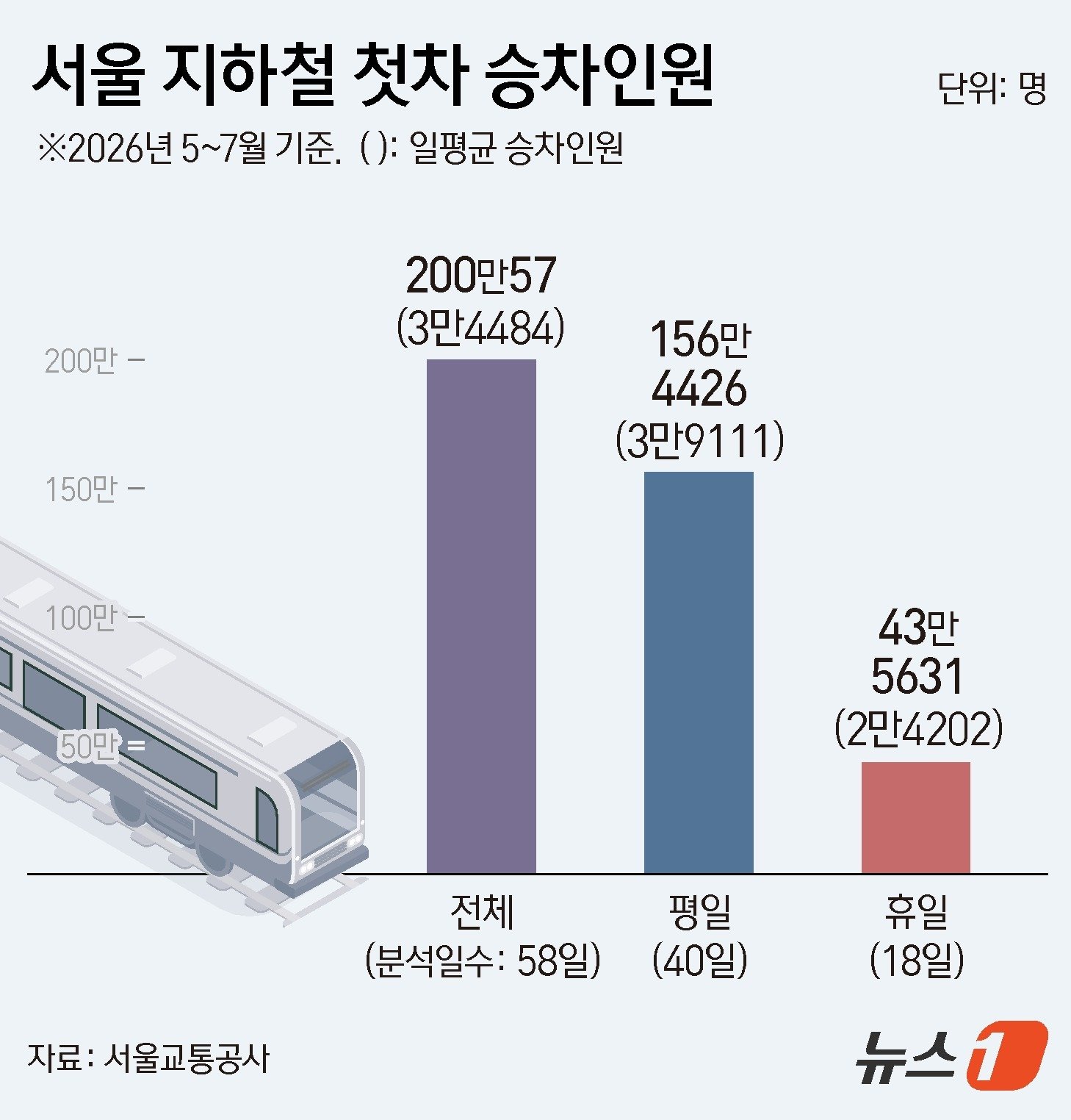
- Seoul subway first trains carried an average of 39,111 passengers on weekdays and 24,202 on holidays during an analysis of 58 days from May to July.
- Seoul National University Station recorded the most weekday boardings, followed by Guro Digital Complex, Daerim, Sindorim and Sillim, all on Line 2 in southwestern Seoul.
- Itaewon Station ranked first on holidays, while Hongik University Station ranked third, reflecting early-morning travel after late-night activity.
Seoul National University Station had the highest weekday first-train ridership in Seoul, with an average of 848 passengers boarding each day. Guro Digital Complex followed with 823, then Daerim with 793, Sindorim with 789 and Sillim with 731.
All five weekday leaders are Line 2 stations in southwestern Seoul. Seoul Metro attributed the pattern to large residential areas nearby and connections with other subway lines and buses, which draw people commuting or attending school early in the morning.
The analysis covered 40 weekdays and 18 holidays from May through July. Across the 58 days, 2,000,057 passengers boarded first trains. Weekdays accounted for 1,564,426 passengers, compared with 435,631 on holidays. The average was 39,111 passengers on weekdays and 24,202 on holidays, making weekday use 61.6% higher.
Holiday travel showed a different pattern. Itaewon Station led with 733 passengers per day, followed by Guro Digital Complex with 507, Hongik University with 467, Daerim with 443 and Sillim with 416. Itaewon and Hongik University, areas dense with restaurants and cultural and leisure venues, ranked outside the weekday top five but moved to first and third on holidays. Seoul Metro said many passengers appear to use the first train to return home after spending late weekend nights out.
Guro Digital Complex, Daerim and Sillim appeared among the top five on both weekdays and holidays. A Seoul Metro official said the figures showed people beginning their day early as well as those heading home after late-night schedules.
This analysis allowed us to see Seoul's diverse patterns of early-morning travel, including citizens who start their day early and those returning home after finishing late-night activities.
About this summary
Originally published by Dong-A Ilbo in Korean. Translated, summarized, and contextualized automatically by DistantNews, with a note on how the source frames the story. Not individually reviewed before publishing. How this works.
More Stories


From Our Blog

What Gets Lost (and Found) When News Is Translated

The Critical Role of Diaspora Media in Global News

What Travellers Should Know About Countries with Restricted Press

A Digital Nomad's Guide to Following Local News

How the Same Story Looks Different in Different Countries
