

Nearly total lunar eclipse to be visible in Germany on August 28
Translated from German, summarized and contextualized by DistantNews.
At a glance
News
Named sources
New plan
- A nearly total lunar eclipse will be visible in Germany on the morning of August 28.
- The partial phase begins around 4:34 AM, with the maximum eclipse occurring shortly after 6 AM.
- While the maximum phase might be difficult to observe due to dawn, the partial eclipse is expected to be a worthwhile spectacle.
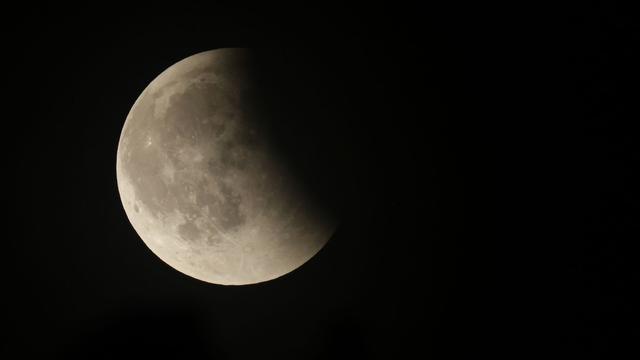
Stargazers in Germany are in for a treat as a nearly total lunar eclipse is set to grace the night sky on the morning of August 28. This celestial event follows a month already rich with astronomical phenomena, including a solar eclipse and meteor showers.
The Earth's shadow will begin to engulf the Moon as it enters the planet's umbra at approximately 4:34 AM. Uwe Pilz, chairman of the Association of Friends of the Stars, noted that the beginning of the partial phase should be clearly visible from Germany, provided the skies are clear. The Moon will be high in the sky during this early morning spectacle.
However, observing the eclipse's peak may present challenges. The maximum phase, when the Moon will be obscured by up to 94 percent of its apparent diameter within Earth's core shadow, is expected shortly after 6 AM. Pilz cautioned that by this time, dawn will be breaking, and with the Moon setting soon after, this particular moment might be practically unobservable for many.
Despite these limitations, Pilz described the event as a "worthwhile spectacle." He also mentioned that capturing the eclipse with a telephoto lens or even a smartphone should be feasible. For those who miss this event, another partial lunar eclipse will occur on February 21 of the following year, and a total lunar eclipse is anticipated on December 31, 2028.
DistantNews Editorial
Originally published by Die Zeit in German. Translated, summarized, and contextualized by our editorial team with added local perspective. Read our editorial standards.
More Stories


From Our Blog

What Gets Lost (and Found) When News Is Translated

How the Same Story Looks Different in Different Countries

The Critical Role of Diaspora Media in Global News

What Travellers Should Know About Countries with Restricted Press

A Digital Nomad's Guide to Following Local News
