

Negotiations over Arab joint list hit snag as Ahmad Tibi rejects proposed slate
Summarized and contextualized by DistantNews.
At a glance
News
Named sources
Ongoing story
- Israeli Arab parties failed to agree on a joint electoral slate for the upcoming Knesset elections, jeopardizing their representation.
- MK Ahmad Tibi's Ta'al party rejected a proposal from a reconciliation committee that included Hadash and the secular nationalist Balad party.
- Internal disagreements, including past splits and differing coalition strategies, have historically fragmented Arab political representation in Israel.
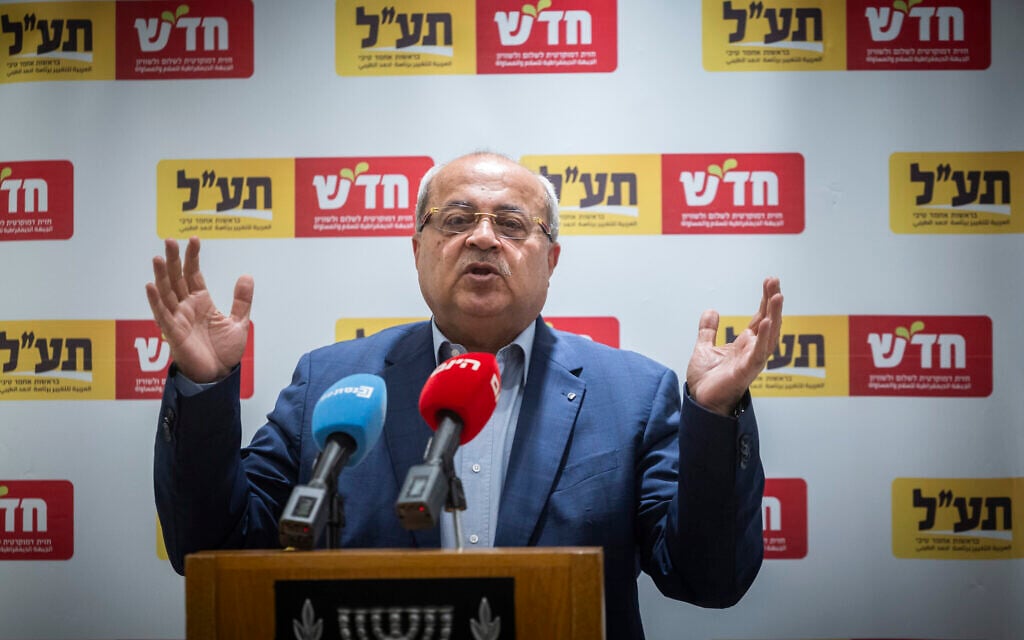
A critical juncture for Arab political representation in Israel has been reached as the country's Arab parties failed to forge a unified electoral slate. The proposed joint list, put forward by an inter-party "reconciliation committee" on Sunday, was rejected by MK Ahmad Tibi's Ta'al party, casting uncertainty over the community's prospects in the upcoming Knesset elections scheduled for October 27.
Sources within Tibi's party described the committee's proposal as "unfair" and "a stab in the back," accusing the committee of bias. This rejection stands in contrast to statements from both the Hadash party, a joint Jewish-Arab leftist faction, and the secular nationalist Balad party, which endorsed the list and called for Arab unity. The proposed slate would have seen Hadash chairman Yousef Jabareen leading, followed by Tibi and other representatives from Balad and Hadash, with Ta'al receiving less representation than the other two parties.
unfair
This failure to unite follows a history of fragmentation among Arab parties. The Joint List, initially formed in 2015, fractured in 2021 when the Islamist Ra'am faction broke away to join a governing coalition. The list collapsed entirely before the 2022 elections, with Balad running solo and the remaining parties forming the smaller Hadash-Ta'al list. Mansour Abbas's Ra'am faction had previously insisted on a purely technical bloc to maintain coalition flexibility, a stance opposed by other Arab parties, leading Abbas to state in July that he would not run jointly with them.
The internal divisions highlight the complex political landscape Arab parties navigate. While some, like Hadash and Balad, advocate for a united front, others prioritize different strategies, such as maintaining independence for potential coalition involvement. This ongoing struggle for consensus impacts the collective voice and influence of the Arab community within Israel's political system.
a stab in the back
DistantNews Editorial
Originally published by Times of Israel. Summarized and contextualized by our editorial team with added local perspective. Read our editorial standards.
More Stories
From Our Blog

What Gets Lost (and Found) When News Is Translated

The Critical Role of Diaspora Media in Global News

What Travellers Should Know About Countries with Restricted Press

A Digital Nomad's Guide to Following Local News

How the Same Story Looks Different in Different Countries
