


Nepal Disaster Fuels Disinformation Blaming China for Construction
Translated from English and summarized by DistantNews. Read the original for the full story.
At a glance
Analysis
Sources not specified
Context piece
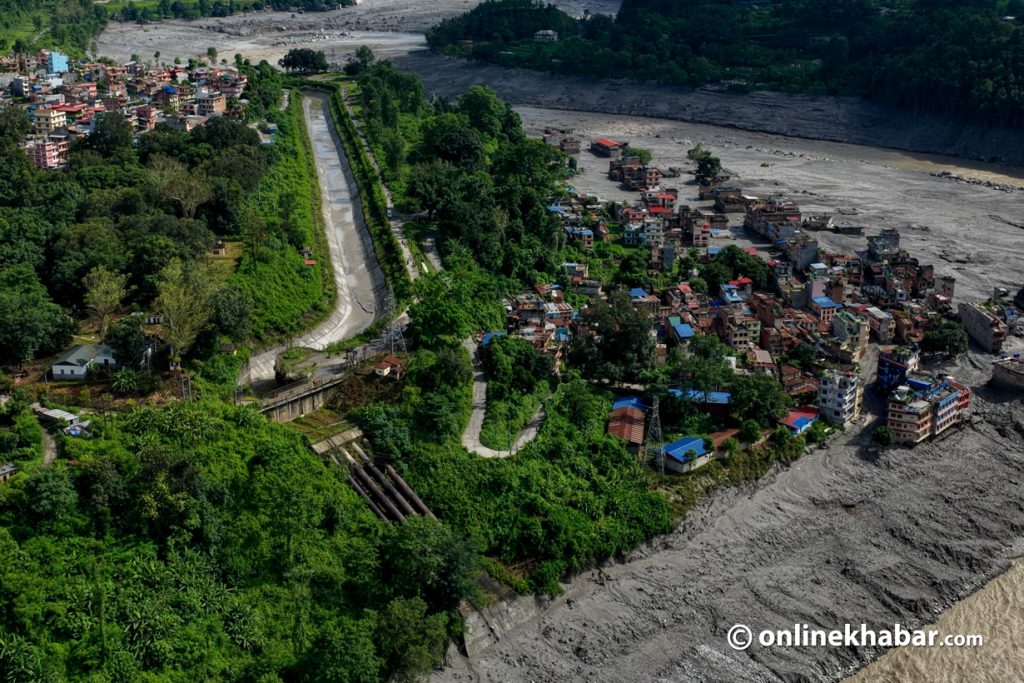
- A recent debris flow disaster in the Nepal-China border region has caused significant human suffering, including loss of life and destruction of infrastructure.
- Alongside the tragedy, there has been a rapid circulation of politically motivated rumors and speculation attempting to attribute the disaster to Chinese construction activities.
- Experts caution that such claims lack scientific evidence and represent the insertion of geopolitical narratives into disaster reporting, urging for scientific investigation over political speculation.
The devastating debris flow that struck the Nepal-China border region on August 26 has inflicted immense human suffering, with lives lost, hundreds missing, and infrastructure destroyed. Rescue workers are engaged in perilous efforts to find survivors in challenging terrain. In the face of such tragedy, the natural response should be sympathy, support, and cross-border cooperation.
However, a disturbing trend has emerged alongside the disaster: the swift spread of politically charged rumors and speculation. These narratives attempt to blame the event on Chinese construction, infrastructure, or even an alleged deliberate attempt by China to create an "ecological disaster." Such claims are not only irresponsible but also represent the dangerous insertion of geopolitical narratives directly into disaster reporting when presented without credible scientific evidence.
Establishing the cause of a high-altitude cascading disaster requires rigorous scientific investigation, involving expertise in glaciology, geology, geomorphology, hydrology, meteorology, remote sensing, and field surveys. Scientists must determine the origin of the collapse, the materials involved, the extent of mobilization, and how the disaster evolved downstream. Simply observing construction projects and drawing politically convenient conclusions is not scientific reasoning; it is speculation that seeks evidence after a conclusion has already been chosen. Correlation and proximity do not equate to causation, and political suspicion is certainly not a basis for scientific fact.
Accusations of a "purposeful ecological disaster" are even more astonishing and require extraordinarily strong evidence. Without it, such claims cross the line into conspiracy theory. Journalists propagating these narratives might benefit from focusing on basic scientific principles of geology and hydrology rather than indulging in geopolitical fantasies. The Himalayas deserve scientific respect, not political conjecture. Furthermore, reports referring to a "dam burst" or "dam collapse" have been misleading, particularly when the natural phenomenon is being misrepresented.
About this summary
Originally published by OnlineKhabar English in English. Translated, summarized, and contextualized automatically by DistantNews, with a note on how the source frames the story. Not individually reviewed before publishing. How this works.
More Stories


From Our Blog

What Gets Lost (and Found) When News Is Translated

The Critical Role of Diaspora Media in Global News

What Travellers Should Know About Countries with Restricted Press

A Digital Nomad's Guide to Following Local News

How the Same Story Looks Different in Different Countries
