

Nepal flood exposes weaknesses in early warning system
Translated from English and summarized by DistantNews. Read the original for the full story.
At a glance
News
Named sources
Outcome reported
- A rapid flood in Nepal's Bhotekoshi river corridor on August 26 has highlighted concerns about the effectiveness of the country's early warning system for extreme events.
- Floodwaters traveled an unusually fast 36 kilometers in about 40 minutes, destroying monitoring equipment and infrastructure.
- Investigations are underway to determine the exact cause of the flood, with initial theories pointing to a glacier collapse or a landslide-induced dam burst.
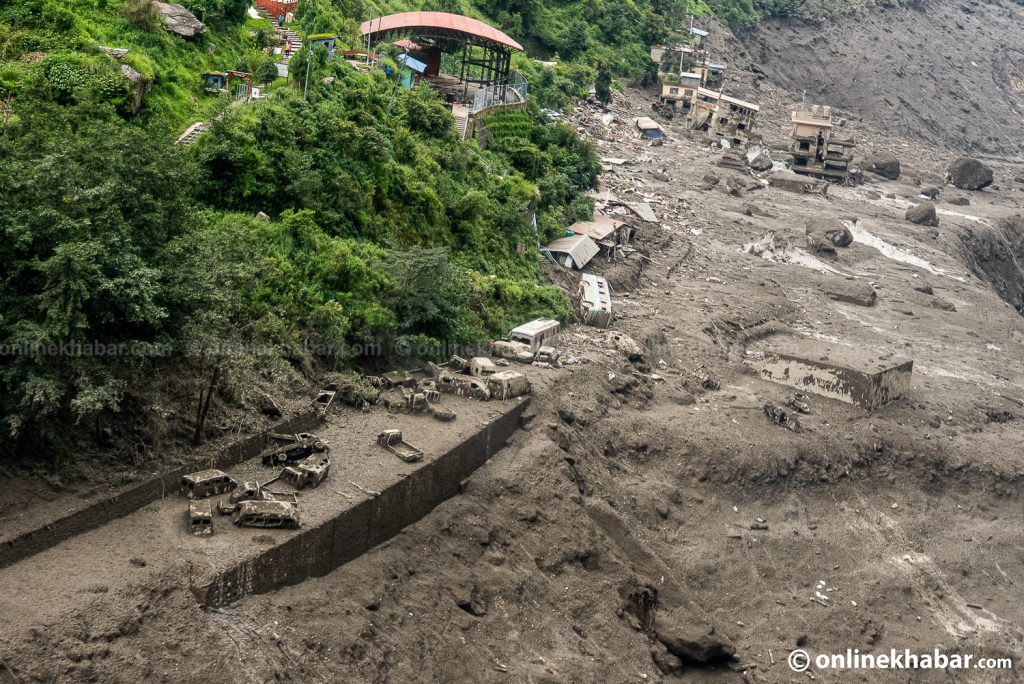
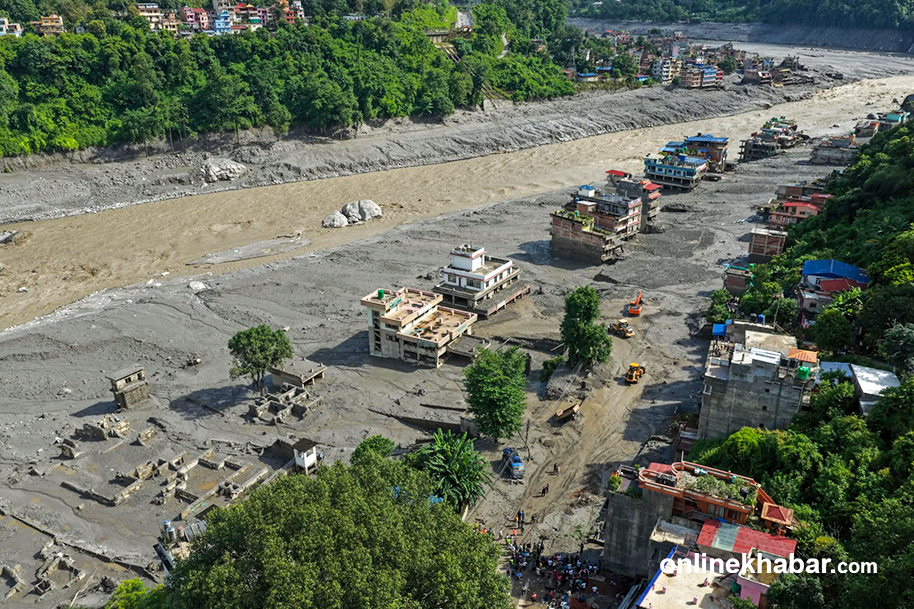
A devastating flood that surged through Nepal's Bhotekoshi river corridor on August 26 has cast a spotlight on the nation's flood early warning system, prompting questions about its preparedness for sudden and extreme events.
The flood moved with alarming speed, covering approximately 36 kilometers from the Nepal-China border to Betrabati in just 40 minutes. This rapid movement contrasts sharply with previous floods, which typically take around 14 hours to cover a similar distance. According to Binod Parajuli, chief of the Department of Hydrology and Meteorology's Flood Forecasting Section, sensors near the border transmitted data normally until 8:40 a.m., but the 8:50 a.m. reading was lost. A sensor downstream at Betrabati continued transmitting until 9:20 a.m., with its next reading also missing. This suggests the flood entered Nepal between 8:45 and 8:50 a.m. and reached Betrabati around 9:25 a.m.
This means the flood was moving extremely fast compared with other floods in the past.
The extreme flow, with a recorded discharge of about 200 million cubic meters of water, overwhelmed and destroyed flood monitoring equipment at multiple locations, including Langtang, Rasuwagadhi, Betrabati, Syafrubesi, and Malekhu. Only stations at Devghat, Bhorle, and Kalikhola near Muglin remained operational. "We had installed most of the equipment on bridges, considering them relatively safe and strong structures," Parajuli stated. "But the bridges themselves were swept away, along with the equipment."
The disaster also caused widespread destruction, with roads, bridges, settlements, and markets reduced to ruins. The full extent of human and economic damage is still being assessed. Nepali and Chinese scientists are collaborating to pinpoint the flood's exact cause, with preliminary findings suggesting a large glacier collapse. However, further investigation is required to confirm the details. The incident has ignited a debate about the system's capabilities, especially considering the possibility that the flood might have resulted from a landslide temporarily damming the river before a sudden release of water.
We had installed most of the equipment on bridges, considering them relatively safe and strong structures. But the bridges themselves were swept away, along with the equipment.
About this summary
Originally published by OnlineKhabar English in English. Translated, summarized, and contextualized automatically by DistantNews, with a note on how the source frames the story. Not individually reviewed before publishing. How this works.
More Stories

From Our Blog

What Gets Lost (and Found) When News Is Translated

The Critical Role of Diaspora Media in Global News

What Travellers Should Know About Countries with Restricted Press

A Digital Nomad's Guide to Following Local News

How the Same Story Looks Different in Different Countries
