


Nepal flood: Families await news as helicopters bring hope and heartbreak
Translated from English and summarized by DistantNews. Read the original for the full story.
At a glance
In-depth
Named sources
Ongoing story
- Families are gathering at an army training center in Nuwakot, Nepal, anxiously awaiting news of loved ones missing after devastating floods.
- Helicopters arriving at the center bring moments of hope, but often deliver survivors or, tragically, bodies, leading to heartbreak for many.
- One woman desperately seeks information about her husband, who worked at a hydropower project, clinging to the possibility he may be trapped in a tunnel.
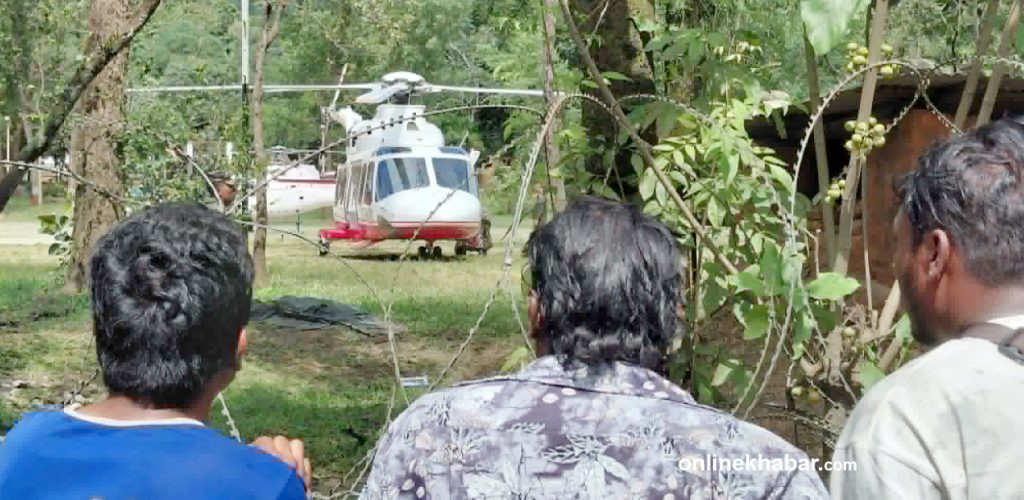
In Nuwakot, Nepal, the arrival of every helicopter at the No. 1 Army Training Centre in Battar brings a surge of anxious energy. Families of those missing since the devastating flood gather, their eyes fixed on the sky, their bodies tensing as the aircraft approaches. They rush towards the gate, a desperate hope flickering that the person they are waiting for will emerge.
What might have happened to him?
But the rhythm is often one of dashed hopes. If their loved one is not among the disembarking passengers, they slowly retreat, returning to the roadside to await the next chance. The helicopters do not always bring survivors. Some individuals are carried down on stretchers, while others are brought out in bundles, their fates tragically confirmed. The crowd scrutinizes these arrivals, trying to decipher the grim news being delivered.
Sabita Adhikari is one of those caught in this cycle of hope and despair. Her husband, who works at the Trishuli Hydropower Project, has been out of contact since the flood. "What might have happened to him?" she asks, tears welling in her eyes. She clings to fragmented reports that employees might be sheltering in a tunnel, and that the army has reached the site for a rescue operation. "People are saying the employees are inside the tunnel," she repeats, a fragile hope sustaining her.
People are saying the employees are inside the tunnel. They say the army has already reached there for the rescue. We heard that too.
Yet, even this glimmer is shadowed by fear. She remembers the enclosed nature of the tunnel from video calls with her husband and worries he might have suffocated. The news that the tunnel's opening is filled with mud adds another layer of dread. When the owner of the hydropower project arrives, she rushes to him, pleading for information about the conditions inside, praying that if he is trapped, he is still alive.
Please let me meet him. I want to understand what happened there. I want to know what it is like inside. Please let me meet him.
Her plea echoes the silent anguish of many others gathered at the center. Nearby, 74-year-old Padam Bahadur Kandel walks with a worn bag, his eyes wet, sometimes stopping as if lost in thought. Each helicopter represents a fleeting moment where their missing person might be returned, a moment that too often dissolves into the crushing weight of uncertainty and grief.
If he is hiding inside the tunnel and that is why he cannot contact us, maybe he is still alive. I pray that the army rescues them soon.
About this summary
Originally published by OnlineKhabar English in English. Translated, summarized, and contextualized automatically by DistantNews, with a note on how the source frames the story. Not individually reviewed before publishing. How this works.
More Stories


From Our Blog

What Gets Lost (and Found) When News Is Translated

The Critical Role of Diaspora Media in Global News

What Travellers Should Know About Countries with Restricted Press

A Digital Nomad's Guide to Following Local News

How the Same Story Looks Different in Different Countries
