

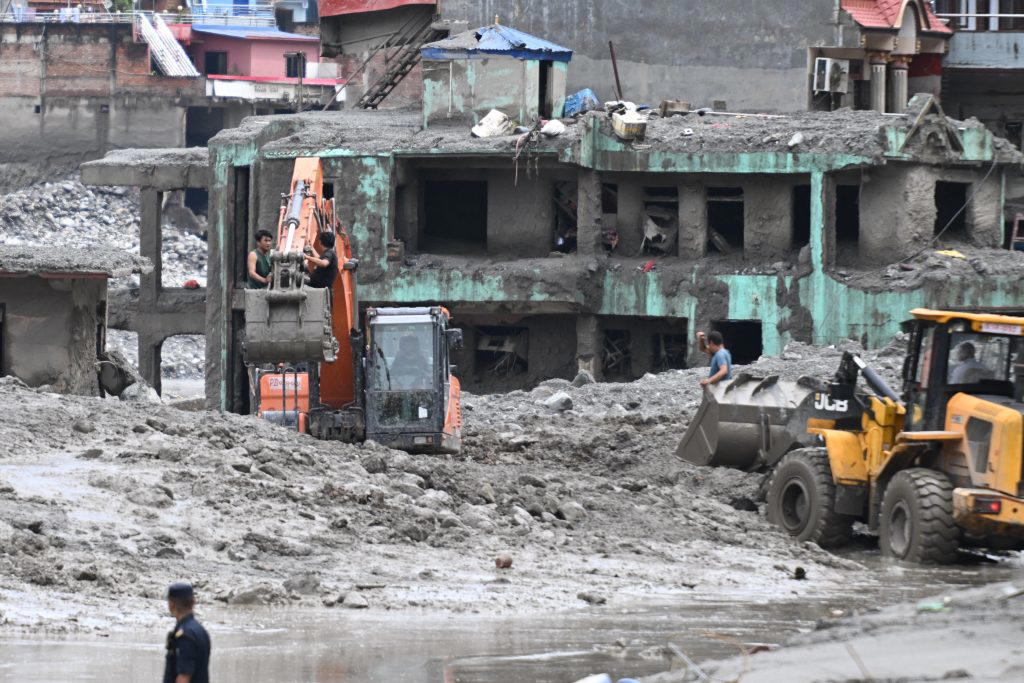

Nepal floods cause widespread destruction, government seeks aid
Translated from English and summarized by DistantNews. Read the original for the full story.
At a glance
News
Sources not specified
Ongoing story
- Devastating floods in Nepal have resulted in over 620 confirmed deaths and more than 2,400 people missing, with tens of thousands affected.
- The disaster has destroyed infrastructure, including bridges and schools, severely hampering rescue and aid delivery efforts.
- Nepal's government has appealed for financial assistance to manage the extensive recovery and rebuilding tasks, compounded by existing economic pressures.
Nepal is grappling with the aftermath of devastating floods that have carved a path of destruction across the Himalayan nation, prompting the government to appeal for international financial aid. Rescue efforts are intensely focused on locating the more than 2,400 individuals still missing following the catastrophic event, which has claimed at least 620 lives.
The government has reported a "heavy loss of life and property" and is working to assess the full scale of the devastation. The Red Cross estimates that as many as 93,000 people may have been affected, with entire communities swept away, leaving families displaced and seeking shelter in temporary facilities. The destruction of multiple bridges and disruption of major roads have made reaching the worst-hit areas extremely difficult.
Compounding the crisis, at least 18 schools have been destroyed and 20 more damaged, impacting approximately 10,000 school-age children, according to the UN Children's Fund. The floods also damaged health facilities, including three health posts and a hospital, with access to other medical centers affected.
Multiple bridges have been washed away and major roads disrupted, leaving some of the worst-affected communities extremely difficult to reach.
The disaster strikes Nepal as it faces political transition, with Prime Minister Balendra Shah, a former Kathmandu mayor, leading a young government just ahead of the anniversary of anti-corruption protests that toppled the previous administration. His government now confronts the immense challenge of rebuilding communities and critical infrastructure.
Economically, Nepal's limited resources are strained by the disaster's scale. With a significant portion of the workforce in informal employment and a reliance on remittances and tourism, the floods threaten to exacerbate existing economic pressures by disrupting key sectors. The World Bank notes that tourism, contributing about 6.4 percent of GDP, could be particularly affected.
The trauma of Wednesday’s catastrophic flooding has been enormous.
About this summary
Originally published by The Punch in English. Translated, summarized, and contextualized automatically by DistantNews, with a note on how the source frames the story. Not individually reviewed before publishing. How this works.
More Stories



From Our Blog

How the Same Story Looks Different in Different Countries

What Gets Lost (and Found) When News Is Translated

The Critical Role of Diaspora Media in Global News

What Travellers Should Know About Countries with Restricted Press

A Digital Nomad's Guide to Following Local News
