


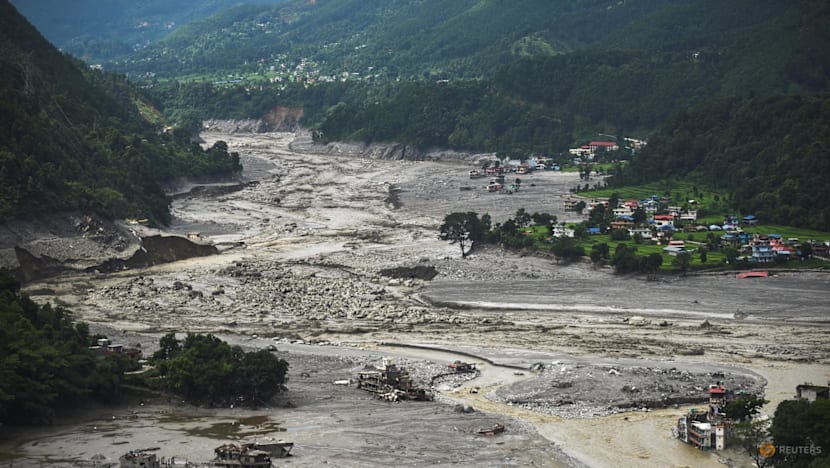
Nepal PM Demands Climate Action After Himalayan Disaster
Translated from English and summarized by DistantNews. Read the original for the full story.
At a glance
Newswire
Named sources
Ongoing story
- Prime Minister Balendra Shah said a flood in Nepal’s Rasuwa district was triggered by an avalanche of snow and ice and was linked to rising climate risks.
- The disaster killed at least 939 people and left nearly 4,500 missing, while reconstruction costs could reach billions of dollars.
- Shah said Nepal, despite contributing little to global emissions, should press the international community to address climate-related disasters.
Nepal’s Prime Minister Balendra Shah says last week’s deadly Himalayan flood should force the international community to confront the growing risks of climate change.
not an ordinary flood
The flood in the Bhote Koshi River in Rasuwa district followed a glacial collapse on the China-Nepal border. At least 939 people died and nearly 4,500 remained missing. Kathmandu warned that rebuilding could cost billions of dollars.
Shah described the disaster as “not an ordinary” flood. He said an avalanche of snow and ice in the Himalayan region triggered what he called one of the area’s major disasters. The exact cause of the collapse remains unclear, but glaciers are melting worldwide as temperatures rise, increasing the risk of similar events.
It is now time for us to strongly raise with the international community the issue of the disasters we are experiencing as a result of climate change
The prime minister said the incident showed that danger in the Himalayan region was growing alongside climate change and called for continued vigilance. He also argued that Nepal should raise the issue internationally. The largely rural country has a population of about 30 million and has contributed little to the emissions associated with global warming, yet it is facing the consequences.
rooftops of the world are caving in
The wider Himalayan and Hindu Kush ranges provide water for about 240 million people in mountainous areas and another 1.65 billion people in the river valleys of South and Southeast Asia. UN Secretary-General Antonio Guterres warned during a 2023 visit to Nepal that rapidly melting glaciers were causing the “rooftops of the world” to cave in. UN climate chief Simon Stiell later called the disaster a devastating reminder of the vulnerability of mountain environments. Nepal’s limited resources are already under pressure as it responds to the catastrophe.
devastating reminder of how fragile these mountain environments can be
About this summary
Originally published by CNA in English. Translated, summarized, and contextualized automatically by DistantNews, with a note on how the source frames the story. Not individually reviewed before publishing. How this works.
More Stories



From Our Blog

What Gets Lost (and Found) When News Is Translated

The Critical Role of Diaspora Media in Global News

What Travellers Should Know About Countries with Restricted Press

A Digital Nomad's Guide to Following Local News

How the Same Story Looks Different in Different Countries
