


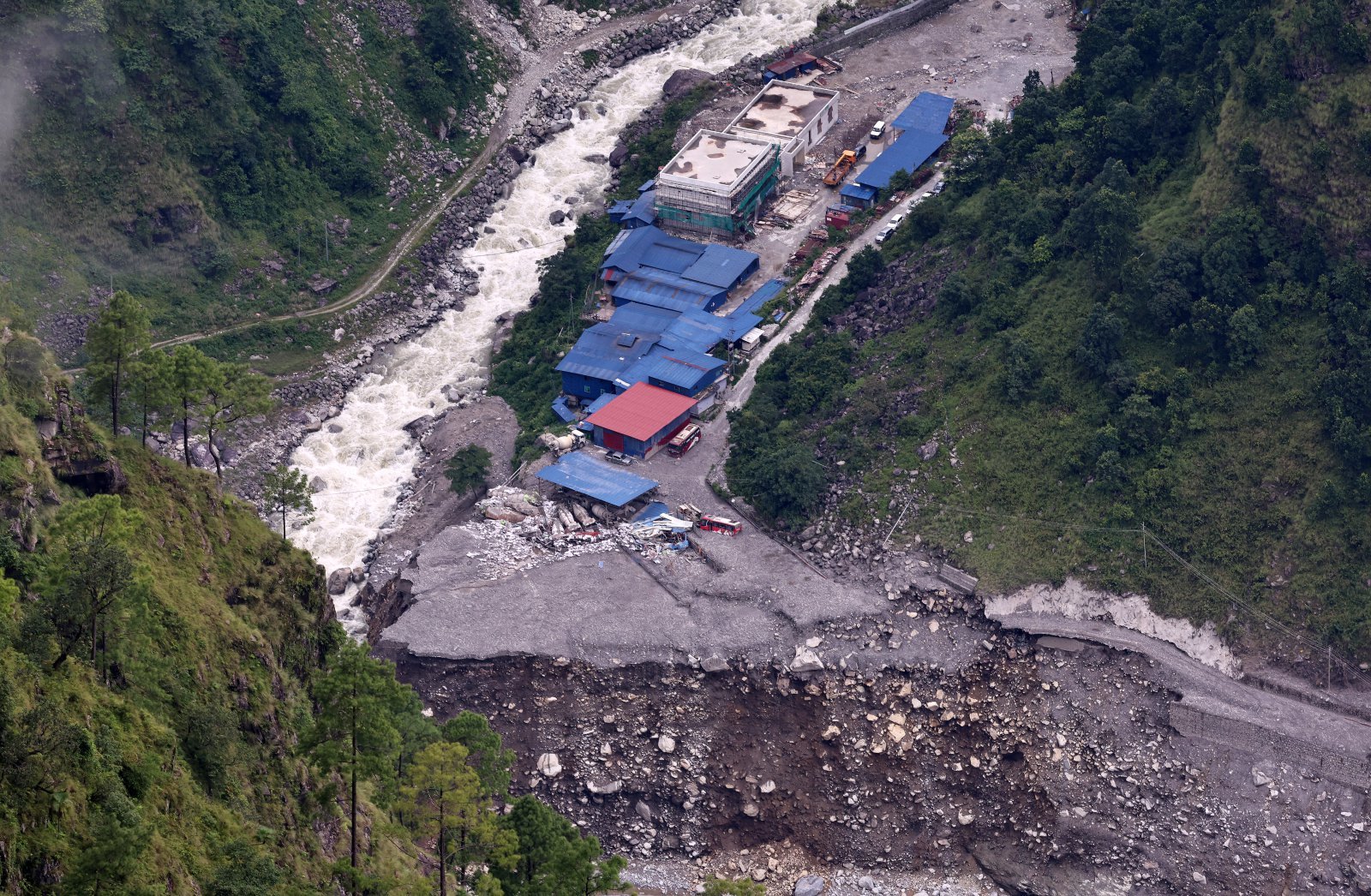
Nepal says survivors may still be trapped inside flooded hydropower plants
Translated from Korean and summarized by DistantNews. Read the original for the full story.
At a glance
News
Named sources
Ongoing story
- Nepal Electricity Authority director Amshu Kiran Shahi said 46 people may be trapped in a room-like structure inside the Rasuwagadhi hydropower plant and could still be alive because food and water are available.
- Rescue teams are also trying to enter the Upper Trishuli-3A plant, where officials believe dry spaces may contain survivors.
- The floods killed at least 1,130 people and left 4,462 missing, including nine South Korean workers at the Upper Trishuli-1 construction site.
A week after devastating flash floods hit Nepal, officials still believe survivors may be trapped inside underground areas of damaged hydropower plants.
Amshu Kiran Shahi, a director at the Nepal Electricity Authority, told Reuters that 46 people were believed to be trapped in a room-like structure inside the Rasuwagadhi hydropower plant. He said the presence of food and water led officials to believe they could have survived the past week.
Shahi also said rescuers expected to find survivors at the Upper Trishuli-3A hydropower plant after receiving information that dry areas remained inside. Teams were trying to enter the tunnels, he said.
We believe they could still be alive even after a week because there is food and water inside.
Nepal is using all available technology in the rescue effort, according to Shahi. India, China and South Korea are providing assistance, while Australian experts have also joined the operation.
The flash floods struck on Aug. 26 near Nepal's border with China's Tibet Autonomous Region. At least 1,130 people have died and 4,462 remain missing. Hydropower plant sites have yielded 279 survivors, but at least 639 people are still unaccounted for there. Nine South Korean workers at the Upper Trishuli-1 construction site, including six Doosan Enerbility employees and three Korea South-East Power employees, also remain missing. The United Nations Development Programme estimates that the floods produced more than 2.2 million tonnes of debris, equivalent to six Empire State Buildings.
We are using all the technology currently available in Nepal.
About this summary
Originally published by Dong-A Ilbo in Korean. Translated, summarized, and contextualized automatically by DistantNews, with a note on how the source frames the story. Not individually reviewed before publishing. How this works.
More Stories


From Our Blog

What Gets Lost (and Found) When News Is Translated

The Critical Role of Diaspora Media in Global News

What Travellers Should Know About Countries with Restricted Press

A Digital Nomad's Guide to Following Local News

How the Same Story Looks Different in Different Countries
