

Nepal seeks emergency Loss and Damage Fund financing after Bhotekoshi floods
Translated from English and summarized by DistantNews. Read the original for the full story.
At a glance
News
Official statement
Ongoing story
- Nepal formally asked the Loss and Damage Fund’s board to approve emergency support after severe flooding in the Bhotekoshi River basin.
- The government said the disaster’s scale exceeds Nepal’s domestic resources and immediate capacity, while search, rescue, relief and damage assessments continue.
- Nepal framed the request as a climate justice issue, saying the high-Himalayan disaster affected a transboundary river system and downstream communities.
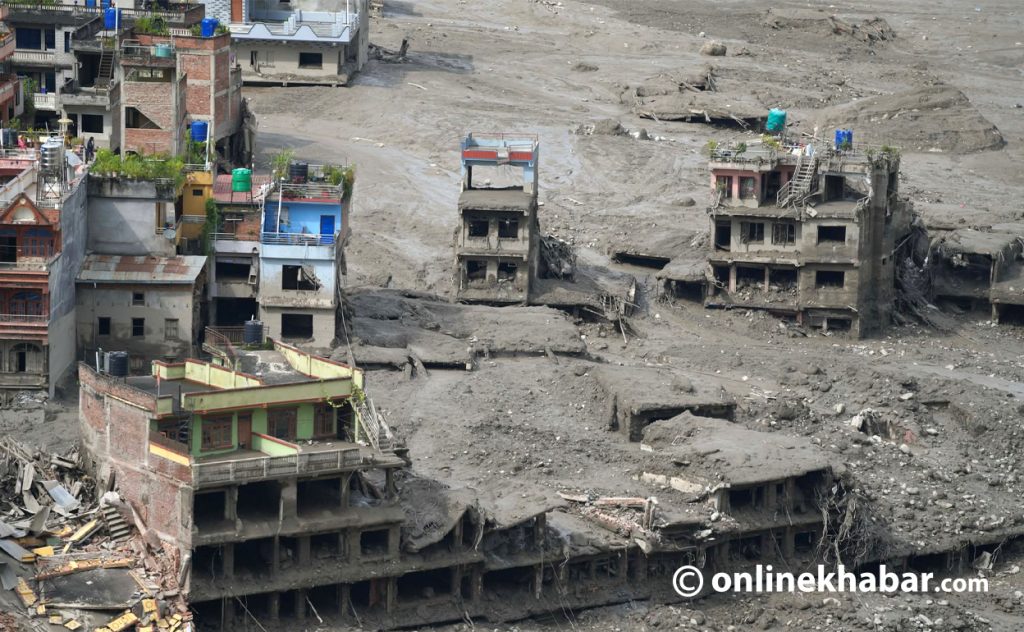
Nepal is asking the international climate finance system for emergency help after floods in the Bhotekoshi River basin overwhelmed the country’s ability to respond.
Finance Minister Swarnim Wagle and Agriculture, Forest and Environment Minister Geeta Chaudhary sent a joint letter on Monday to the co-chairs of the Loss and Damage Fund board. The request followed a special government meeting on the loss of life and property caused by the floods.
Maheshwar Dhakal, who leads the Climate Change Management Division at the agriculture and environment ministry, said the government used a special decision to seek immediate support. He said the fund’s regular 10th board meeting is scheduled for December, but Nepal cannot wait that long. “The scale of the damage caused by the floods is far beyond Nepal’s domestic resources and immediate response capacity,” Dhakal said. “Our main request is for emergency support to be provided now through a special decision.”
The scale of the damage caused by the floods is far beyond Nepal’s domestic resources and immediate response capacity.
Nepal described the flooding as an extreme climate-related disaster originating in the high Himalayan region. Search, rescue, relief and rapid damage assessments remain underway. Authorities have not completed a full assessment of the economic and non-economic losses, but preliminary information indicates damage beyond the country’s capacity to manage.
The government also emphasized the river system’s transboundary character. It said hazards such as melting snow in the high Himalayas can trigger sudden crises downstream, affecting food, energy, health, infrastructure, ecosystems and human security. Nepal said it contributes almost nothing to global greenhouse gas emissions while suffering disproportionate climate impacts, and urged the fund to make a rapid, direct and effective decision to protect communities, restore essential services and prevent further humanitarian suffering.
The board’s regular 10th meeting is scheduled for December, but that would be too late for our needs. Our main request is for emergency support to be provided now through a special decision.
About this summary
Originally published by OnlineKhabar English in English. Translated, summarized, and contextualized automatically by DistantNews, with a note on how the source frames the story. Not individually reviewed before publishing. How this works.
More Stories


From Our Blog

What Gets Lost (and Found) When News Is Translated

The Critical Role of Diaspora Media in Global News

What Travellers Should Know About Countries with Restricted Press

A Digital Nomad's Guide to Following Local News

How the Same Story Looks Different in Different Countries
