


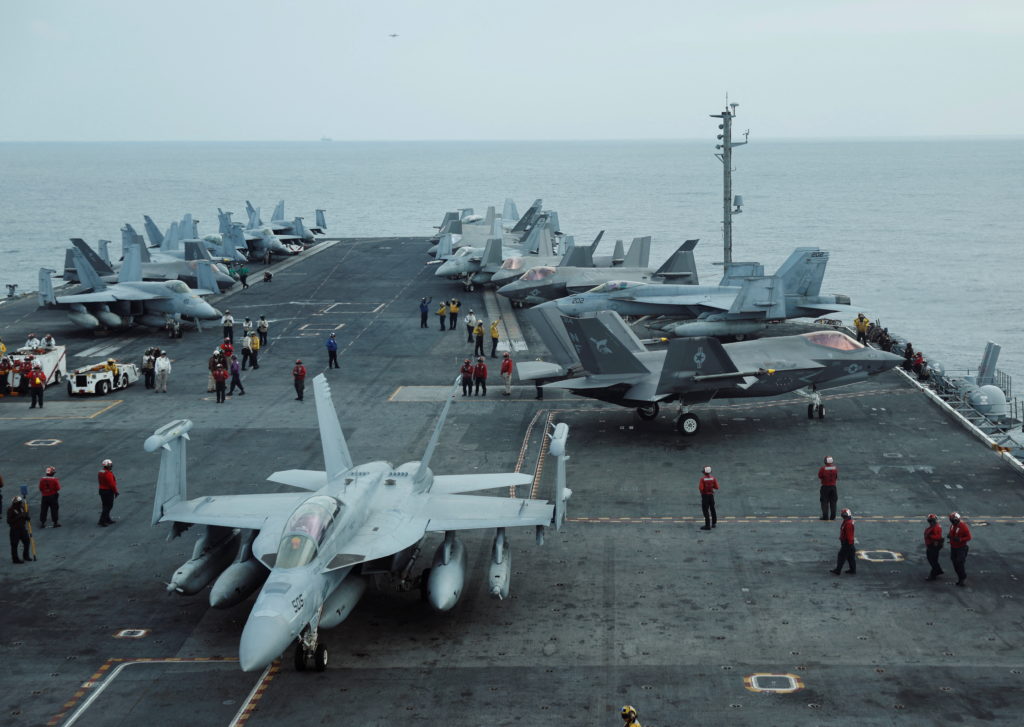
New aircraft carrier en route to Middle East after issues reported aboard USS Abraham Lincoln
Summarized and contextualized by DistantNews.
At a glance
News
Named sources
Ongoing story
- The USS George Washington carrier is en route to the Middle East to potentially replace the USS Abraham Lincoln.
- The Lincoln has been deployed for over 240 days, raising concerns about crew mental health and supply issues.
- Pentagon officials deny reports of significant problems aboard the Lincoln, while lawmakers seek accountability.
The U.S. Pacific-based aircraft carrier USS George Washington is heading toward the Middle East, potentially to relieve the USS Abraham Lincoln. This move comes amid reports of mental health and supply chain issues aboard the Lincoln, which has been on an extended deployment supporting U.S. operations against Iran.
completely misrepresented
The Lincoln's deployment has set a record for uninterrupted time at sea, exceeding 240 days. This prolonged absence from home has prompted concerns from several Democratic lawmakers regarding the impact on service members and the strain on the ship's equipment. Defense Secretary Pete Hegseth, however, described the reports of conditions aboard the carrier as "completely misrepresented."
While recent hostilities between the U.S. and Iran have subsided, the Navy has reinstated a blockade on Iranian ports in the Strait of Hormuz. The Trump administration has not provided clarity on its strategy for ending the war, though Hegseth stated the U.S. can maintain the blockade "indefinitely."
indefinitely
The USS George Washington departed from Da Nang, Vietnam, last week, accompanied by a cruiser and a destroyer. Navy officials confirmed the carrier was in the Strait of Malacca, positioning it to enter the Indian Ocean. The Wall Street Journal reported that the Washington would replace the Lincoln in the Middle East, potentially leaving the Pacific region without a U.S. carrier presence for an unspecified duration.
highly contested environment where traditional supply hubs in the Middle East were disrupted by combat actions.
The Navy acknowledged that the conflict disrupted traditional supply hubs in the Middle East, leading to shortages of essential items, including mail, aboard the aircraft carrier. The statement indicated that "Leadership prioritized mission-critical supplies: first food, then hygiene items, then mail."
Leadership prioritized mission-critical supplies: first food, then hygiene items, then mail.
DistantNews Editorial
Originally published by PBS NewsHour. Summarized and contextualized by our editorial team with added local perspective. Read our editorial standards.
More Stories


From Our Blog

How the Same Story Looks Different in Different Countries

What Gets Lost (and Found) When News Is Translated

The Critical Role of Diaspora Media in Global News

What Travellers Should Know About Countries with Restricted Press

A Digital Nomad's Guide to Following Local News
