

New Benefit System for Manual Therapy Sparks Confusion in South Korea
Translated from Korean, summarized and contextualized by DistantNews.
At a glance
News
Sources not specified
New plan
- A new health insurance benefit system in South Korea is causing confusion among patients regarding manual therapy (dosu therapy).
- Patients are concerned about hospitals discontinuing treatment, potential issues with private insurance, and limits on treatment frequency.
- The Ministry of Health and Welfare has issued clarifications, stating the system aims to manage non-covered services appropriately, not restrict patient access.
South Korea's implementation of a new benefit system for manual therapy, known as 'dosu therapy,' has sparked widespread confusion and concern among patients. Many are reporting that clinics are halting treatments, leading to anxieties about accessing necessary care and the implications for their private health insurance.
Online forums are abuzz with questions like "Will my private insurance still cover this?" and "Am I limited to only 15 sessions?" Patients worry that while the cost per session may decrease, the availability of treatments could be significantly reduced, with some clinics reportedly scaling back or completely stopping manual therapy services. Reports of treatment rooms closing and therapists facing job insecurity have surfaced.
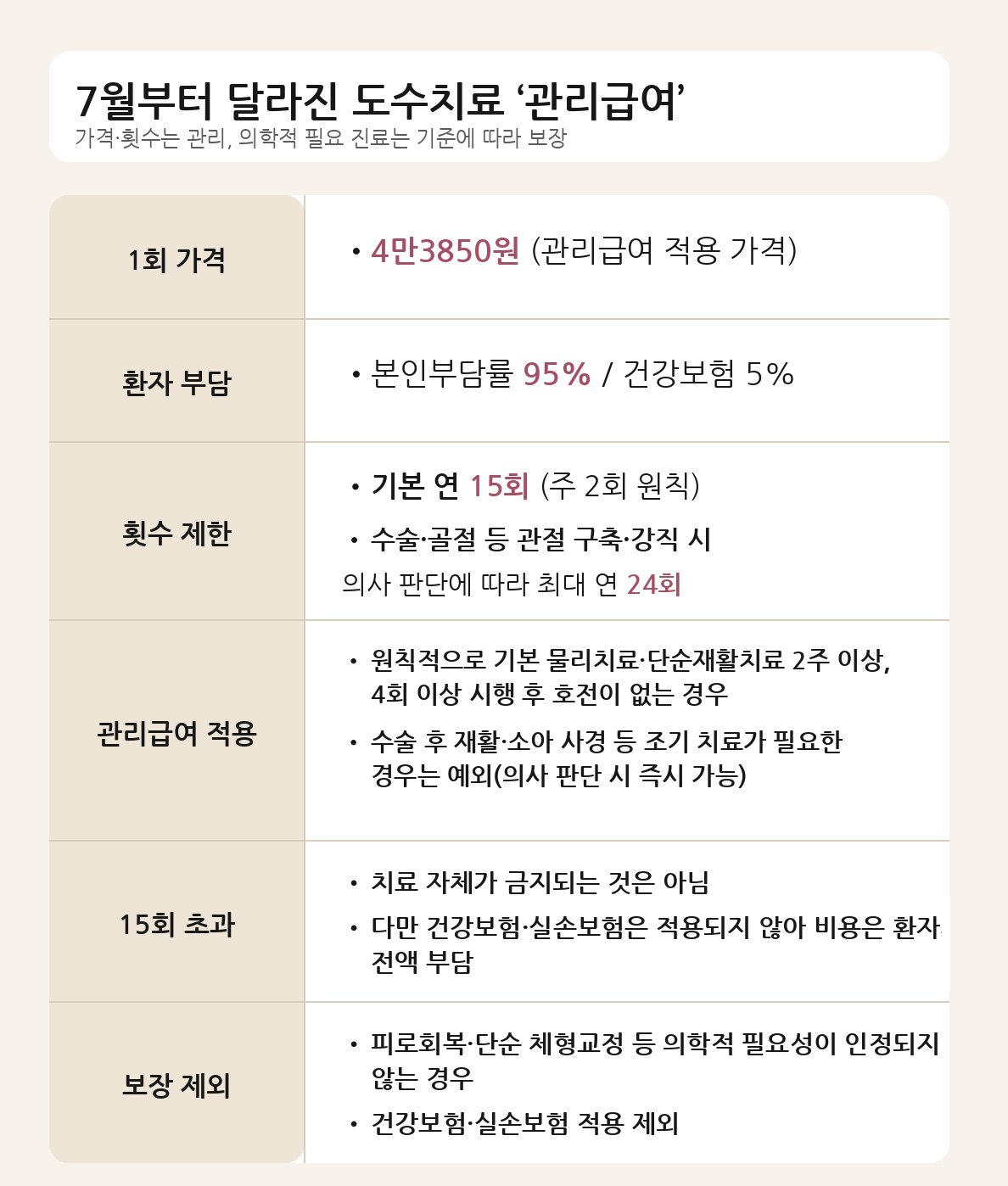
The Ministry of Health and Welfare has stepped in to clarify the new regulations. The ministry emphasizes that the system, which caps benefits at 43,850 won per session and generally limits coverage to twice a week or 15 sessions annually, is not intended to prohibit manual therapy or restrict patient rights. For specific medical conditions like post-surgery joint stiffness or pediatric torticollis, doctors can approve up to 24 sessions. Treatments beyond these limits will not be covered by national health insurance or private insurance, requiring patients to bear the full cost.
The government explains that the system aims to manage the overuse of non-covered medical services. Data suggests most patients utilize manual therapy 15 times or fewer per year. However, the transition has created significant disruption, with chronic pain patients and those with rare diseases expressing worries about treatment continuity. While the government assures that medically necessary treatments will continue, ongoing feedback from patients and clinics may necessitate adjustments to the new policy.
DistantNews Editorial
Originally published by Dong-A Ilbo in Korean. Translated, summarized, and contextualized by our editorial team with added local perspective. Read our editorial standards.
More Stories


From Our Blog

What Gets Lost (and Found) When News Is Translated

The Critical Role of Diaspora Media in Global News

What Travellers Should Know About Countries with Restricted Press

A Digital Nomad's Guide to Following Local News

How the Same Story Looks Different in Different Countries
