


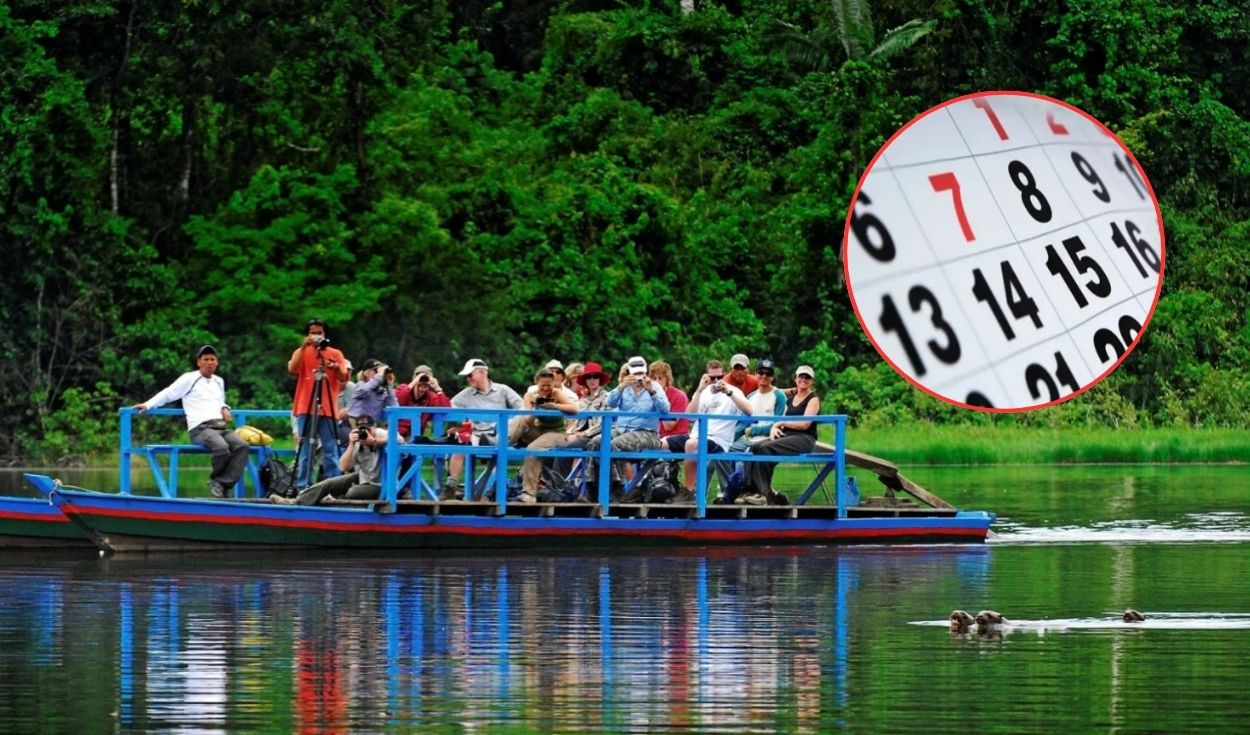
New Non-Working Day on July 10: Special Benefit for Public and Private Workers in Tambopata Province
Translated from Spanish, summarized and contextualized by DistantNews.
At a glance
News
Official statement
Approved/passed
- A new non-working day will be established on July 10 each year in the province of Tambopata, Peru.
- The initiative commemorates the historical anniversary of Puerto Maldonado, the region's capital.
- The non-working day will apply to both public and private sector workers in the province, with provisions for essential services.
The Permanent Commission of Congress has unanimously approved a bill to declare July 10 as a non-working day annually in the province of Tambopata, located in the Madre de Dios department of Peru. This measure aims to commemorate the historical anniversary of Puerto Maldonado, the provincial capital.
The approved bill, Project of Law 14718, received 24 votes in favor and establishes a specific labor regime for its implementation. It will benefit both public and private sector workers who carry out their activities within the Tambopata province. The legislation respects the corresponding labor regulations for each sector.
During the debate, Alex Paredes Gonzales, president of the Committee on Labor and Social Security, stated that the committee recognized the date as an event of special significance for the local population. The initiative seeks to highlight the importance of this celebration for the province and its regional capital.
The approved text also mandates that the Provincial Municipality of Tambopata and local governments within its jurisdiction coordinate with the Regional Government of Madre de Dios and other relevant entities. This coordination is necessary to ensure the continuity of essential services for citizens during the declared non-working day. The project clarifies that the holiday will not disrupt the provision of critical services, with authorities organizing necessary actions to maintain public attention.
The working group considered that the date represents an event of special relevance for the population of the area.
DistantNews Editorial
Originally published by La República in Spanish. Translated, summarized, and contextualized by our editorial team with added local perspective. Read our editorial standards.
More Stories


From Our Blog

What Gets Lost (and Found) When News Is Translated

The Critical Role of Diaspora Media in Global News

What Travellers Should Know About Countries with Restricted Press

A Digital Nomad's Guide to Following Local News

How the Same Story Looks Different in Different Countries
