


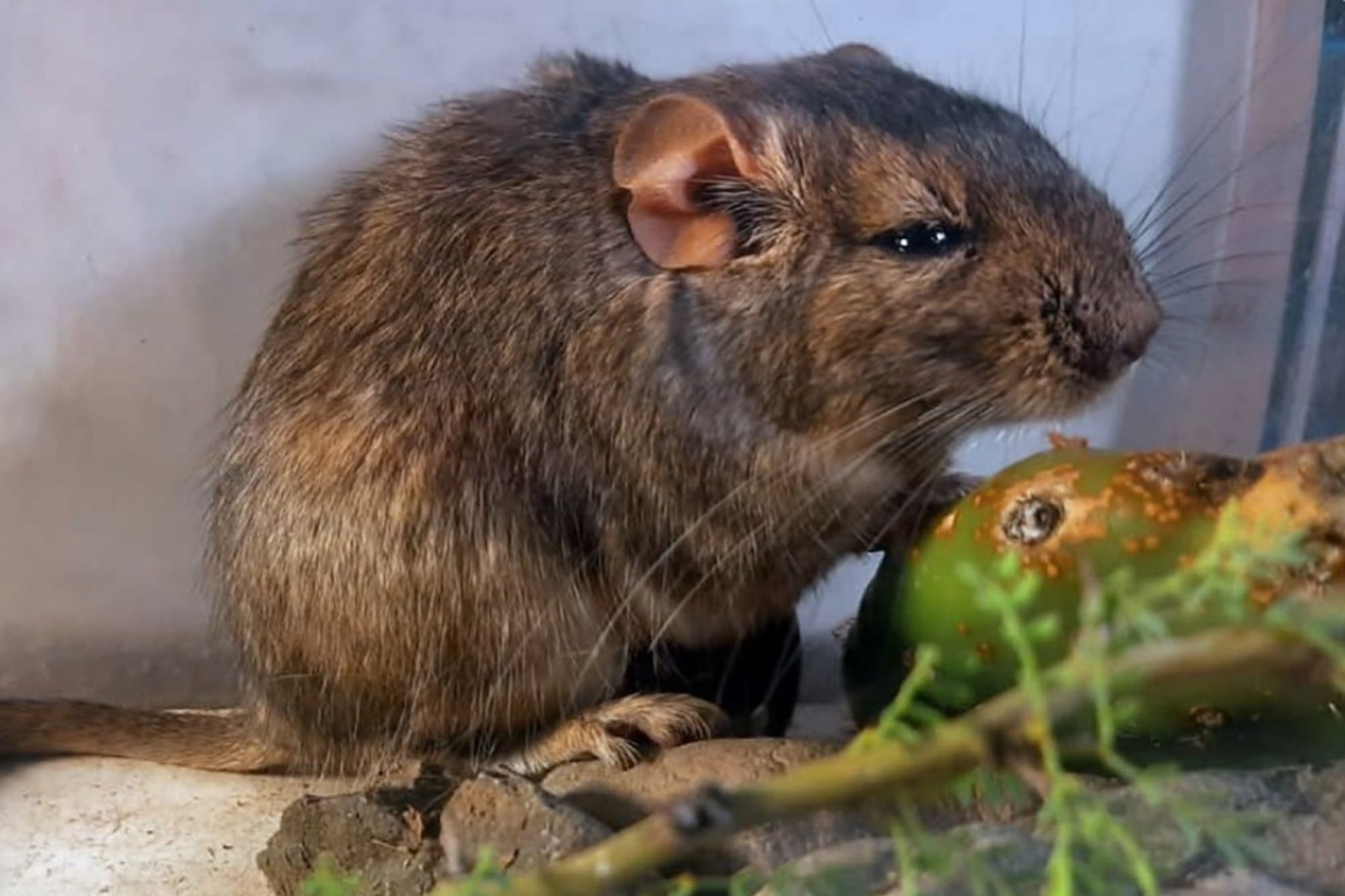
New rodent species discovered in Argentina named after Conicet
Translated from Spanish, summarized and contextualized by DistantNews.
At a glance
News
Official statement
Outcome reported
- Researchers in Argentina have discovered a new species of rodent in the Traslasierra National Park.
- The mammal, named *Apnoctomys conicetorum*, is related to vizcachas, capybaras, and maras and is restricted to a narrow habitat.
- The discovery highlights Argentina's biodiversity and the importance of protected areas for conservation.
A new species of mammal, a rodent belonging to the vizcacha rat group, has been discovered in Argentina's Traslasierra National Park. Researchers from the National Parks Administration (APN) and the National Scientific and Technical Research Council (Conicet) identified the species, which has been scientifically named *Apnoctomys conicetorum* in honor of Conicet.
The newly identified rodent is described as medium-sized, approximately 35 centimeters long with a long, furry tail. Its habitat is confined to a small strip of Chaco Serrano forest within the Sierra de Guasapampa, an area protected by the national park. Preliminary observations suggest its diet consists mainly of bromeliads, which are abundant in its environment.
This discovery is considered a significant contribution to understanding Argentina's biodiversity and underscores the critical role of protected areas in safeguarding species yet unknown to science. While over 20 new mammal species have been described in Argentina this decade, *Apnoctomys conicetorum* is the first new genus reported from field-captured specimens since 2000.
The scientific name honors both the APN and Conicet, recognizing their historical contributions to biodiversity conservation and scientific study in the country. The species exhibits a unique combination of morphological traits, including its distinct tail, grayish-brown dorsal coloration contrasting with a whitish belly, and a robust skull with a proportionally short snout.
This rodent is characterized by a unique combination of morphological traits, including a long and very hairy tail; grayish-brown dorsal coloration that contrasts with the whitish belly; robust skull, with a proportionally short snout.
DistantNews Editorial
Originally published by La Nación in Spanish. Translated, summarized, and contextualized by our editorial team with added local perspective. Read our editorial standards.
More Stories


From Our Blog

What Gets Lost (and Found) When News Is Translated

The Critical Role of Diaspora Media in Global News

What Travellers Should Know About Countries with Restricted Press

A Digital Nomad's Guide to Following Local News

How the Same Story Looks Different in Different Countries
