

New US Sanctions Tighten Grip on Hezbollah, Test Lebanon
Summarized and contextualized by DistantNews.
At a glance
News
Named sources
Context piece
- New U.S. sanctions target a network accused of transferring millions of dollars to Hezbollah.
- The sanctions signal a broader U.S. strategy shift, increasing pressure on Hezbollah and testing Lebanese institutions' oversight of financial flows.
- The U.S. Treasury linked the targeted network to a former Quds Force official, highlighting methods used to funnel support to proxy groups.
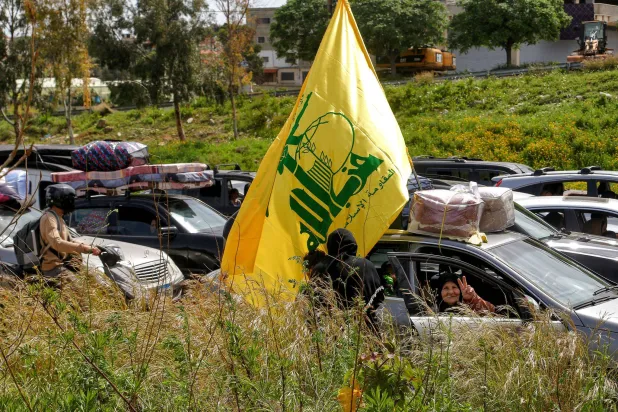
The United States has imposed new sanctions on Hezbollah, targeting individuals involved in a network allegedly moving millions of dollars to the group. This move signifies a broader shift in Washington's strategy, intensifying pressure on Hezbollah while simultaneously testing the Lebanese state's ability to oversee financial transfers and meet its obligations without exacerbating the country's economic crisis.
The network utilizes couriers travelling on commercial airline flights between Lebanon, Türkiye, the UAE, and Iran to move up to hundreds of millions of dollars between jurisdictions, providing an avenue outside the formal financial system for Hezbollah to obtain foreign currency and evade sanctions.
The U.S. Treasury Department's Office of Foreign Assets Control (OFAC) announced sanctions on 10 individuals identified as part of a network responsible for transferring cash to Hezbollah. According to OFAC, this network uses couriers traveling between Lebanon, Türkiye, the UAE, and Iran to move hundreds of millions of dollars outside the formal financial system, enabling Hezbollah to acquire foreign currency and evade sanctions. OFAC also re-designated Hezbollah for its service to the Iranian regime under the command of Iran's Revolutionary Guard Corps-Quds Force (IRGC-QF).
pose challenges for the Lebanese state and its security, judicial and financial institutions.
These sanctions place Lebanese banks, financial institutions, and regulatory bodies under increased U.S. scrutiny. They are being tested on their capacity to detect financial activities linked to Hezbollah, its institutions, or its networks. An official Lebanese source acknowledged that the sanctions "pose challenges for the Lebanese state and its security, judicial and financial institutions," emphasizing the need for tighter oversight of assets connected to Hezbollah to avoid further consequences.
tough US measures require tighter oversight of any assets linked to Hezbollah and its institutions, because any delay in doing so could leave the state facing consequences it can ill afford.
Beyond targeting specific individuals and entities, the sanctions convey a strong message to Lebanon itself. Analysts suggest that Washington is now classifying Hezbollah outside the traditional Lebanese framework, presenting it as an Iranian faction within the broader U.S. confrontation with Iran. This reclassification is expected to have repercussions within Lebanon for its authorities and official institutions, particularly given the country's ongoing political and financial instability.
dealing with Hezbollah under a new classification that places it outside the traditional Lebanese framework and presents it as an Iranian faction and part of the broader US confrontation with Iran.
DistantNews Editorial
Originally published by Asharq Al-Awsat. Summarized and contextualized by our editorial team with added local perspective. Read our editorial standards.
More Stories


From Our Blog

What Gets Lost (and Found) When News Is Translated

The Critical Role of Diaspora Media in Global News

What Travellers Should Know About Countries with Restricted Press

A Digital Nomad's Guide to Following Local News

How the Same Story Looks Different in Different Countries
