


New York Times reporters subpoenaed over Air Force One stories, raising press freedom concerns
Translated from English, summarized and contextualized by DistantNews.
At a glance
News
From a news agency
Context piece
- The Department of Justice subpoenaed New York Times reporters who wrote about security concerns regarding the new Air Force One jet.
- The subpoenas seek testimony from journalists Julian E. Barnes, Eric Lipton, Tyler Pager, and Eric Schmitt before a federal grand jury.
- Critics argue the move erodes press freedom and breaks with Justice Department practice of protecting reporters.
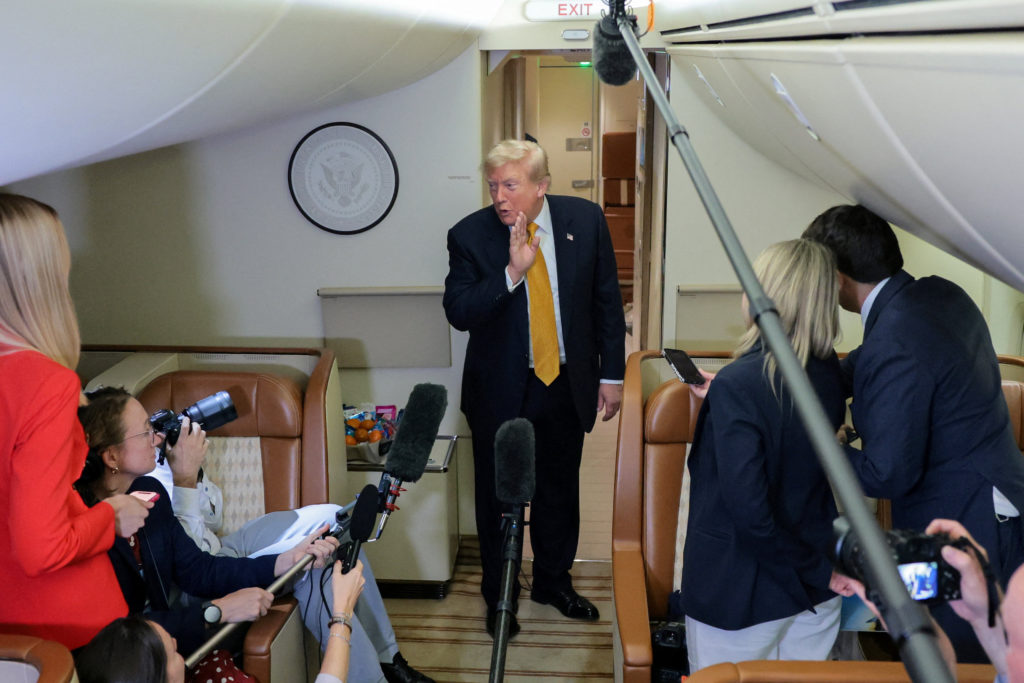
The Department of Justice has subpoenaed New York Times journalists who reported on security concerns surrounding the new, Qatari-gifted Air Force One jet. This action escalates President Donald Trump's campaign against the media, drawing condemnation for undermining press freedom.
The appearance of federal law enforcement agents on the doorstep of news reporters should shock the conscience of any American who believes in the Constitution and the press freedom it protects.
The subpoenas demand that reporters Julian E. Barnes, Eric Lipton, Tyler Pager, and Eric Schmitt testify before a federal grand jury in Manhattan next week. Federal agents reportedly delivered some subpoenas to the reporters' homes.
Trump's "war on the press is looking for another victim."
David McCraw, a lawyer for The Times, stated that federal law enforcement agents appearing at reporters' doorsteps should "shock the conscience of any American who believes in the Constitution and the press freedom it protects." Bruce D. Brown, president of the Reporters Committee for Freedom of the Press, called it Trump's "war on the press looking for another victim." He added that the subpoenas deviate from longstanding Justice Department practice, which treats seeking information from reporters as a last resort.
The subpoenas "break from longstanding Justice Department practice to protect the public interest and press independence by requiring prosecutors to only seek information from reporters as a last resort when all other avenues have been exhausted."
The Justice Department defended its actions, stating that reporters are not the targets, but rather those leaking classified information. They emphasized the importance of the press while also asserting their role in ensuring individuals entrusted with national secrets do not share classified information that impacts national security. The department acknowledged a "natural tension" but insisted they would not ignore the law or stop investigating leaks.
reporters are not the targets, those leaking classified information are.
DistantNews Editorial
Originally published by PBS NewsHour in English. Translated, summarized, and contextualized by our editorial team with added local perspective. Read our editorial standards.
More Stories


From Our Blog

How the Same Story Looks Different in Different Countries

What Gets Lost (and Found) When News Is Translated

The Critical Role of Diaspora Media in Global News

What Travellers Should Know About Countries with Restricted Press

A Digital Nomad's Guide to Following Local News
