


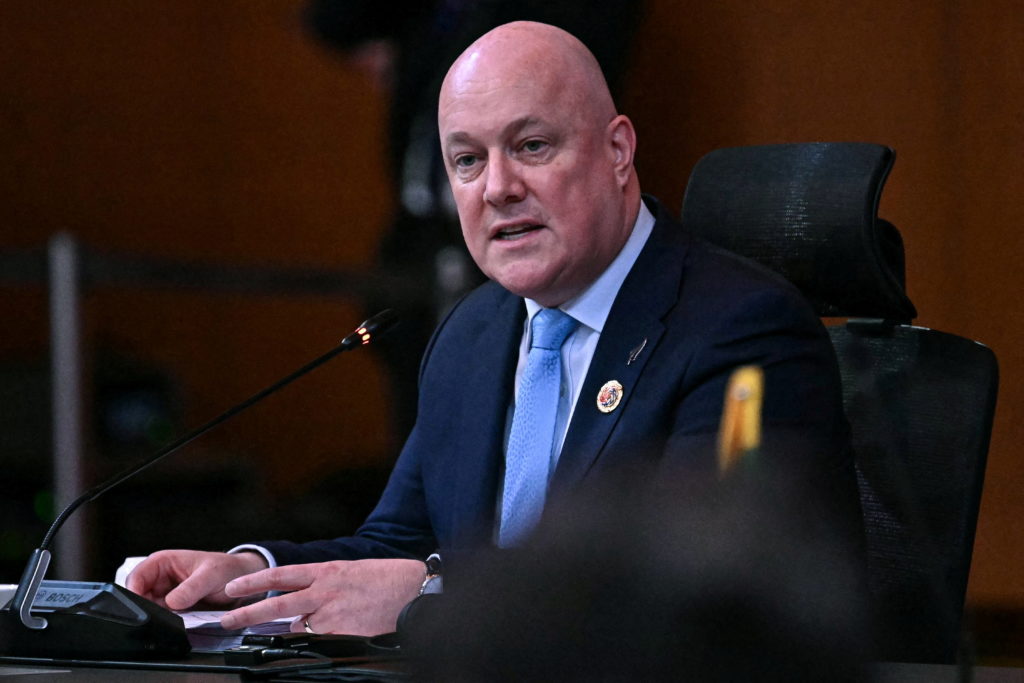
New Zealand PM proposes ban on social media for under-16s
Translated from English, summarized and contextualized by DistantNews.
At a glance
News
Named sources
Ongoing story
- New Zealand's Prime Minister Christopher Luxon proposed a law to ban children under 16 from using social media.
- Luxon cited harm to young people, including exposure to harmful content and addictive technology, affecting their mental health and education.
- The proposal faces significant opposition within the governing coalition, with two parties set to vote against it, jeopardizing its passage before Parliament dissolves for elections.
New Zealand Prime Minister Christopher Luxon has unveiled a proposed law that would ban children younger than 16 from accessing social media platforms. Luxon stated on Monday that the measure is necessary due to the "harm being done to a generation" of young people, citing concerns about exposure to harmful content and addictive technologies.
harm being done to a generation
The proposal, however, faces an uphill battle for passage. Two of the three parties in Luxon's coalition government have declared their intention to vote against the bill. This means that passage would hinge on securing support from opposition lawmakers, who have not yet revealed their voting intentions. Furthermore, there is insufficient time for the bill to complete the required three rounds of voting before Parliament dissolves on October 1, ahead of the November election.
Luxon's government aims to be among the latest worldwide to implement age restrictions on social media, following similar measures in other countries. Research from 2025 indicated that a third of New Zealand teenagers spend at least five hours daily on social media. Luxon argued that these platforms negatively impact teenagers' family life, mental health, sleep, and education.
Social media is exposing them to harmful content, addictive technology and pressures they are not equipped to deal with and it's affecting their family life, mental health, sleep, and education.
The proposed law would require platforms like Instagram, TikTok, Snapchat, and Facebook to implement "reasonable steps" to verify users are over 16. Methods could include checking existing account information, using facial age estimation, or employing digital ID services. Messaging apps like WhatsApp, online gaming platforms, and AI productivity apps are excluded. While no penalties are proposed for parents or children, tech companies could face fines up to 10% of their global revenue for non-compliance. The prospect of such a ban has already divided New Zealand's government, with the libertarian ACT and populist NZ First parties reiterating their opposition.
take reasonable steps
DistantNews Editorial
Originally published by PBS NewsHour in English. Translated, summarized, and contextualized by our editorial team with added local perspective. Read our editorial standards.
More Stories


From Our Blog

How the Same Story Looks Different in Different Countries

What Gets Lost (and Found) When News Is Translated

The Critical Role of Diaspora Media in Global News

What Travellers Should Know About Countries with Restricted Press

A Digital Nomad's Guide to Following Local News
