


Nigeria braces for floods as 27 states face high risk
Translated from English, summarized and contextualized by DistantNews.
At a glance
News
Named sources
New plan
- Nigeria's Meteorological Agency (NiMet) has issued a flash flood risk alert for July 1-10, warning of widespread rainfall.
- 27 states are at high risk due to saturated soils from heavy June rains, entering the peak of the rainy season.
- Authorities advise preventive measures, including clearing drains and following weather advisories, to mitigate potential disruptions.
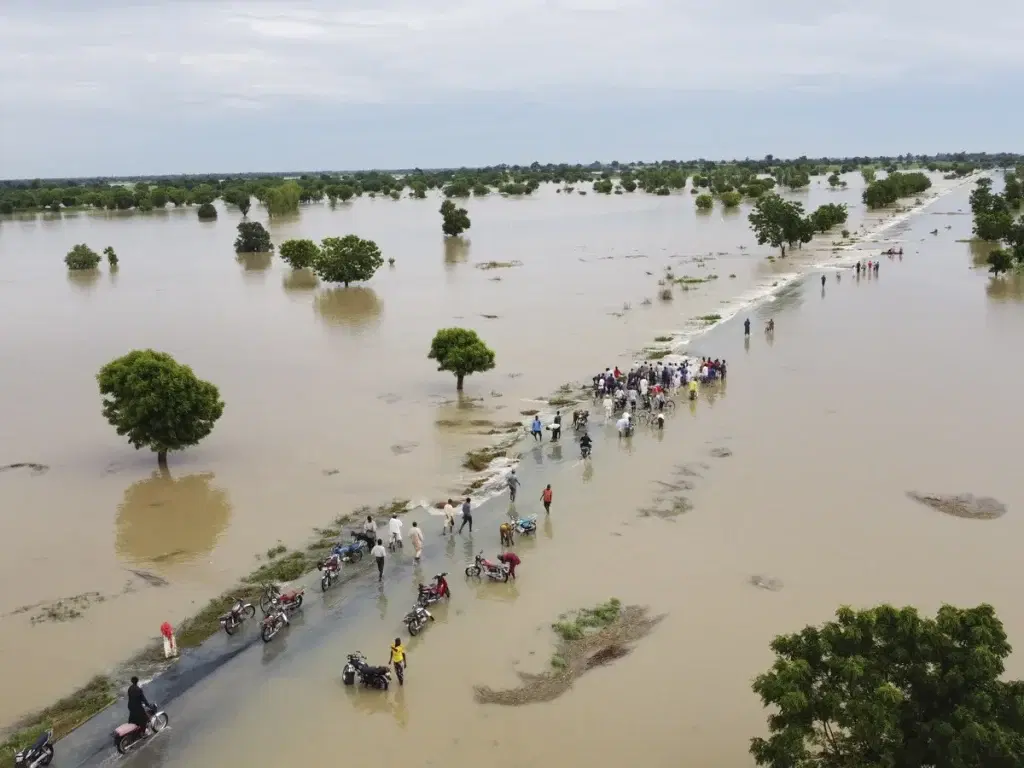
Nigeria faces an elevated risk of flash flooding as the country enters the peak of its rainy season, according to the Nigerian Meteorological Agency (NiMet). The agency issued a flash flood risk alert for the first ten days of July, anticipating widespread rainfall that could inundate 27 states.
Following widespread rainfall recorded across many parts of Nigeria in June, soils have become heavily saturated, reducing their ability to absorb additional rainfall.
NiMet explained that persistent heavy rainfall throughout June has saturated soils across much of the nation, significantly reducing their capacity to absorb further precipitation. This heightened saturation, combined with the expected downpours in early July, increases the likelihood of flash floods, particularly in low-lying, urban, coastal, and poorly drained areas.
States identified as being at high risk include Taraba, Sokoto, Borno, Zamfara, Kebbi, Katsina, Kaduna, Nasarawa, Plateau, Adamawa, Kwara, Kogi, Oyo, Ogun, Lagos, Osun, Ekiti, Delta, Edo, Abia, Imo, Anambra, Enugu, Akwa Ibom, Cross River, Rivers, and Bayelsa. The agency warned that the anticipated heavy rainfall could lead to severe consequences, including traffic gridlock, road closures, and disruptions to transportation networks.
As July marks the beginning of the peak rainy season, the risk of flash flooding is expected to increase, particularly in low-lying, urban, coastal, and poorly drained areas.
Furthermore, NiMet cautioned about potential temporary power and telecommunications outages, as well as poor visibility affecting motorists and aviation. Farmlands are vulnerable to waterlogging, potentially causing crop losses, and infrastructure such as roads and bridges could suffer damage. Health officials are also on alert for an increased risk of waterborne diseases associated with stagnant floodwaters.
The agency also cautioned that “temporary power and telecommunications outages may occur in affected areas, while poor visibility during intense rainfall could pose risks to motorists and aviation operations.”
To minimize the impact, NiMet urged residents and emergency responders to take immediate preventive actions. These include closely monitoring weather forecasts and advisories, keeping drains and waterways clear of debris, securing outdoor objects, reinforcing vulnerable structures, and avoiding travel through floodwaters. Emergency management authorities have also been advised to enhance preparedness efforts.
Follow weather forecasts and flash flood advisories issued by NiMet; keep drains, gutters, and waterways free of refuse to ensure the free flow of water.
DistantNews Editorial
Originally published by The Punch in English. Translated, summarized, and contextualized by our editorial team with added local perspective. Read our editorial standards.
More Stories

From Our Blog

How the Same Story Looks Different in Different Countries

What Gets Lost (and Found) When News Is Translated

The Critical Role of Diaspora Media in Global News

What Travellers Should Know About Countries with Restricted Press

A Digital Nomad's Guide to Following Local News
