

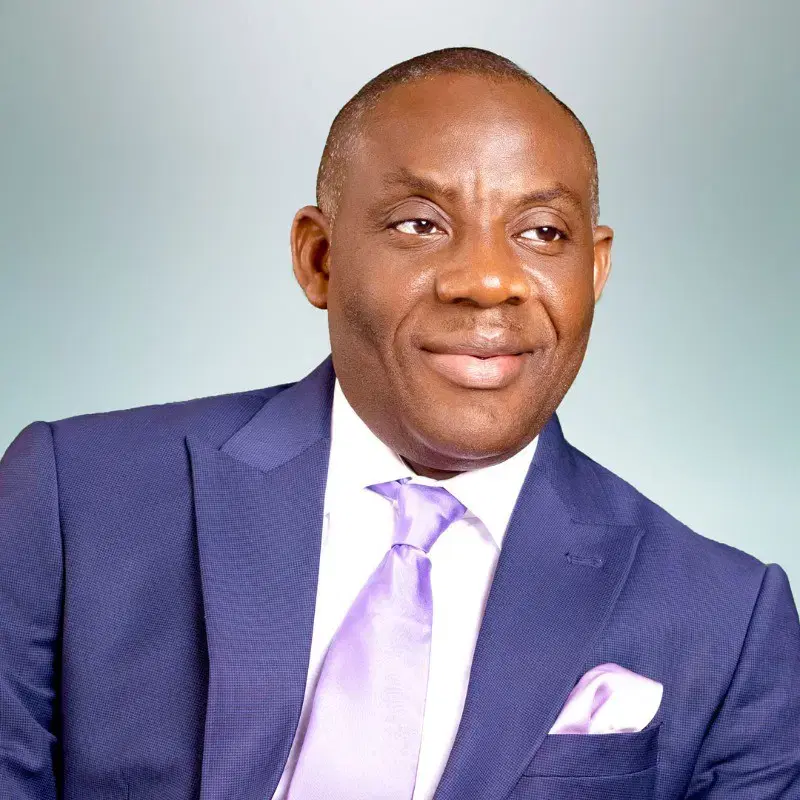

Nigeria must move from allocation-dependent economy to production-driven one, says Finance Minister
Translated from English, summarized and contextualized by DistantNews.
At a glance
News
Named sources
Context piece
- Nigeria's Finance Minister Taiwo Oyedele urged states to boost internally generated revenue and reduce dependence on federal allocations.
- He highlighted that recent economic reforms have significantly increased Federation Account allocations, but stressed that higher allocations alone do not guarantee development.
- Oyedele called for greater fiscal responsibility, accountability, and cooperation among government tiers to achieve sustainable economic growth driven by production and investment.
Nigeria must shift from an economy reliant on federal allocations to one driven by production, investment, and job creation, Finance Minister Taiwo Oyedele declared. Speaking at the 2026 National Council on Finance and Economic Development Retreat in Owerri, Imo State, Oyedele urged states to strengthen their internally generated revenue (IGR) and attract investments.
Nigeria must move from an allocation-dependent economy to one driven by production, investment and job creation.
Oyedele emphasized the need for stronger fiscal federalism, improved revenue generation, and economic diversification to build resilience against economic shocks. He pointed out that recent reforms, such as the removal of fuel subsidy and foreign exchange market unification, have substantially boosted revenues. Monthly Federation Account allocations, previously between N300 billion and N600 billion, now exceed N2 trillion, with N2.8 trillion distributed in June 2026.
The Federation Account Allocation Committee (FAAC) distributed N2.8 trillion to the Federal, State and Local Governments in June 2026.
However, the minister cautioned that increased allocations do not automatically translate to development. He insisted that higher revenues must lead to improved infrastructure, human capital development, productivity, and public services. Oyedele also advocated for prudent borrowing and greater transparency in public finance, warning against accumulating liabilities without credible repayment plans.
Higher allocations alone could not guarantee development, insisting that increased revenues must translate into improved infrastructure, human capital development, productivity and public services.
Imo State Governor Hope Uzodimma, represented by his Deputy Chinyere Ekomaru, echoed the call for states to be empowered to generate more revenue and manage resources efficiently. He stated that continued dependence on oil revenue is unsustainable and praised the retreat's theme, "Strengthening Fiscal Federalism for Equity, Sustainable Development and Economic Resilience in a Volatile Global Economy," as timely.
States must be empowered to generate more revenue and efficiently manage available resources, pointing out that continued dependence on oil revenue was no longer sustainable.
DistantNews Editorial
Originally published by The Punch in English. Translated, summarized, and contextualized by our editorial team with added local perspective. Read our editorial standards.
More Stories


From Our Blog

How the Same Story Looks Different in Different Countries

What Gets Lost (and Found) When News Is Translated

The Critical Role of Diaspora Media in Global News

What Travellers Should Know About Countries with Restricted Press

A Digital Nomad's Guide to Following Local News
