

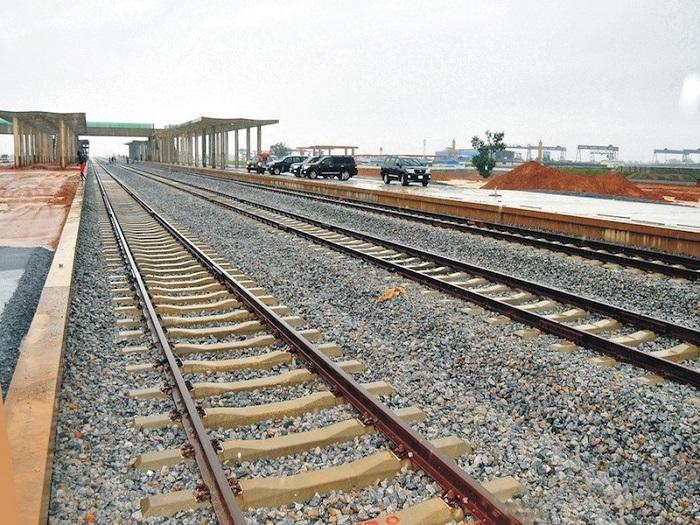

Nigeria Unveils Rail, Data and Bus Terminal Projects to Transform Transport
Translated from English and summarized by DistantNews. Read the original for the full story.
At a glance
News
Official statement
New plan
- Nigeria’s government outlined rail, water, air and bus terminal projects aimed at reducing the country’s dependence on road transport.
- Transport officials said several rail corridors are operational, while the Kaduna-Zaria-Kano line is nearing completion and could open by December.
- A proposed national transport data bank would centralize information on drivers, vehicles, operators and passengers, while rail freight would help reduce highway congestion and road damage.
Nigeria’s federal government is presenting rail expansion, a national transport database and standardized bus terminals as the foundation of a less road-dependent transport system.
Olufunso Adebiyi, permanent secretary at the Federal Ministry of Transportation, outlined the projects in Abuja at the opening of the 19th National Council on Transportation. The meeting focused on building an integrated system that uses rail, water and air transport alongside roads.
Summary of summaries
Adebiyi described the railway program as a rebirth of the sector. Operational corridors include Port Harcourt-Aba, Warri-Itakpe, Lagos-Ibadan and Abuja-Kaduna. He said the Kaduna-Zaria-Kano line was nearing completion and should open by December, while work was progressing on the Kaduna-Daura-Katsina, Katsina-Jibia-Maradi and Kano-Dutse routes.
The Kaduna-Zaria-Kano line is nearing completion and should open by December. The Kaduna-Daura-Katsina line is progressing, the Katsina-Jibia-Maradi link is targeted for next year, and work continues on Kano-Dutse.
The government also plans to expand rail freight. Adebiyi cited a recent train that carried 33 forty-foot containers from a port to Ibadan Dry Port, saying this effectively removed 33 trailers from the Lagos-Ibadan road. He said additional dry ports would move containers closer to their destinations and help reduce congestion, accidents and road damage.
The Federal Executive Council has approved a Smart National Transport Data Bank under a design-build-finance-operate-and-transfer model. Adebiyi said it would centralize records for drivers, vehicles, number plates and operators, and introduce standardized manifests at motor parks. The manifests would record vehicle, driver, passenger and destination details, helping authorities identify people involved in an accident and track traffic violations through computerized number plates.
Technically, you have removed 33 trailers from the Lagos-Ibadan road.
The government has also approved six standardized bus terminals as a pilot. The terminals are expected to include waiting areas, passenger information systems, police posts, vehicle inspection bays, mechanic workshops, restaurants and restrooms. Operators would have to meet safety and regulatory requirements, with sanctions for violations.
It will also introduce standardised manifests at motor parks to record vehicle, driver, passenger and destination details.
About this summary
Originally published by ThisDay in English. Translated, summarized, and contextualized automatically by DistantNews, with a note on how the source frames the story. Not individually reviewed before publishing. How this works.
More Stories
From Our Blog

How the Same Story Looks Different in Different Countries

What Gets Lost (and Found) When News Is Translated

The Critical Role of Diaspora Media in Global News

What Travellers Should Know About Countries with Restricted Press

A Digital Nomad's Guide to Following Local News
