


Nigerians are suffering, stop denying it, Anglican bishop tells FG
Summarized and contextualized by DistantNews.
At a glance
News
Named sources
Context piece
- An Anglican bishop has challenged Nigeria's Federal Government to acknowledge the widespread hardship faced by citizens.
- Bishop Josiah Idowu-Fearon stated that millions struggle to afford basic necessities and called for clear explanations of government actions to address the economic crisis.
- His comments come amid public debate over the economic reforms, including subsidy removal and foreign exchange adjustments, which have led to high prices for food and transportation.
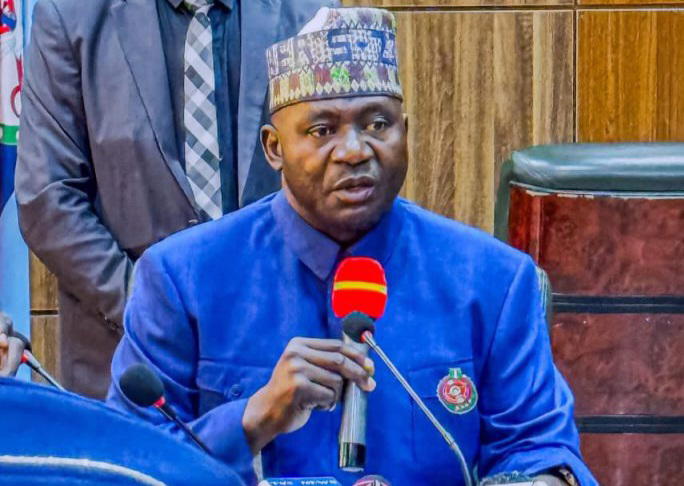
A prominent Anglican bishop has directly confronted Nigeria's Federal Government, urging it to cease denying the severe economic hardship gripping the nation. Bishop Josiah Idowu-Fearon, a former Secretary-General of the Anglican Communion Worldwide, asserted that millions of Nigerians are struggling to afford food and essential goods.
To say people are not suffering as a result of what is going on in our country, I think we are being economical with the truth.
Idowu-Fearon, who also founded the Kaduna Centre for the Study of Christian-Muslim Relations, called on the government to openly acknowledge the suffering and provide clear details on its strategies to combat the economic crisis. His remarks followed a meeting between President Bola Tinubu and Catholic archbishops and were made while addressing journalists on the economy, the 2027 elections, and the role of religious leaders in politics.
The bishop's statements highlight the ongoing public discontent with the Tinubu administration's economic reforms, such as the removal of fuel subsidies and foreign exchange adjustments. While the government defends these measures as necessary for economic stabilization and investment, citizens continue to report soaring costs for food, transportation, and utilities.
You can see suffering. There is no doubt about that.
Idowu-Fearon shared his firsthand observations from interactions with ordinary Nigerians, describing how rising prices have forced many to reduce their meals or skip them entirely. He noted that the economic strain even affects church attendance, as some congregants can no longer afford transportation to services. "You can see suffering. There is no doubt about that," he stated.
A good number of people just have one meal a day. They can hardly even have a balanced meal.
The cleric also questioned the allocation of increased government revenue, citing the Finance Minister's mention of trillions distributed to state and local governments. "And I ask, where is the money? Where is this money?" he demanded. He illustrated the severity of inflation by recalling a household item that increased in price from 500 Naira to 5,000 Naira, lamenting the difficulty in affording basic goods.
It’s not that the people themselves can afford to take either taxis or buses to the church. So, there is poverty.
DistantNews Editorial
Originally published by The Punch. Summarized and contextualized by our editorial team with added local perspective. Read our editorial standards.
More Stories


From Our Blog

How the Same Story Looks Different in Different Countries

What Gets Lost (and Found) When News Is Translated

The Critical Role of Diaspora Media in Global News

What Travellers Should Know About Countries with Restricted Press

A Digital Nomad's Guide to Following Local News
