


No Single Test Detects All Cancers, Imaging Specialist Explains
Translated from Romanian, summarized and contextualized by DistantNews.
At a glance
Interview
Sources not specified
Context piece
- Modern medicine offers various imaging techniques for early cancer detection, with the best method depending on the affected organ and clinical question.
- Computed tomography (CT) is useful for many cancers, particularly lung and kidney, but other methods like MRI may offer superior detail for specific organs like the prostate.
- While imaging plays a vital role in diagnosis and monitoring, no single test can detect all cancers, and definitive diagnosis often requires histopathological confirmation via biopsy.
Modern medicine employs a range of imaging examinations for the early detection of cancer, but no single investigation can identify all types. The optimal approach varies significantly based on the affected organ and the specific clinical questions being addressed.
When we talk about the diagnosis of oncological diseases, imaging plays an essential role. Practically, whenever we have a clinical or biochemical suspicion of neoplasia, highlighted by usual or extended analyses, regardless of its location, we complete the evaluation with an imaging examination dedicated to the organ or type of cancer suspected.
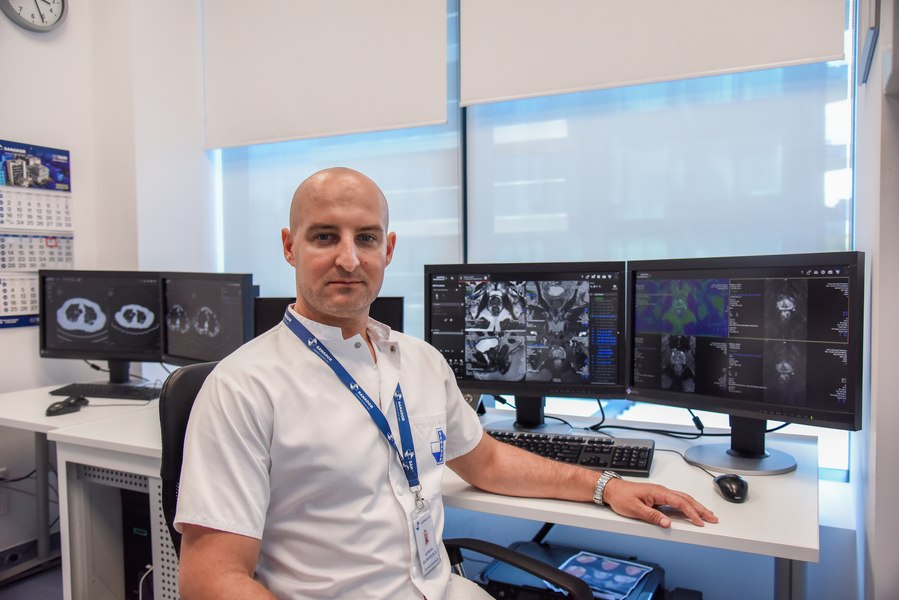
Dr. Adrian Dijmărescu, a primary care physician in radiology and medical imaging at SANADOR, explained that while computed tomography (CT) is crucial for identifying, characterizing, and staging many cancers, other imaging methods have specific indications. These techniques are essential for detecting and characterizing suspicious lesions, complementing clinical or biochemical suspicions raised by routine analyses.
Imaging is not only vital for initial diagnosis but also for monitoring cancer progression and assessing treatment effectiveness. For healthy adults, specific screening programs exist, such as mammography for breast cancer and complementary breast ultrasounds. Other screenings are recommended based on individual risk factors and the organs being evaluated.
There is no single investigation that detects all cancers.
Dr. Dijmărescu highlighted that CT scans can diagnose nearly any type of cancer due to their ability to investigate any body segment or organ. However, the scan is particularly beneficial for lung and kidney cancers. For certain conditions, like prostate cancer, multiparametric magnetic resonance imaging (MRI) provides more detailed information than a CT scan. Ultimately, a definitive diagnosis often requires histopathological confirmation through a biopsy.
In most situations, the definitive diagnosis requires histopathological confirmation through biopsy or examination.
DistantNews Editorial
Originally published by Adevărul in Romanian. Translated, summarized, and contextualized by our editorial team with added local perspective. Read our editorial standards.
More Stories



From Our Blog

What Gets Lost (and Found) When News Is Translated

The Critical Role of Diaspora Media in Global News

What Travellers Should Know About Countries with Restricted Press

A Digital Nomad's Guide to Following Local News

How the Same Story Looks Different in Different Countries
