

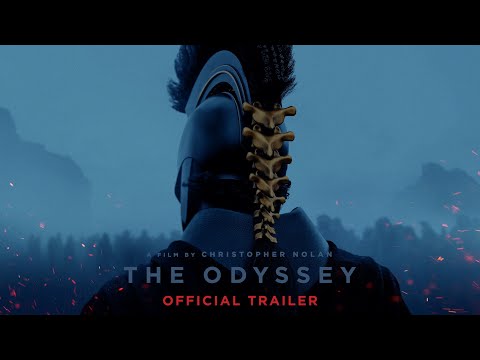

Nolan's 'Odyssey' Depicts Trojan Horse Scene Uniquely, Focusing on Trapped Warriors
Translated from Greek, summarized and contextualized by DistantNews.
At a glance
In-depth
Sources not specified
Context piece
- Christopher Nolan's new film adaptation of "The Odyssey" premiered in New York on July 14 with a nearly 12-meter-tall Trojan Horse replica.
- Nolan's film uniquely places the audience inside the Trojan Horse, realistically depicting the warriors' harsh conditions and psychological pressure during their days hidden within.
- Unlike previous adaptations that focused on the Trojans' decision to bring the horse into the city, Nolan's approach centers on the trapped warriors' experience, a scene he had envisioned for two decades.
Christopher Nolan's cinematic adaptation of "The Odyssey" has arrived, marked by a striking visual: a nearly 12-meter-tall Trojan Horse replica dominating the July 14 premiere's red carpet in New York. Similar effigies are touring the United States and Britain to promote the film, with the wooden horse also prominently featured on posters.
While Homer's epic does not detail the Trojan Horse episode extensively, this iconic symbol is central to Nolan's cinematic interpretation, according to a CNN analysis. Those who have seen the film understand why. Nolan uniquely transports viewers inside the Trojan Horse for the first time, offering a stark and realistic portrayal of the warriors' ordeal. The scene, lasting several minutes, highlights the suffocating confinement, physical exhaustion, and psychological strain endured by the soldiers as they waited, determined to achieve their objective.
The extremely difficult conditions during the warriors' stay inside the horse had never been presented on screen before.
Max Nelson, an associate professor of Classics at the University of Windsor, notes that no prior film adaptation has attempted to depict the events inside the Trojan Horse with such a dark and compelling intensity. "The extremely difficult conditions during the warriors' stay inside the horse had never been presented on screen before," he stated.
This scene has been in the back of my mind for a very long time. I had specific images of how I wanted to present the Trojan Horse.
Nelson points out that most film and television versions narrate the episode from the Trojans' perspective, focusing on their decision whether to bring the horse within their city walls. Nolan, however, chooses to tell the story from the viewpoint of the trapped warriors. The director himself has admitted to planning this scene for nearly twenty years. He was approached to direct "Troy" (2004) before Wolfgang Petersen was ultimately chosen. "This scene has been in the back of my mind for a very long time," Nolan told Empire magazine, adding, "I had specific images of how I wanted to present the Trojan Horse." In another interview, he specifically mentioned, "For 20 years, I've had the image of the horse sinking into the sand in my mind."
The film begins with the Trojans discovering the Trojan Horse on the shore. Sinon, the sole Greek left behind, explains it as a dedication to the gods, implying the besiegers have departed. Nolan then interrupts the narrative, returning to the Trojan Horse approximately 45 minutes later, as Menelaus recounts his experiences to Telemachus.
For 20 years, I've had the image of the horse sinking into the sand in my mind.
DistantNews Editorial
Originally published by Kathimerini in Greek. Translated, summarized, and contextualized by our editorial team with added local perspective. Read our editorial standards.
More Stories



From Our Blog

What Gets Lost (and Found) When News Is Translated

The Critical Role of Diaspora Media in Global News

What Travellers Should Know About Countries with Restricted Press

A Digital Nomad's Guide to Following Local News

How the Same Story Looks Different in Different Countries
