


Northern German States Demand Increased Federal Funding for Ports, Push Baltic Trade
Translated from German, summarized and contextualized by DistantNews.
At a glance
News
Named sources
New plan
- Northern German states convened in Rostock to coordinate positions on economy, energy, and ports, urging the federal government to increase funding.
- They demand the federal government raise annual port expansion funding from approximately 38 million euros to at least 500 million euros.
- The states also advocated for greater economic integration with the Baltic region, citing its potential trade volume surpassing that with the US or China.
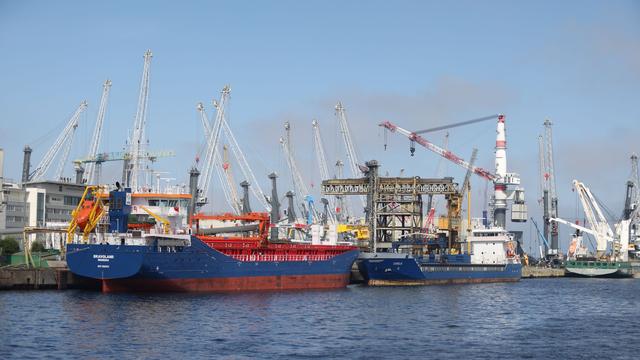
In a unified stance, the five northern German states convened in Rostock for a joint conference, aligning their priorities on economic development, energy policy, and crucially, the expansion of their vital port infrastructure. A primary demand directed at the federal government is a significant increase in financial support for port development.
Our expectation is that the federal government will significantly increase its financial resources for the expansion of the ports. They are of economic importance for all of Germany, also as energy hubs.
Mecklenburg-Vorpommern's Minister President Manuela Schwesig stated that the federal government must substantially boost its financial contribution for port expansion, emphasizing their economic importance for all of Germany, including their role as energy hubs. Currently, the federal government allocates roughly 38 million euros annually, a figure the northern states argue is insufficient. They are calling for this amount to rise to at least 500 million euros per year.
Schwesig highlighted the immense investment backlog facing German North Sea ports, estimated at eight billion euros. She pointed out that a single port basin renovation in Rostock alone costs 100 million euros, illustrating the scale of the funding gap. The minister president stressed that the significance of these ports extends beyond the northern region, serving as critical gateways for approximately 62% of German exports and about 60% of imports, and thus impacting the entire national economy.
The high energy costs remain a burden for consumers and businesses alike.
Beyond port funding, the conference also addressed energy issues, with Niedersachsen's Minister President Olaf Lies noting the persistent burden of high energy costs on consumers and businesses. The northern states agreed that a sustainable solution lies in the ambitious expansion of renewable energies. Additionally, Schwesig advocated for a stronger economic focus on the Baltic region, suggesting that its trade volume with Germany rivals or exceeds that with the United States or China, presenting an opportunity for enhanced regional cooperation and trade.
But the trade volume of Germany and the Baltic region, i.e., the Scandinavian countries, the Nordic countries, Denmark is higher than with the USA or China.
DistantNews Editorial
Originally published by Die Zeit in German. Translated, summarized, and contextualized by our editorial team with added local perspective. Read our editorial standards.
More Stories



From Our Blog

What Gets Lost (and Found) When News Is Translated

How the Same Story Looks Different in Different Countries

The Critical Role of Diaspora Media in Global News

What Travellers Should Know About Countries with Restricted Press

A Digital Nomad's Guide to Following Local News
