


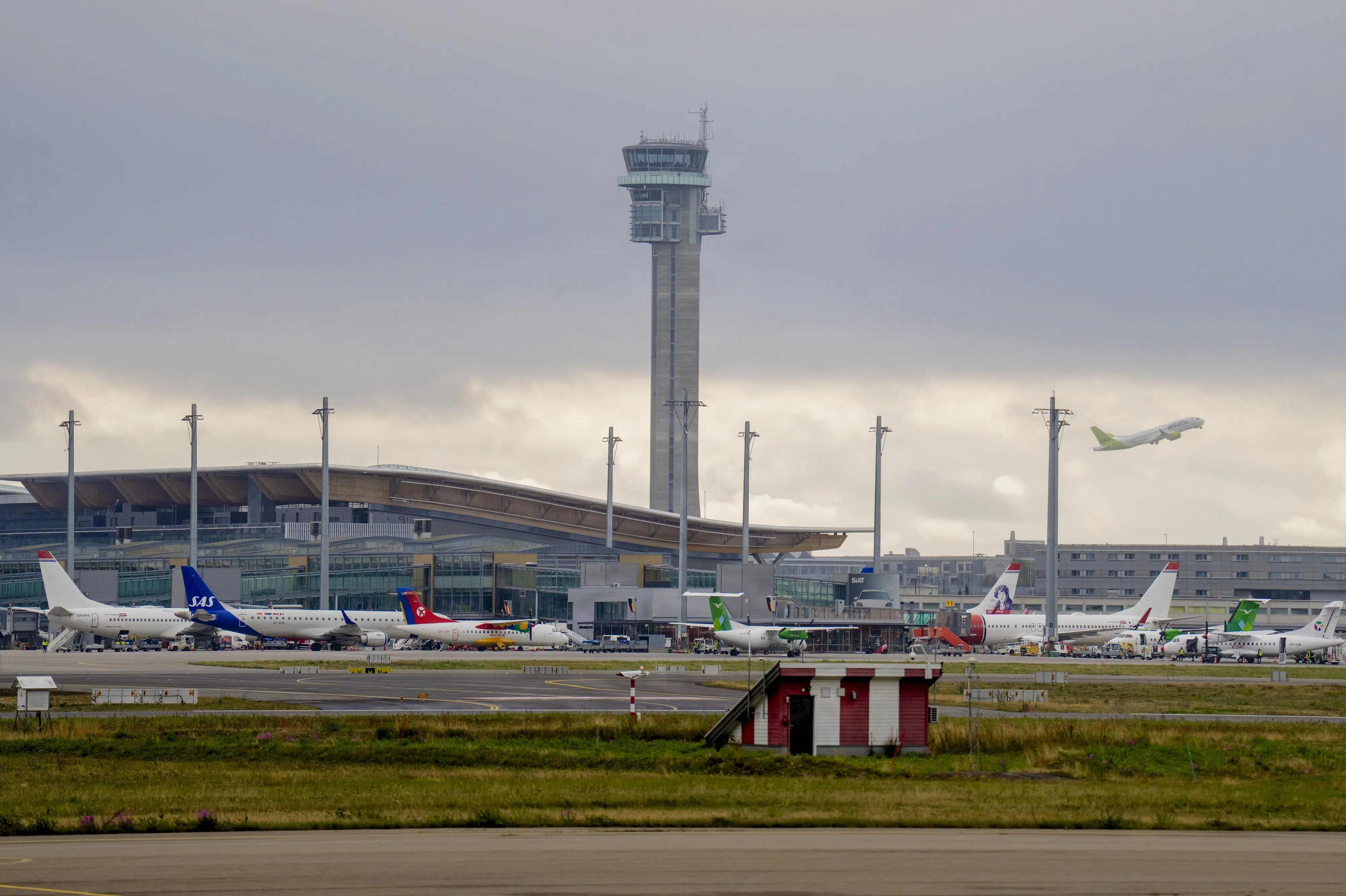
Norway air traffic strike leaves hundreds sleeping at Bergen Airport
Translated from Danish, summarized and contextualized by DistantNews.
At a glance
News
Sources not specified
Ongoing story
- A strike by air traffic controllers in Norway caused several hundred passengers to spend the night at Bergen Airport, Flesland.
- The strike, involving 12 air traffic controllers, led to the closure of airspace over Bergen and Stavanger for several hours.
- Hotels in the Bergen area were fully booked, forcing stranded passengers to sleep in the airport, with authorities providing blankets and field beds.
Passengers faced an uncomfortable night at Bergen Airport, Flesland, after an air traffic controllers' strike stranded hundreds on Saturday. The strike, initiated by 12 members of the Norwegian Air Traffic Controllers' Association, led to the closure of airspace over Bergen and Stavanger for several hours in the evening.
The message is practically that we have to spend the night at the airport.
Avinor, the state-owned company operating many Norwegian airports, estimated that between 300 and 400 people would spend the night at the airport. With hotels in Bergen fully booked, many travelers had no alternative but to sleep on the floor, on seats, or on benches. Some received assistance from family friends, while Avinor, in collaboration with the Red Cross, provided blankets and set up field beds.
The hotels in the Bergen area are simply fully booked. Therefore, some people unfortunately have to sleep at the airport tonight.
The disruption is expected to worsen on Sunday when the strike affects Oslo's Gardermoen Airport, the country's largest. Avinor warned that the closure between 6:30 AM and 11:30 AM would have nationwide consequences. Norwegian Air has already reported 72 cancellations due to the strike.
We have great understanding that it is frustrating for those affected.
The employer, Spekter, criticized the strike, noting that air traffic controllers are among Norway's highest-paid professionals. However, the head of the air traffic controllers' union, Robert Gjønnes, stated that the dispute is not about salary but about working hours, specifically breaks and life-phase policies.
At the same time, this is an extraordinary situation that is demanding and unpredictable.
DistantNews Editorial
Originally published by Berlingske in Danish. Translated, summarized, and contextualized by our editorial team with added local perspective. Read our editorial standards.
More Stories


From Our Blog

What Gets Lost (and Found) When News Is Translated

The Critical Role of Diaspora Media in Global News

What Travellers Should Know About Countries with Restricted Press

A Digital Nomad's Guide to Following Local News

How the Same Story Looks Different in Different Countries
