


Nostalgic 'Old Summer' Ends as Recent Years Prove Warmer
Translated from Estonian and summarized by DistantNews. Read the original for the full story.
At a glance
News
Sources not specified
Context piece
- Estonia experienced a summer that would not have stood out even 50 to 100 years ago, with no significant heatwaves.
- Average temperatures in June and July were 16.5 and 17.6 degrees Celsius, respectively, with August expected to be around 16.5 degrees.
- While historically moderate, recent decades show significantly warmer summers, making this year's latter half feel cooler by comparison.
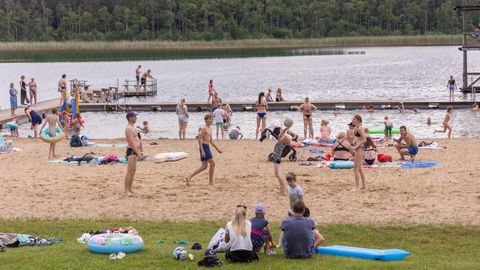
Estonia's summer this year, encompassing June, July, and August, proved to be rather unremarkable, failing to distinguish itself even when compared to temperatures from fifty or a hundred years ago. The season was characterized by a distinct lack of heatwaves, with maximum air temperatures in both June and July remaining just below the 30-degree Celsius mark.
According to data from Tartu-Tõravere, the average temperature in June was 16.5 degrees Celsius, rising slightly to 17.6 degrees in July. August is also expected to hover around 16.5 degrees. These figures represent a summer that, in a historical context, would have been considered moderately warm.
However, when contrasted with more recent periods, the difference becomes apparent. The average temperatures recorded between 1991 and 2020 show a marked increase. During this period, June averaged 15.5 degrees, July reached 18 degrees, and August averaged 16.7 degrees Celsius. This means that the latter half of the current summer, particularly August, feels comparatively cooler when measured against the warmer baseline of the last three decades.
About this summary
Originally published by Postimees in Estonian. Translated, summarized, and contextualized automatically by DistantNews, with a note on how the source frames the story. Not individually reviewed before publishing. How this works.
More Stories

/nginx/o/2025/03/07/16702014t1hd848.jpg)

From Our Blog

What Gets Lost (and Found) When News Is Translated

The Critical Role of Diaspora Media in Global News

What Travellers Should Know About Countries with Restricted Press

A Digital Nomad's Guide to Following Local News

How the Same Story Looks Different in Different Countries
