


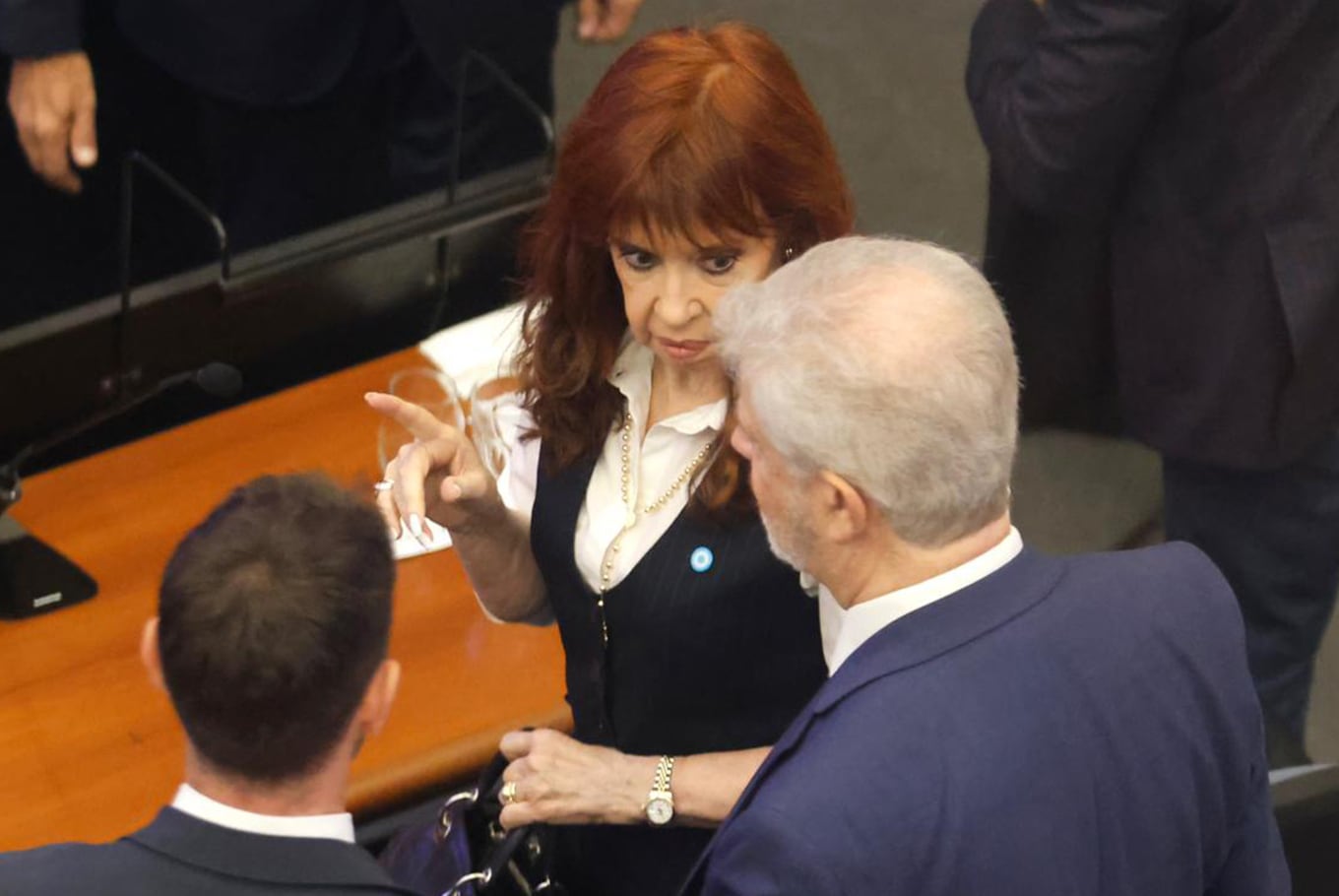
Notebooks trial: businessmen's schemes to extract cash from public works revealed, say prosecutors and ex-tax employees
Translated from Spanish, summarized and contextualized by DistantNews.
At a glance
News
Named sources
Context piece
- Argentine prosecutors are investigating alleged schemes by businessmen to extract cash from public works contracts during the Kirchner government.
- Employees of the former tax agency ARCA testified about suspicious financial transactions, including transfers to offshore accounts.
- The investigation, known as the
Argentine prosecutors are scrutinizing alleged maneuvers by businessmen to siphon funds from public works projects awarded during the previous Kirchner administration. The "Cuadernos de las Coimas" (Notebooks of Bribes) trial is hearing testimony from former employees of the tax agency ARCA, who detailed how companies formed temporary alliances to undertake specific projects.
These companies, such as Isolux, Fainser, Sacde, and Esuco, would receive advance payments or partial installments from the state for projects like the Río Turbio Thermoelectric Plant, awarded to Isolux in 2007 for over 2 billion pesos. ARCA employees identified that these firms then contracted with "unreliable contributors" – subcontractors issuing invoices of questionable validity.
Witnesses described how money left these companies without verifiable services rendered. This allowed the businessmen to reflect these movements in their accounting as ordinary commercial payments. One employee, Verónica Iglesias, testified about her transfer from a managerial role to an advisory position after flagging accounting inconsistencies, stating she received no explanation for the move.
Another ARCA employee, María Marta Criscuolo, revealed that their investigation traced money movements to an intermediary in New York, which then went to Banca Privada d'Andorra. This information pertained to SACDE, formerly IECSA S.A., a company then owned by Angelo Calcaterra, a cousin of former President Mauricio Macri. Criscuolo also noted that IECSA's joint venture had engaged in purchasing dollars for cash holdings, with the company reporting that the dollars were delivered in cash to proxies of the joint venture. The investigation suggested that approximately three million dollars were acquired in two or three separate transactions.
DistantNews Editorial
Originally published by La Nación in Spanish. Translated, summarized, and contextualized by our editorial team with added local perspective. Read our editorial standards.
More Stories

From Our Blog

What Gets Lost (and Found) When News Is Translated

The Critical Role of Diaspora Media in Global News

What Travellers Should Know About Countries with Restricted Press

A Digital Nomad's Guide to Following Local News

How the Same Story Looks Different in Different Countries
