

Nova Scotia 911 dispatchers strike over wages and staffing concerns
Summarized and contextualized by DistantNews.
At a glance
News
Sources not specified
Ongoing story
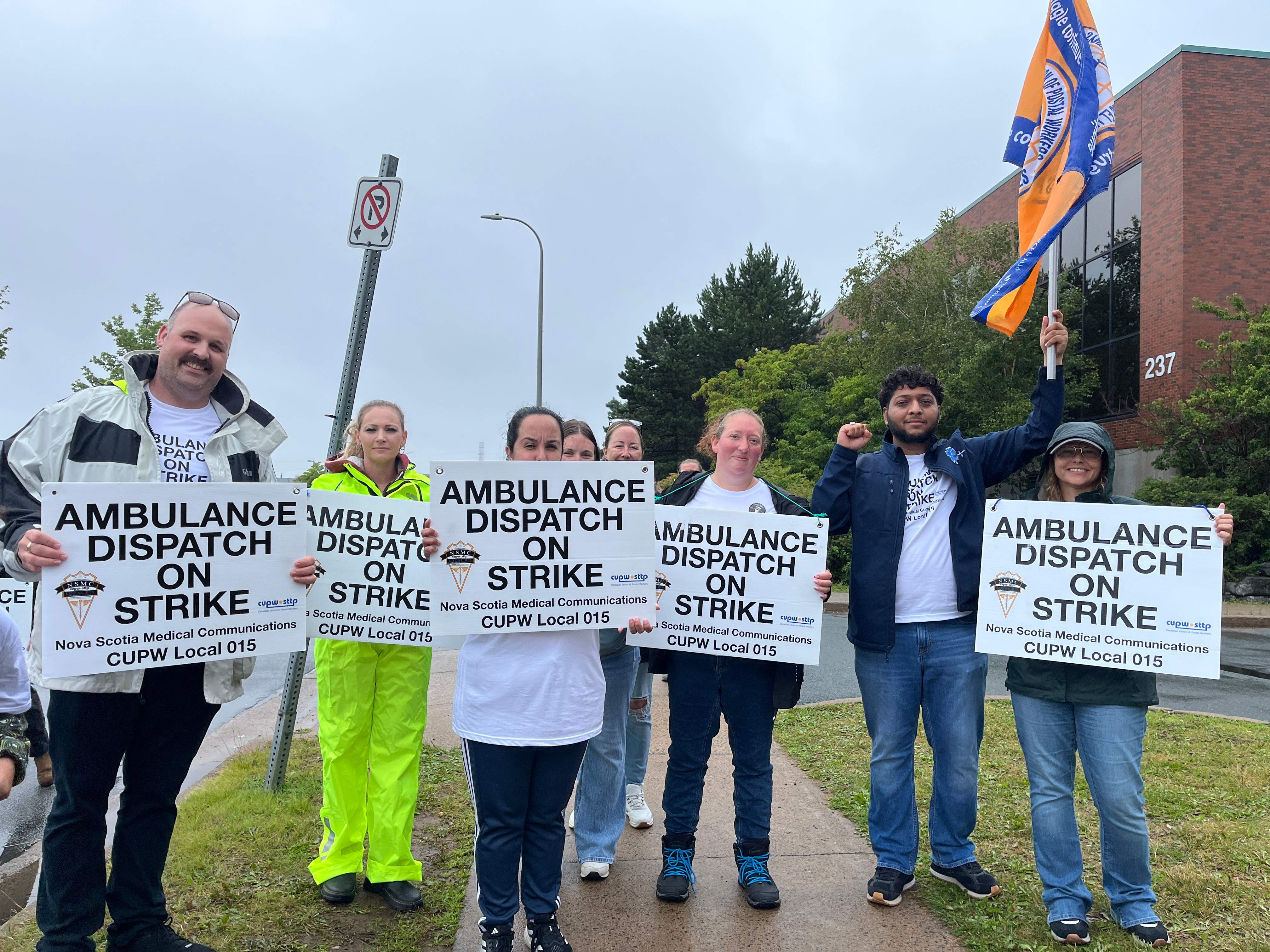
- Nova Scotia 911 dispatchers, represented by CUPW Local 015, have been on strike since July 17, demanding better wages and staffing.
- The union claims current staffing levels are dangerously low, even exceeding pre-strike numbers during the ongoing strike due to essential services agreements.
- Dispatchers highlight low pay compared to other services, leading to high turnover and impacting their ability to respond effectively to life-or-death calls.
Emergency dispatchers across Nova Scotia are striking for better wages and staffing, two weeks into their job action. The Canadian Union of Postal Workers (CUPW) Local 015, representing the workers who handle 911 medical calls and dispatch ambulances, says bargaining with employer Emergency Medical Care Inc. (EMC) has stalled over these critical issues.
Every day when I come in, I’m asked to make quick decisions that have life or death consequences.
Workers on the picket line describe a stressful environment where limited resources and low pay take a significant toll. Jordan McVeigh, a communications training officer, stated, "Every day when I come in, I’m asked to make quick decisions that have life or death consequences." He advocates for more competitive pay to reduce turnover and bolster the dwindling workforce, emphasizing that retaining staff benefits everyone, including Nova Scotians.
We’d be able to keep more of the people that we hire and it would just be good for everyone, including people of Nova Scotia.
The union asserts that staffing levels hit "dangerously" low points in 2025. Under the province's essential services agreement, EMC must maintain 20 dispatchers during the strike. CUPW's Atlantic lead negotiator, Craig Power, pointed out this number is higher than average weekday staffing when workers are not on strike. He also noted a significant pay disparity, with non-paramedic dispatchers earning about $8 less per hour than their paramedic colleagues for the same work, contributing to high turnover.
That’s 33 per cent higher than the average staffing levels in 2025 during the weekdays, and we are on strike.
EMC, a private company contracted by Nova Scotia's Emergency Health Services, stated its commitment to the bargaining process and reaching a fair agreement. The province's Department of Health and Wellness expressed trust that both parties will strive for a resolution. Meanwhile, dispatchers like McVeigh continue to emphasize that competitive wages are key to maintaining their ability to help people, especially when facing a stressful job with high staff departures.
They can go to the police, they can go to Costco and make the same amount of money, right?
DistantNews Editorial
Originally published by Global News. Summarized and contextualized by our editorial team with added local perspective. Read our editorial standards.
More Stories



From Our Blog

What Gets Lost (and Found) When News Is Translated

The Critical Role of Diaspora Media in Global News

What Travellers Should Know About Countries with Restricted Press

A Digital Nomad's Guide to Following Local News

How the Same Story Looks Different in Different Countries
