


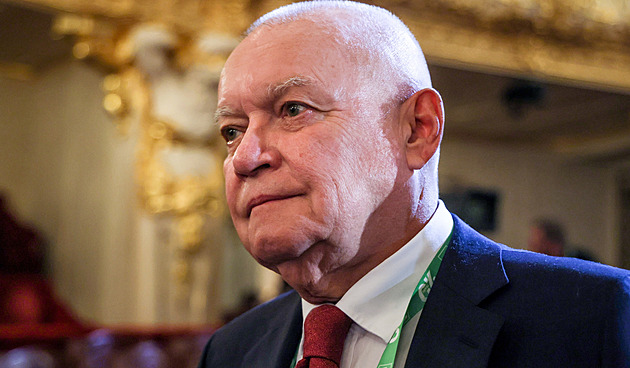
 Image: Mikhail Metzel / TASS / Profimedia Profimedia.cz
Nuclear doomsayer disappears from Russian TV
Translated from Czech and summarized by DistantNews. Read the original for the full story.
At a glance
News
Sources not specified
Context piece
- Dmitry Kiselyov, a prominent Russian TV host known for his hawkish rhetoric, has disappeared from the airwaves.
- His show, which previously featured strong anti-US statements, has seen a significant drop in viewership.
- The decline in ratings led to the program's removal from the television schedule.
Dmitry Kiselyov, a Russian television host notorious for his aggressive anti-Western pronouncements, has seemingly vanished from the public eye. Kiselyov, who once famously stated that Russia possessed the capability to reduce the United States to "nuclear ash," had carved out a prominent position in Russian media through his hawkish commentary.
However, his flagship program has recently experienced a dramatic decline in viewership. This sharp drop in ratings has reportedly led to the show's removal from the broadcast schedule, marking a significant, albeit quiet, exit for a figure who often amplified state narratives.
The disappearance of Kiselyov from his regular television slot raises questions about the longevity of his particular brand of state-aligned media influence. While his past statements often generated international attention and concern, the current circumstances suggest a shift in the media landscape or a reassessment of his platform's effectiveness.
Russia is the only country that has the capacity to turn the United States into nuclear ash
About this summary
Originally published by iDNES in Czech. Translated, summarized, and contextualized automatically by DistantNews, with a note on how the source frames the story. Not individually reviewed before publishing. How this works.
More Stories



From Our Blog

What Gets Lost (and Found) When News Is Translated

The Critical Role of Diaspora Media in Global News

What Travellers Should Know About Countries with Restricted Press

A Digital Nomad's Guide to Following Local News

How the Same Story Looks Different in Different Countries
