


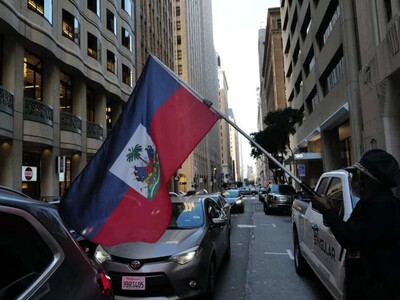
NYC begins firing Haitian workers after TPS termination
Translated from Spanish, summarized and contextualized by DistantNews.
At a glance
News
Named sources
New plan
- New York City is beginning to dismiss Haitian municipal employees who were in the U.S. under Temporary Protected Status (TPS) after its termination.
- Mayor Zohran Mamdani stated the city must comply with federal directives to review work authorizations and terminate employment for those without alternative legal status.
- The move has raised concerns among Haitian residents about potential deportations and the impact on families who have lived in the city for years.
New York City is initiating the dismissal of Haitian municipal employees whose Temporary Protected Status (TPS) has been terminated by the federal government. Mayor Zohran Mamdani announced that the city administration has been instructed to review the work authorizations of Haitian TPS beneficiaries and remove those who cannot demonstrate another legal pathway to employment in the country.
Only President Trump has the power to reinstate TPS or grant 'Deferred Enforced Departure' (DED) to the affected TPS beneficiaries.
The exact number of affected employees remains unspecified by the City Hall. However, officials cited by The New York Times suggest that at least dozens, potentially hundreds, of municipal workers could lose their jobs. This action follows recent court decisions allowing the termination of TPS for Haitian citizens, a program that had enabled thousands to reside and work legally in the U.S. due to conditions in their home country.
The Haitian community is an indispensable part of New York City.
Despite the obligation to enforce federal directives, Mayor Mamdani has publicly appealed to President Donald Trump to reinstate TPS or grant Deferred Enforced Departure (DED) to the affected individuals. Mamdani emphasized that many TPS beneficiaries have lived in New York for decades, contributing to the city's fabric through their work and families. He described the Haitian community as an "indispensable part of New York City" and highlighted their contributions to sectors like healthcare, construction, and hospitality, calling the situation one of "incredible instability."
They work. They have children, and now we are going to separate them from their children, from everything they have worked for for 15 years.
The announcement has sparked significant anxiety within New York's Haitian community. Residents fear that those losing their protected status could face deportation proceedings. Many have lived in the city for years, established families, and built lives. One 55-year-old Haitian woman expressed deep concern about families being separated, stating, "They work. They have children, and now we are going to separate them from their children, from everything they have worked for for 15 years." Another resident, aged 78, voiced fears about returning to Haiti due to the ongoing violence and insecurity, noting, "Most people are afraid to go back to Haiti now, most people because it is dangerous."
Most people are afraid to go back to Haiti now, most people because it is dangerous.
DistantNews Editorial
Originally published by Diario Libre in Spanish. Translated, summarized, and contextualized by our editorial team with added local perspective. Read our editorial standards.
More Stories


From Our Blog

What Gets Lost (and Found) When News Is Translated

The Critical Role of Diaspora Media in Global News

What Travellers Should Know About Countries with Restricted Press

A Digital Nomad's Guide to Following Local News

How the Same Story Looks Different in Different Countries
