


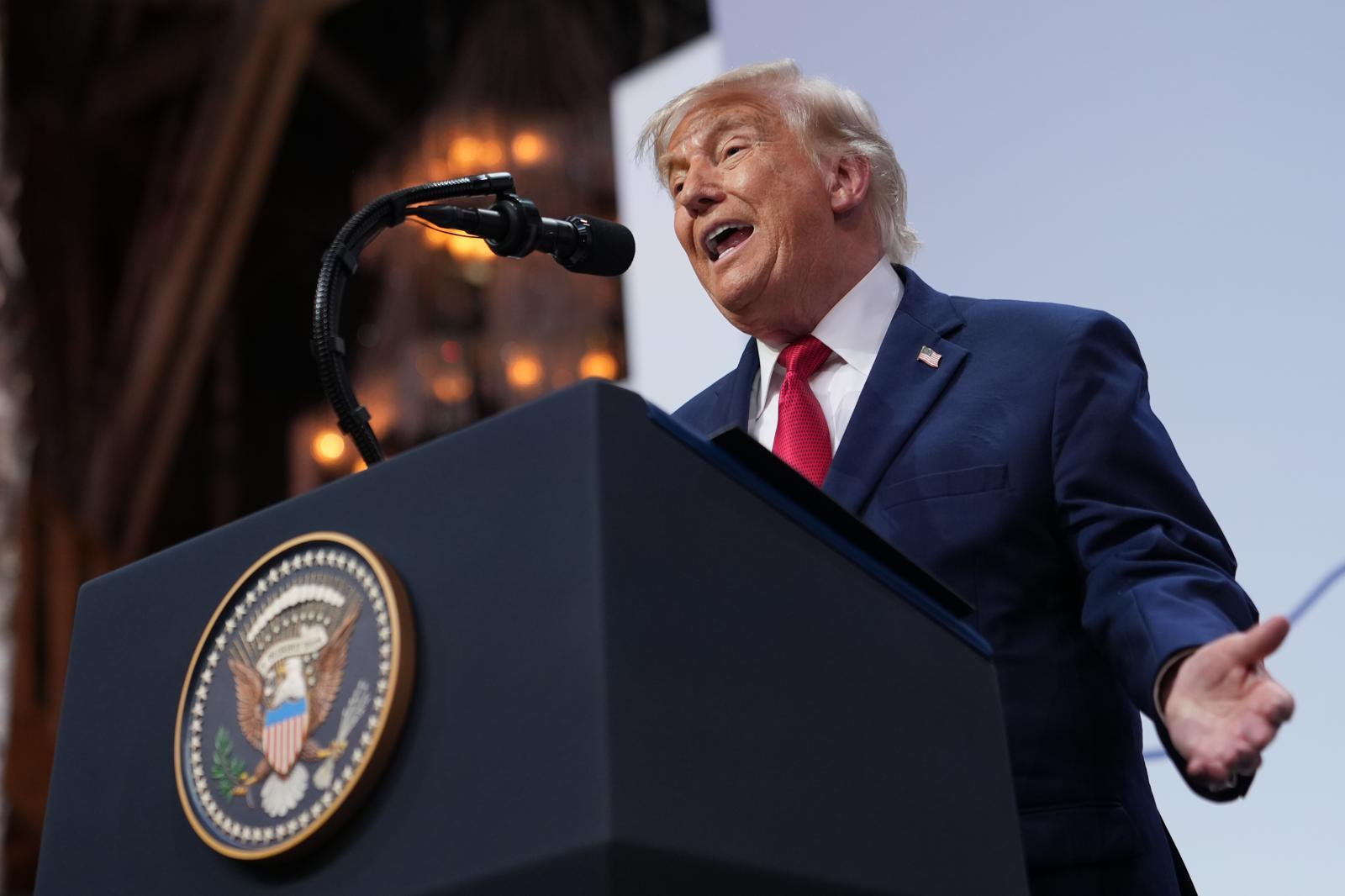
NYT: Trump leveraged presidency for unprecedented earnings, wealth triples
Translated from Korean, summarized and contextualized by DistantNews.
At a glance
News
Official statement
Context piece
- Donald Trump's wealth has reportedly tripled since the start of his second presidential term, reaching at least $3.4 trillion won (approx. $2.2 billion USD).
- The New York Times reported that Trump has earned an "unprecedented amount of money" by leveraging his presidency.
- His earnings from virtual asset-related businesses are projected to reach $2.17 trillion won (approx. $1.4 billion USD) in 2025, with past actions like pardoning a crypto mogul and signing stablecoin legislation potentially influencing this.
Donald Trump has significantly increased his wealth since beginning his second term as U.S. president, reportedly tripling his assets to at least 3.4 trillion won (approximately $2.2 billion USD), according to a recent report. The New York Times highlighted that Trump has earned an "unprecedented amount of money" by leveraging his presidential position.
Financial disclosures released by the U.S. Office of Government Ethics show that Trump earned at least $2.2 billion USD last year. This figure is more than triple the $622 million USD he earned in the year before his inauguration. The actual value of his assets could be considerably higher, as U.S. federal financial disclosure forms only require reporting asset values up to "over $50 million."
earned an unprecedented amount of money by leveraging the presidency
Projections indicate that Trump's virtual asset-related businesses could generate at least $1.4 billion USD in 2025. The New York Times suggested that Trump's actions, such as pardoning cryptocurrency mogul Changpeng Zhao in October and signing legislation promoting stablecoins in July, may have influenced these earnings.
Experts note a stark contrast between Trump's approach and that of previous presidents. Megan Gorman, a tax attorney and author of "All the Presidents' Money," stated that past presidents have taken steps to distance themselves from potentially conflicting business interests. For instance, former President George W. Bush sold his stake in the Texas Rangers baseball team before taking office, and former President Jimmy Carter transferred the management of his peanut farm to an independent trustee. These actions aimed to avoid potential conflicts of interest, a path Trump has not followed.
Past presidents have taken steps to distance themselves from potentially conflicting business interests.
DistantNews Editorial
Originally published by Dong-A Ilbo in Korean. Translated, summarized, and contextualized by our editorial team with added local perspective. Read our editorial standards.
More Stories


From Our Blog

What Gets Lost (and Found) When News Is Translated

The Critical Role of Diaspora Media in Global News

What Travellers Should Know About Countries with Restricted Press

A Digital Nomad's Guide to Following Local News

How the Same Story Looks Different in Different Countries
