


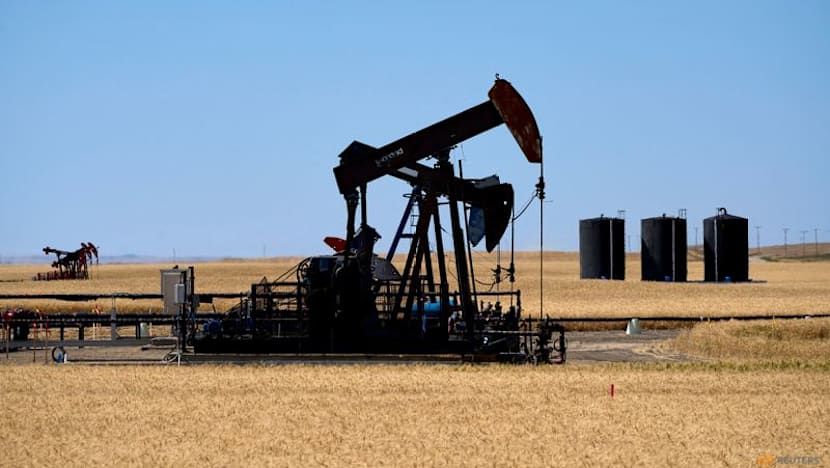
Oil falls after US, Iran talks conclude in Doha
Summarized and contextualized by DistantNews.
At a glance
News
Named sources
New plan
- Oil prices fell in early Thursday trade as Iran and the U.S. concluded indirect talks in Qatar.
- The talks focused on maritime traffic in the Strait of Hormuz, which handles a significant portion of global oil supply.
- Expectations of oversupply and potential OPEC+ output hikes are also contributing to the downward pressure on prices.
Oil prices dipped in early Thursday trading following news that Iran and the United States had made "positive progress" in indirect talks held in Qatar. The discussions centered on the critical Strait of Hormuz, a vital chokepoint for global oil transport.
Iran and the U.S. had made "positive progress" in indirect talks
Brent crude futures saw a 1.02 percent decrease, settling at $70.84 a barrel, while U.S. West Texas Intermediate crude fell 1.21 percent to $67.75 a barrel. Both benchmarks had previously dropped over 1 percent, reaching their lowest levels in four months.
Iran is determined to win international recognition of its control over the strait even if it has to do so by force
Sources indicated that negotiators spent two days in Doha discussing maritime traffic and the unfreezing of Iranian assets. Despite partial resumption of traffic, recent exchanges of strikes between the U.S. and Iran, following an Iranian attack on a cargo ship, add a layer of tension. Iran has signaled its intent to impose tolls on shipping starting mid-August.
oil flows through the waterway had returned to pre-war levels
Adding to the downward pressure, expectations of oversupply are growing. Haitong Futures noted that as the strait remains open and crude oil flows, market competition is driving prices lower. Furthermore, OPEC+ oil-producing countries are reportedly nearing an agreement to increase their output targets by approximately 188,000 barrels per day from August, a move that could further suppress prices.
As the strait stays open and crude oil flows out, competition for market share keeps pushing oil prices down, and there are growing expectations of oversupply
DistantNews Editorial
Originally published by CNA. Summarized and contextualized by our editorial team with added local perspective. Read our editorial standards.
More Stories


From Our Blog

What Gets Lost (and Found) When News Is Translated

The Critical Role of Diaspora Media in Global News

What Travellers Should Know About Countries with Restricted Press

A Digital Nomad's Guide to Following Local News

How the Same Story Looks Different in Different Countries
