


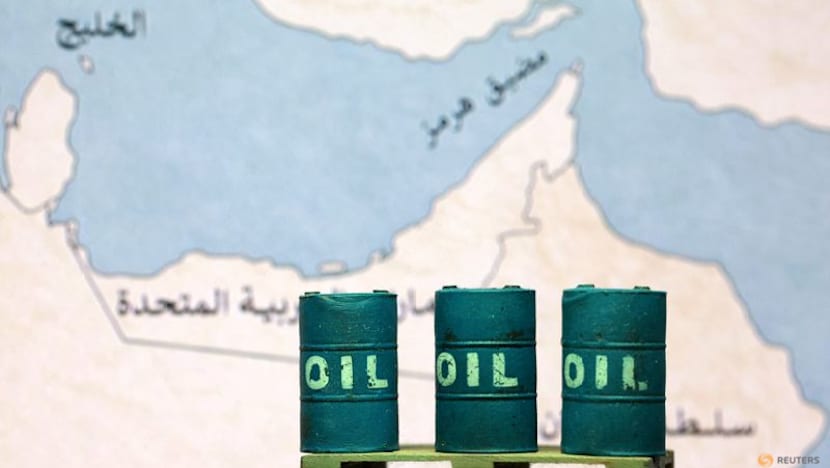
Oil prices dip 1% amid hopes for Iran diplomatic solution
Translated from English, summarized and contextualized by DistantNews.
At a glance
News
Named sources
Context piece
- Oil prices dropped by 1% as markets assessed a pause in U.S. strikes against Iran, fostering hopes for a diplomatic resolution.
- Brent crude futures fell 0.6% to $87.82 a barrel, and U.S. West Texas Intermediate crude was down 0.8% at $81.95.
- Analysts noted that while tensions have eased, the situation remains volatile, with potential impacts on Middle East energy flows and shipping routes.
Oil prices experienced a 1% decline on Tuesday, driven by market participants evaluating a pause in U.S. military strikes on Iran. This de-escalation has sparked optimism for a diplomatic solution to the ongoing conflict and a potential normalization of energy supplies from the Middle East.
Brent crude futures saw a decrease of $0.54, or 0.6%, settling at $87.82 per barrel. Similarly, U.S. West Texas Intermediate crude was priced at $81.95 a barrel, down $0.66, or 0.8%. Both benchmarks had previously touched their lowest levels in over a week earlier in the session, falling by 1%.
For now, the relief that an off-ramp has been found has taken the heat out of prices and eased concerns around Houthi attacks on Saudi infrastructure. However, the situation remains highly fluid.
U.S. President Donald Trump indicated on Monday that "good talks" were underway with Iran, suggesting a possibility of resolution. However, he cautioned that strikes would resume if negotiations falter, a sentiment echoed by Iranian officials regarding potential retaliation. Analyst Tony Sycamore of IG noted that the "relief that an off-ramp has been found has taken the heat out of prices and eased concerns around Houthi attacks on Saudi infrastructure." He stressed, however, that the situation remains "highly fluid."
Whether the Houthis have the military capacity to enforce a comprehensive blockade is questionable, especially given that the Saudis will attack them relentlessly. Still, there is no doubt that traffic has dropped off significantly in the Red Sea and the Strait of Hormuz.
Concerns persist regarding the security of key shipping lanes. Afrah al-Zouba, the foreign minister-designate for Yemen's internationally recognized government, stated that Houthi fighters aim to emulate Iran's control over the Strait of Hormuz by potentially disrupting traffic in the Bab el-Mandeb strait. While analyst Edward Meir questioned the Houthis' capacity to enforce a comprehensive blockade, he acknowledged a significant drop in traffic through both the Red Sea and the Strait of Hormuz.
Furthermore, analysts pointed to demand destruction, particularly in Asia, as a factor preventing prices from rising higher. Barclays analysts reported that flows through the Strait of Hormuz remained subdued, with crude oil and refined product net exports averaging 2.9 million barrels per day in the week ending July 24, down from 5.9 million the previous week. Preliminary data also suggests a potential decrease in U.S. crude oil stockpiles last week.
A key reason prices are not even higher than they are right now is the demand destruction that is taking place, especially in Asia.
DistantNews Editorial
Originally published by CNA in English. Translated, summarized, and contextualized by our editorial team with added local perspective. Read our editorial standards.
More Stories


From Our Blog

What Gets Lost (and Found) When News Is Translated

The Critical Role of Diaspora Media in Global News

What Travellers Should Know About Countries with Restricted Press

A Digital Nomad's Guide to Following Local News

How the Same Story Looks Different in Different Countries
