


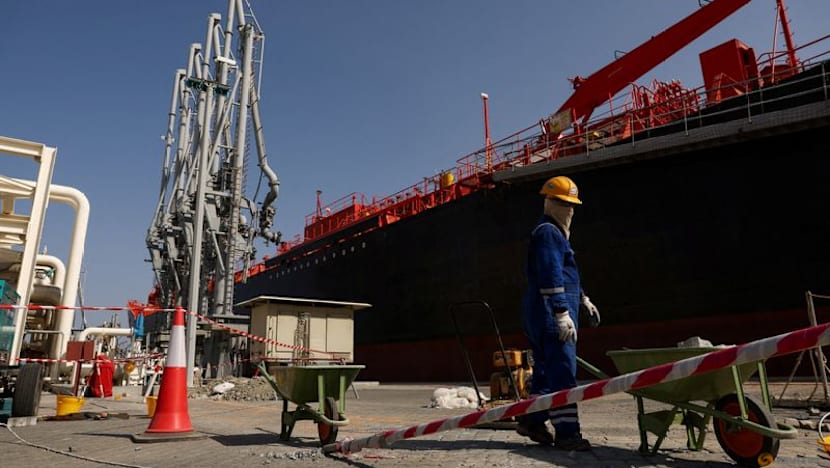
Oil prices lower, stocks higher as Hormuz doubts drag on
Summarized and contextualized by DistantNews.
At a glance
News
Named sources
Context piece
- Oil prices and stock markets fluctuated as investors weighed fading expectations of interest rate hikes against concerns over Middle East oil flows.
- Oil prices initially rose but later fell, though they remain up significantly over the past week, nearing June highs.
- US consumer price data is anticipated to influence the Federal Reserve's next move on interest rates, with potential inflation risks from rising oil prices.
Oil prices experienced volatility, dipping in choppy trading while stock markets saw marginal gains. Investors are navigating a complex landscape, balancing reduced expectations for interest rate increases against anxieties about oil supply from the Middle East.
Crude oil has surged over the past few days as hopes of a US-Iran agreement that would fully reopen the Strait of Hormuz have faded.
Initially, oil prices surged over 2 percent amid fading hopes for a US-Iran deal to reopen the Strait of Hormuz. However, these gains were later relinquished, though prices remain approximately 10 percent higher over the past five days, trading near their highest levels since early June. "Crude oil has surged over the past few days as hopes of a US-Iran agreement that would fully reopen the Strait of Hormuz have faded," noted Fawad Razaqzada, market analyst at FOREX.com. He also pointed to "contradictory messages from Washington and Tehran."
But "we have also heard contradictory messages from Washington and Tehran".
In New York, the Dow and S&P indices edged higher, while the Nasdaq opened lower. European markets in Frankfurt, London, and Paris also showed slight increases. "The slight drop in expectations for Federal Reserve rate hikes following the weak US payroll report have supported equities," explained David Morrison, senior market analyst at Trade Nation. "But rising crude oil prices and further delays in reopening the Strait of Hormuz have introduced fresh inflation risks."
The slight drop in expectations for Federal Reserve rate hikes following the weak US payroll report have supported equities.
Asian equities presented a mixed performance, with Tokyo closed for a holiday. The ongoing dispute between Donald Trump and Iranian leaders, each insisting on reparation payments from the other, adds to the uncertainty. The prospect of sustained elevated oil prices has reignited concerns about inflation, potentially increasing the likelihood of higher interest rates. Last week's unexpected loss of over 20,000 jobs in the US economy had previously eased fears of a Federal Reserve rate hike. Attention now shifts to Wednesday's release of US consumer price data, which could significantly guide the Fed's upcoming decisions. "The Fed problem is becoming more awkward," commented Patrick Munnelly at the Tickmill Group. "Labour-market cooling can justify patience, but energy-driven inflation can undermine that patience if it lifts headline CPI, gasoline prices and household inflation expectations."
But rising crude oil prices ... and further delays in reopening the Strait of Hormuz, have introduced fresh inflation risks.
DistantNews Editorial
Originally published by CNA. Summarized and contextualized by our editorial team with added local perspective. Read our editorial standards.
More Stories


From Our Blog

What Gets Lost (and Found) When News Is Translated

The Critical Role of Diaspora Media in Global News

What Travellers Should Know About Countries with Restricted Press

A Digital Nomad's Guide to Following Local News

How the Same Story Looks Different in Different Countries
