


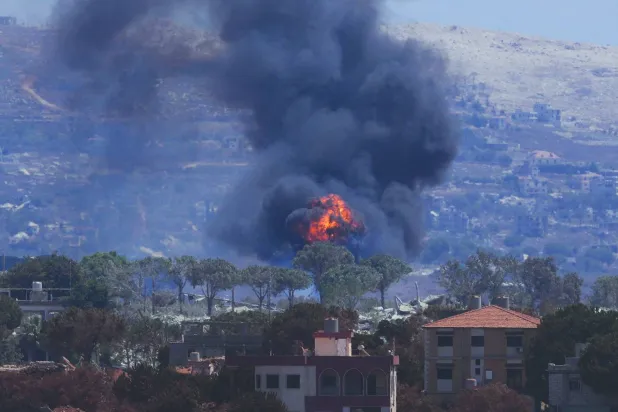

Oil Prices Rise as US-Iran Strikes Heighten Fears of a Prolonged Hormuz Disruption
Translated from English and summarized by DistantNews. Read the original for the full story.
At a glance
Newswire
Named sources
Ongoing story
- Brent crude rose 0.82% to $97.07 a barrel and West Texas Intermediate gained 0.87% to $92.28 as strikes involving the United States and Iran raised concerns about supply disruptions.
- Ship traffic through the Strait of Hormuz has fallen to its lowest level since May, while Iran said it would announce a restricted zone outside the strait.
- Analysts said a prolonged standoff could keep Middle East exports constrained through the rest of 2026, with a return to pre-war throughput not expected until early 2027.
Oil prices extended their gains on Monday as tit-for-tat US and Iranian strikes on vessels near the Strait of Hormuz intensified fears that the Middle East supply disruption could last.
Brent crude futures rose 79 cents, or 0.82%, to $97.07 a barrel by 0512 GMT. US West Texas Intermediate crude gained 80 cents, or 0.87%, to $92.28. Brent had risen 7.8% the previous week, while WTI gained nearly 10% after attacks resumed and reduced flows through the strait, a route that previously carried a fifth of the world’s oil supply.
US forces struck three Iranian oil tankers on Saturday, according to US Central Command, including one off Kharg Island near Iran’s main oil export hub. Iran’s Revolutionary Guard navy said it had targeted three tankers using unauthorized routes through the Strait of Hormuz and three additional US vessels elsewhere.
Commercial tankers are now being deliberately used as instruments of reciprocal economic pressure, substantially weakening the previous distinction between military confrontation and commercial shipping.
The attacks marked a “major escalation in the maritime conflict,” maritime intelligence firm Marisks said. “Commercial tankers are now being deliberately used as instruments of reciprocal economic pressure, substantially weakening the previous distinction between military confrontation and commercial shipping,” it added.
Kpler data showed that an average of 10 commodity ships crossed the strait each day over the previous 10 days, the lowest level since May. Priyanka Sachdeva, head of market insights at Phillip Nova, said a further slowdown in tanker traffic could produce a much larger supply shock, adding that signs of such a slowdown were already emerging.
Iranian state media reported that Mohsen Rezaei, secretary of Iran’s Supreme National Security Council, said a restricted zone would be announced outside the strait in the coming days. OPEC+ left its October oil-output policy unchanged, while analysts at ANZ said a prolonged standoff and calibrated military action could delay a full recovery in Middle East supply. They expect exports to remain constrained through the end of 2026, with a gradual reopening late in the fourth quarter and a return to pre-war throughput only in late March or early April 2027.
If tanker traffic begins to slow materially, the market could price in a much larger supply shock. And there are already signs that this is happening.
About this summary
Originally published by Asharq Al-Awsat in English. Translated, summarized, and contextualized automatically by DistantNews, with a note on how the source frames the story. Not individually reviewed before publishing. How this works.
More Stories


From Our Blog

News in Translation: What Gets Lost, and How We Keep the Framing

Diaspora Media: How Communities Follow News From Home

Traveling Where the Press Is Not Free: How to Read the News There

The Digital Nomad's Guide to Local News

The Same Story, Different Countries: How Coverage Changes at the Border
