


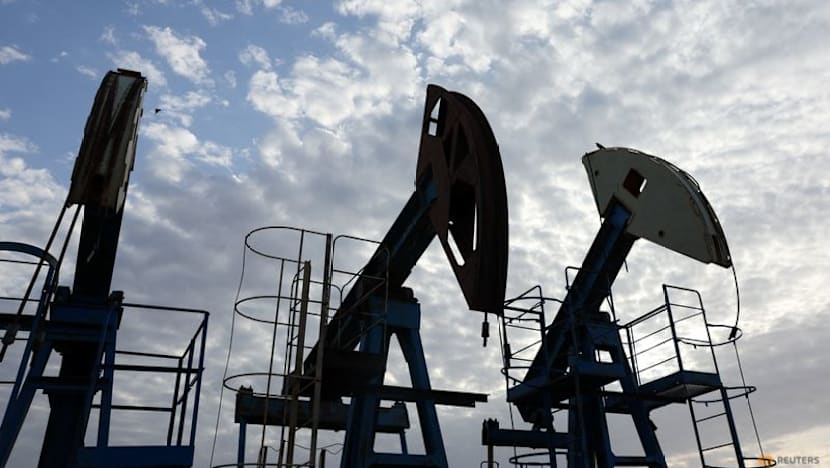
Oil rises after US-Iran hostilities flare again with strikes on energy targets
Summarized and contextualized by DistantNews.
At a glance
News
Named sources
Ongoing story
- Oil prices rose as the U.S. reimposed a naval blockade on Iranian ports and Iran launched retaliatory strikes on regional U.S. infrastructure.
- Brent crude and West Texas Intermediate both closed at one-month highs, with further gains seen in early Wednesday trade.
- The renewed hostilities have heightened doubts about a permanent halt to the war and increased the risk premium on oil.
Oil prices climbed on Wednesday as escalating hostilities between the U.S. and Iran intensified, with Washington reimposing a naval blockade on all Iranian ports and Tehran launching retaliatory strikes on U.S. infrastructure in the region.
Brent crude closed at its highest since June 12 and West Texas Intermediate at its highest since June 15, with both benchmarks rising further in early Wednesday trade. Brent was up $1.46, or 1.72 percent, to $86.19 a barrel by 0029 GMT, while WTI rose $1.11, or 1.4 percent, to $80.40 a barrel. On Tuesday, oil prices had already closed up 2 percent to a one-month high amid deepening supply disruption fears in the Strait of Hormuz.
The U.S. military announced it began a fresh round of strikes early Wednesday "to continue degrading Iranian capabilities used to attack commercial shipping in the Strait of Hormuz." Tehran claims it has again closed the strait after hostilities between Iran and the U.S. reignited last week, fraying a fragile truce reached in June after months of fighting.
I'll save the energy targets for last, but ultimately we'll hit energy targets.
President Trump told Fox News that he would "save the energy targets for last, but ultimately we'll hit energy targets." Iran's army stated early Wednesday that it had launched drone attacks against U.S. positions at Jordan's Azraq base, while Iran's Islamic Revolutionary Guard Corps claimed they targeted weapons and storage facilities in Bahrain and Kuwait. The Pentagon had no immediate comment.
This flare-up has heightened doubts that a memorandum of understanding signed last month will lead to a permanent halt to the war. Tim Waterer, chief market analyst at KCM Trade, noted that "the chances of oil moving back toward $100 in the reasonably near term are still meaningful if hostilities intensify which damages energy infrastructure around the Gulf." He added that Brent prices could remain at $75-$80 a barrel if diplomatic efforts helped reopen the strait, but for now, the risk premium is embedded.
The chances of oil moving back toward $100 in the reasonably near term are still meaningful if hostilities intensify which damages energy infrastructure around the Gulf.
DistantNews Editorial
Originally published by CNA. Summarized and contextualized by our editorial team with added local perspective. Read our editorial standards.
More Stories



From Our Blog

What Gets Lost (and Found) When News Is Translated

The Critical Role of Diaspora Media in Global News

What Travellers Should Know About Countries with Restricted Press

A Digital Nomad's Guide to Following Local News

How the Same Story Looks Different in Different Countries
