


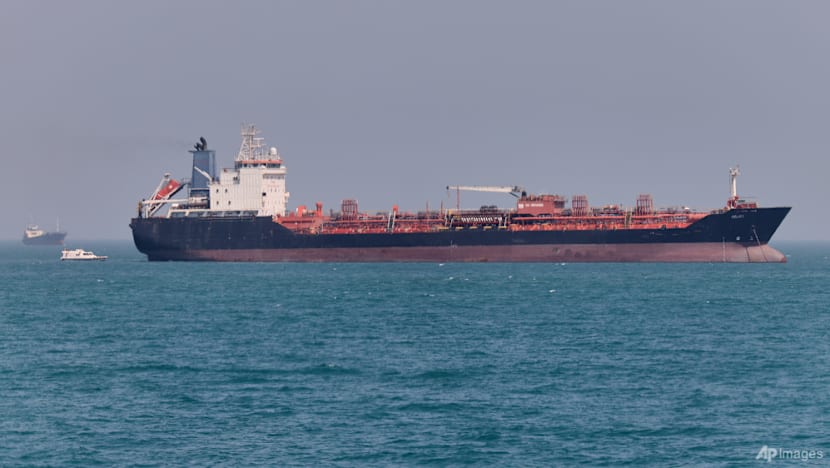
Oil tanker hit by 'unknown projectile' in Strait of Hormuz region: Maritime agency
Summarized and contextualized by DistantNews.
At a glance
News
Named sources
Under investigation
- An oil tanker was struck by an "unknown projectile" off the coast of Oman near the Strait of Hormuz, causing a fire.
- The incident occurred on Monday, July 6, with no immediate reports of casualties or environmental damage.
- Maritime authorities are investigating and advising vessels to exercise caution in the strategic waterway, a key route for global energy exports.
An oil tanker sustained a fire after being struck by an "unknown projectile" off the coast of Oman, near the crucial Strait of Hormuz, according to the British maritime security agency UKMTO. The incident occurred on Monday, July 6.
The UKMTO reported that the tanker informed them of being hit on its port side while traveling southbound, approximately eight nautical miles east of Limah, Oman. The agency confirmed there were no initial reports of casualties or environmental damage. UKMTO has advised vessels in the area to transit with caution and to report any suspicious activities.
A tanker has reported being hit by an unknown projectile on the port side causing a fire, whilst travelling southbound.
This event unfolds despite recent diplomatic efforts between the United States and Iran to secure a lasting peace agreement and reopen the Strait of Hormuz. The two nations signed a memorandum of understanding last month aimed at ending conflict, though Iran has stated it will not return to pre-war arrangements that allowed unrestricted passage.
The Strait of Hormuz remains a vital maritime gateway, particularly for energy exports to Asia. In 2024, roughly one-fifth of global crude oil, approximately 20 million barrels per day, passed through this waterway. Tensions in the past have led to blockades and attacks on commercial vessels, causing significant spikes in global energy prices.
Vessels are advised to transit with caution and report any suspicious activity to UKMTO.
DistantNews Editorial
Originally published by CNA. Summarized and contextualized by our editorial team with added local perspective. Read our editorial standards.
More Stories



From Our Blog

What Gets Lost (and Found) When News Is Translated

The Critical Role of Diaspora Media in Global News

What Travellers Should Know About Countries with Restricted Press

A Digital Nomad's Guide to Following Local News

How the Same Story Looks Different in Different Countries
