


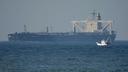
Oil tankers go dark in Hormuz Strait to evade attacks, switch oil mid-sea
Translated from Croatian, summarized and contextualized by DistantNews.
At a glance
News
Named sources
Context piece
- Oil companies from Saudi Arabia, Qatar, Kuwait, and the UAE are using a new tactic to navigate the Strait of Hormuz by shutting off AIS transmitters at night and transferring oil mid-sea under military escort.
- This method, involving tankers going dark and then reappearing on the other side of the strait, aims to reduce the risk of attacks, with approximately 80% of traffic reportedly using turned-off transponders recently.
- While this tactic allows for continued oil exports, it does not solve the fundamental problem of security in the Strait of Hormuz, impacting global oil supplies and fuel markets.
Oil companies in Saudi Arabia, Qatar, Kuwait, and the United Arab Emirates are employing a novel strategy to transit the Strait of Hormuz. Tankers are disabling their Automatic Identification System (AIS) transmitters at night and proceeding under military escort through the crucial waterway.
The Greek supertanker Kiku, for example, sailed from Qatar's Mesaieed terminal in late July. Days later, near Dubai, its signal vanished from maritime traffic monitoring systems. It reappeared across the Strait of Hormuz the following day. This "going dark" tactic, supported by the U.S. Navy, aims to mitigate attack risks for oil producers in the Middle East.
After passing through the strait, tankers head to the Gulf of Oman. There, crude oil is transferred to other vessels bound for customers in China, Taiwan, South Korea, the Philippines, Vietnam, and Thailand. CNN reported over a dozen such ship-to-ship transfers in just two days. The U.S. Department of Energy estimates daily oil traffic through Hormuz at 8-9 million barrels, significantly more than publicly available AIS data suggests. Kpler data indicates about 80% of recent traffic involved disabled transponders.
Satellite imagery and radar systems can still detect vessels despite the AIS blackout. This tactic allows exports to continue but fails to address the core security issues in the Strait of Hormuz. Until a lasting political and security solution is found, the disruption to one of the world's most vital shipping lanes persists, affecting global oil supplies and fuel markets, with rising demand for diesel and jet fuel straining refinery capacities.
DistantNews Editorial
Originally published by Večernji List in Croatian. Translated, summarized, and contextualized by our editorial team with added local perspective. Read our editorial standards.
More Stories



From Our Blog

What Gets Lost (and Found) When News Is Translated

The Critical Role of Diaspora Media in Global News

What Travellers Should Know About Countries with Restricted Press

A Digital Nomad's Guide to Following Local News

How the Same Story Looks Different in Different Countries
