


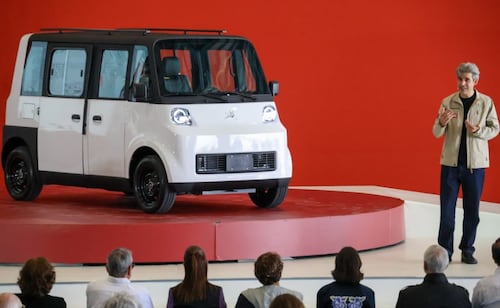
Olinia: The car designed to be accessible and cheap, built to withstand floods, dirt roads, and all urban use
Translated from Spanish, summarized and contextualized by DistantNews.
At a glance
News
Named sources
Context piece
- Olinia, a new minivehicle designed for urban use, aims to be affordable and robust, capable of handling floods and rough terrain.
- Priced around 150,000 pesos, it is significantly cheaper than conventional subcompact cars, which cost about 230,000 pesos.
- The vehicle features an electric motor, a top speed of 50 km/h, and a range of over 125 km per charge, with commercialization planned for 2027.
A new minivehicle called Olinia is set to enter the market, designed with affordability and durability as its primary goals for urban transportation. Roberto Capuano Tripp, the project's director, stated that the main objective is to offer a vehicle that is more accessible than conventional cars, capable of withstanding challenging urban conditions such as floods, cobblestone streets, and unpaved roads.
Olinia is a project that was born because we identified that the vehicle we needed to design did not exist in the market.
"Olinia is a project that was born because we identified that the vehicle we needed to design did not exist in the market," Capuano Tripp explained. The team conducted street-level research in various towns and cities, collaborating with academics from Mexican public institutions to design the vehicle.
With an anticipated price tag of around 150,000 pesos, the Olinia 1 will be considerably more affordable than current subcompact vehicles, which typically cost around 230,000 pesos. Beyond the passenger model, Olinia plans to introduce a cargo version after the 2026 FIFA World Cup, utilizing the same base architecture for transporting goods within urban environments.
If it is not the vehicle that everyone expected, it is the one that people need. We designed it this way and it will satisfy important urban needs.
The Olinia was specifically conceived to navigate diverse urban conditions, including those found in Mexico City, such as floods and uneven streets. While not intended for highway travel, its electric motor provides 13.5 kilowatts of power, enabling a top speed of 50 kilometers per hour and an impressive range of over 125 kilometers on a single charge. The company aims for commercialization by 2027, seeking public, private, and industrial partners to ensure effective market deployment.
The vehicle can be plugged into a conventional outlet and we have registered 125 kilometers per full charge.
DistantNews Editorial
Originally published by El Universal in Spanish. Translated, summarized, and contextualized by our editorial team with added local perspective. Read our editorial standards.
More Stories



From Our Blog

What Press Freedom Means for the News You Read

What Gets Lost (and Found) When News Is Translated

The Critical Role of Diaspora Media in Global News

What Travellers Should Know About Countries with Restricted Press

A Digital Nomad's Guide to Following Local News
