


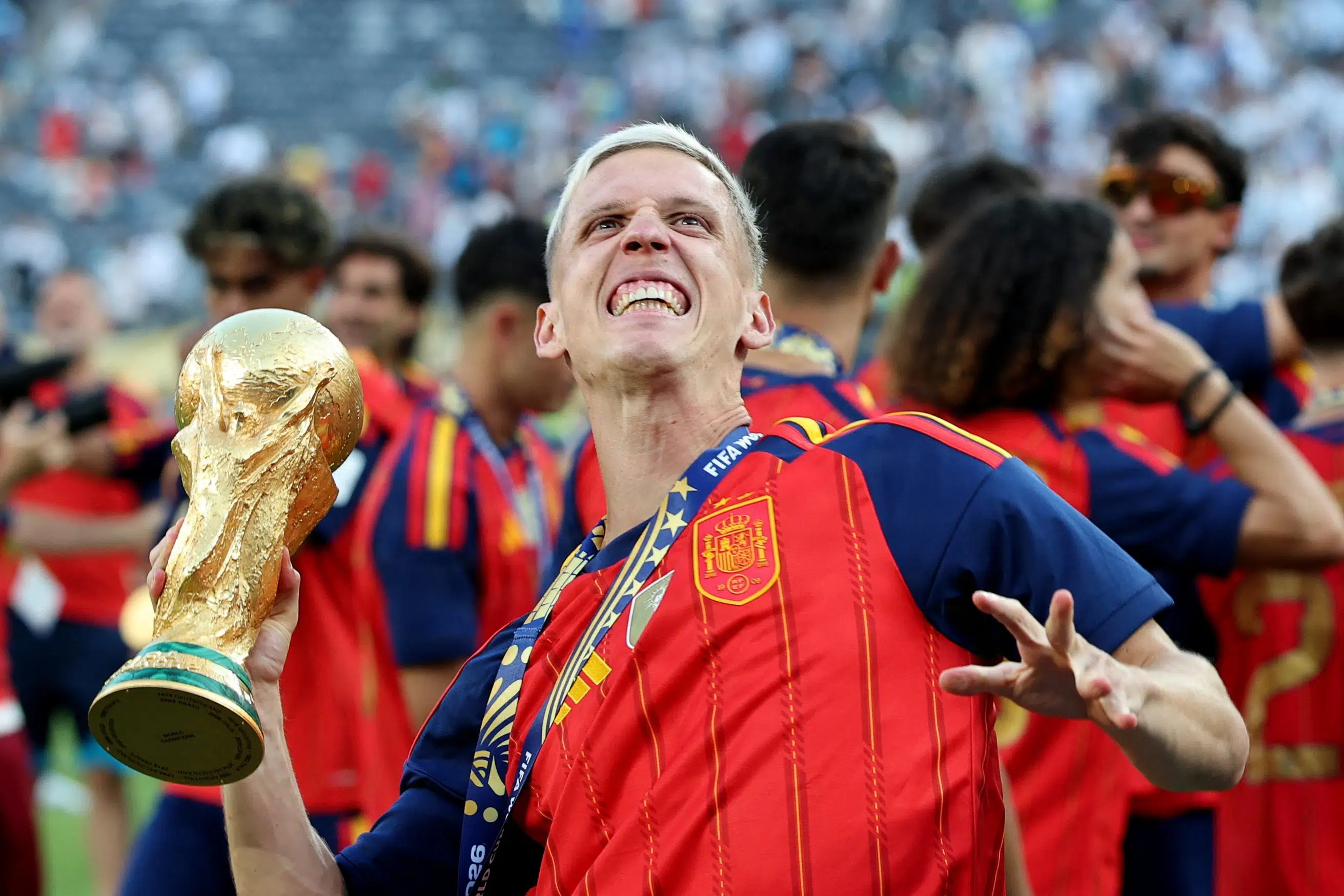
Olmo accuses Argentina coach of lying about World Cup final scuffle
Translated from Danish, summarized and contextualized by DistantNews.
At a glance
News
Sources not specified
Context piece
- Spanish national team player Dani Olmo accuses Argentina's assistant coach Roberto Ayala of lying about post-World Cup final altercations.
- Ayala claimed he reacted to something Olmo said, but Olmo denies this, stating he said nothing and Ayala's apology is insincere.
- FIFA is investigating the behavior of Argentine players and coaches after the final, which also involved an incident with Leandro Paredes.
Dani Olmo, a Spanish national team player, has accused Roberto Ayala, Argentina's assistant coach, of lying about the physical confrontations that occurred after the World Cup final. Spain defeated Argentina 1-0 in the match, which was followed by several altercations on the field in New Jersey.
A person who apologizes but justifies a blow by saying it was a reaction to a comment is clearly not sincerely sorry because they are lying.
Ayala had previously stated that he reacted to something Olmo said and would apologize if they met again. However, Olmo disputes this account, asserting that he said nothing to Ayala and therefore the apology is not genuine. "A person who apologizes but justifies a blow by saying it was a reaction to a comment is clearly not sincerely sorry because they are lying," Olmo told the Spanish newspaper Diari de Terrassa.
I didn't say anything to him, so he doesn't need to apologize.
Olmo emphasized the importance of players and coaches acting as role models, stating, "What truly defines us is not the mistake, but the courage to admit it with humility, honesty, and dignity." Ayala had downplayed the incident, describing it as a push rather than a blow and a reaction to a comment. FIFA has announced it will investigate the conduct of Argentine players and coaches after the final whistle. The incident also involved Argentine midfielder Leandro Paredes, who clashed with several Spanish players.
What truly defines us is not the mistake, but the courage to admit it with humility, honesty, and dignity.
DistantNews Editorial
Originally published by Berlingske in Danish. Translated, summarized, and contextualized by our editorial team with added local perspective. Read our editorial standards.
More Stories



From Our Blog

What Gets Lost (and Found) When News Is Translated

The Critical Role of Diaspora Media in Global News

What Travellers Should Know About Countries with Restricted Press

A Digital Nomad's Guide to Following Local News

How the Same Story Looks Different in Different Countries
