


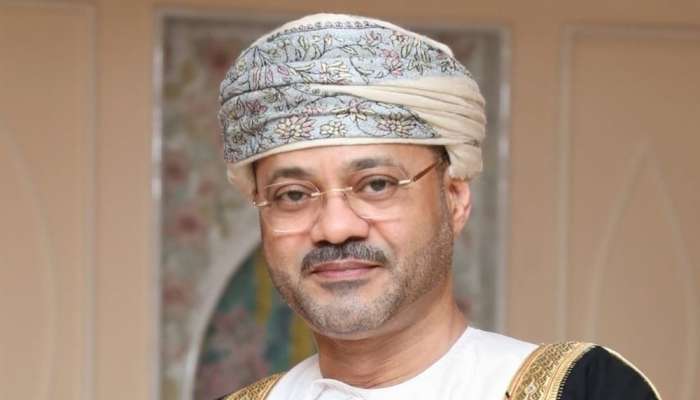
Oman minister urges Gulf security overhaul, inclusion of Iran
Translated from English, summarized and contextualized by DistantNews.
At a glance
News
Sources not specified
Context piece
- Oman's Foreign Minister calls for a fundamental shift in Gulf security, moving from containment to inclusive regional responsibility.
- He advocates for a permanent framework to ensure freedom of navigation in the Strait of Hormuz, emphasizing Oman and Iran's shared role.
- The minister criticizes past security systems based on excluding Iran and relying on external protection, suggesting external decisions, particularly from Tel Aviv, pose greater threats.
Oman's Foreign Minister Sayyid Badr bin Hamad Al Busaidi is urging a significant reevaluation of Gulf security. He argues that the recent war in the region has exposed the failures of past policies, particularly the "containment" strategy against Iran. Instead, he proposes a new security architecture that includes all regional nations and emphasizes shared responsibility.
the war on Iran has revealed the need for a comprehensive review of the security architecture of the Gulf region, and a transition from the policy of "containment" that governed regional arrangements over the past decades to a system based on the inclusion of all countries in the region and their assumption of responsibility for their shared security.
Al Busaidi highlighted the urgent need for a permanent framework to guarantee freedom of navigation in the Strait of Hormuz. He noted Oman's unique position, sharing territorial waters with Iran in the vital waterway, and stressed the necessity for cooperation between the two nations and the international community to establish sustainable, law-compliant arrangements. This framework, he believes, is crucial for global trade and the economy.
the peoples of the Sultanate of Oman and the Gulf nations are living under the weight of the consequences of a war that should never have occurred, expressing hope that current developments will lead to an actual end to the conflict, rather than a mere temporary halt in military operations that could collapse at any time.
The minister criticized the security system established in 1979, which he described as flawed by viewing Iran as an existential threat. He pointed to decades of heavy military spending and reliance on external protection, which failed to prevent wars and crises. Al Busaidi suggested that the "containment" policy was an illusion, and that significant dangers to Gulf security often originate from decisions made outside the region, specifically mentioning Tel Aviv.
one of the priorities currently on the table is to establish a permanent framework that guarantees the freedom of navigation in the Strait of Hormuz, pointing to the special responsibility that the Sultanate of Oman bears in this file, as it is, alongside Iran, one of the countries whose territorial waters border the strait.
Looking ahead, Al Busaidi questioned how a new Gulf security system could be rebuilt. He asserted that any future structure must be inclusive, encompassing all eight countries bordering the Gulf: the six GCC nations, Iran, and Iraq. He believes this inclusive approach is the only way to build lasting regional security.
the security system formed in the Gulf since 1979 was based on the premise that Iran is considered an existential threat to the region and Western interests, a premise he described as having been fundamentally flawed.
DistantNews Editorial
Originally published by Times of Oman in English. Translated, summarized, and contextualized by our editorial team with added local perspective. Read our editorial standards.
More Stories
From Our Blog

What Gets Lost (and Found) When News Is Translated

The Critical Role of Diaspora Media in Global News

What Travellers Should Know About Countries with Restricted Press

A Digital Nomad's Guide to Following Local News

How the Same Story Looks Different in Different Countries
