


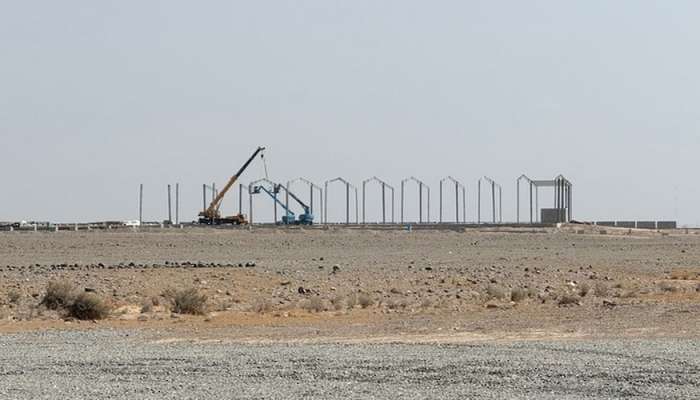

Oman oil price tops $104 as supply disruption fears intensify
Translated from English and summarized by DistantNews. Read the original for the full story.
At a glance
News
Named sources
Context piece
- Oman’s official oil price for November delivery rose $2.74 to $104.54 per barrel on Monday.
- Brent and West Texas Intermediate prices also increased as attacks involving the United States and Iran disrupted oil flows and heightened supply concerns.
- OPEC+ kept its October 2026 production policy unchanged while preparing to discuss quotas and production baselines for 2027.
Oman’s official oil price for delivery in November rose by $2.74 to $104.54 per barrel on Monday, as fears of prolonged supply disruptions in the Middle East pushed global crude prices higher.
Brent crude futures gained 52 cents, or 0.54 percent, to reach $96.80 a barrel. U.S. West Texas Intermediate rose 66 cents, or 0.72 percent, to $92.14. Brent jumped 7.8 percent last week, while WTI climbed about 10 percent after the United States and Iran resumed attacks, reducing oil flows.
Marine intelligence firm Marisks said commercial tankers were increasingly being used deliberately as tools of mutual economic pressure. That development, it said, was eroding the earlier distinction between military confrontation and commercial shipping.
The group can adjust production targets on paper, but it cannot guarantee that those barrels will be produced or actually reach the market.
OPEC+ decided on Sunday to keep its oil production policy unchanged for October 2026. The alliance is working toward new quotas before deciding its next steps on output. In August, it agreed to raise production for September after gradual increases that fully reversed a 1.65 million-barrel-per-day cut agreed in 2023. Production nevertheless remains well below target levels because of the war.
Jorge León of Rystad Energy said OPEC+ had very limited ability to influence the actual oil market. “The group can adjust production targets on paper, but it cannot guarantee that those barrels will be produced or actually reach the market.” He said attention was shifting from monthly production changes to a more important discussion about 2027.
OPEC+ is maintaining another production cut, covering most of its 21 members, through the end of 2026. Before deciding how to phase out the cuts, the group must assess members’ production capacity and establish the baselines that will underpin 2027 quotas. Its next meeting is scheduled for October 4, 2026.
The focus is now shifting away from monthly production adjustments towards a much more important discussion about 2027.
About this summary
Originally published by Times of Oman in English. Translated, summarized, and contextualized automatically by DistantNews, with a note on how the source frames the story. Not individually reviewed before publishing. How this works.
More Stories
From Our Blog

News in Translation: What Gets Lost, and How We Keep the Framing

Diaspora Media: How Communities Follow News From Home

Traveling Where the Press Is Not Free: How to Read the News There

The Digital Nomad's Guide to Local News

The Same Story, Different Countries: How Coverage Changes at the Border
