


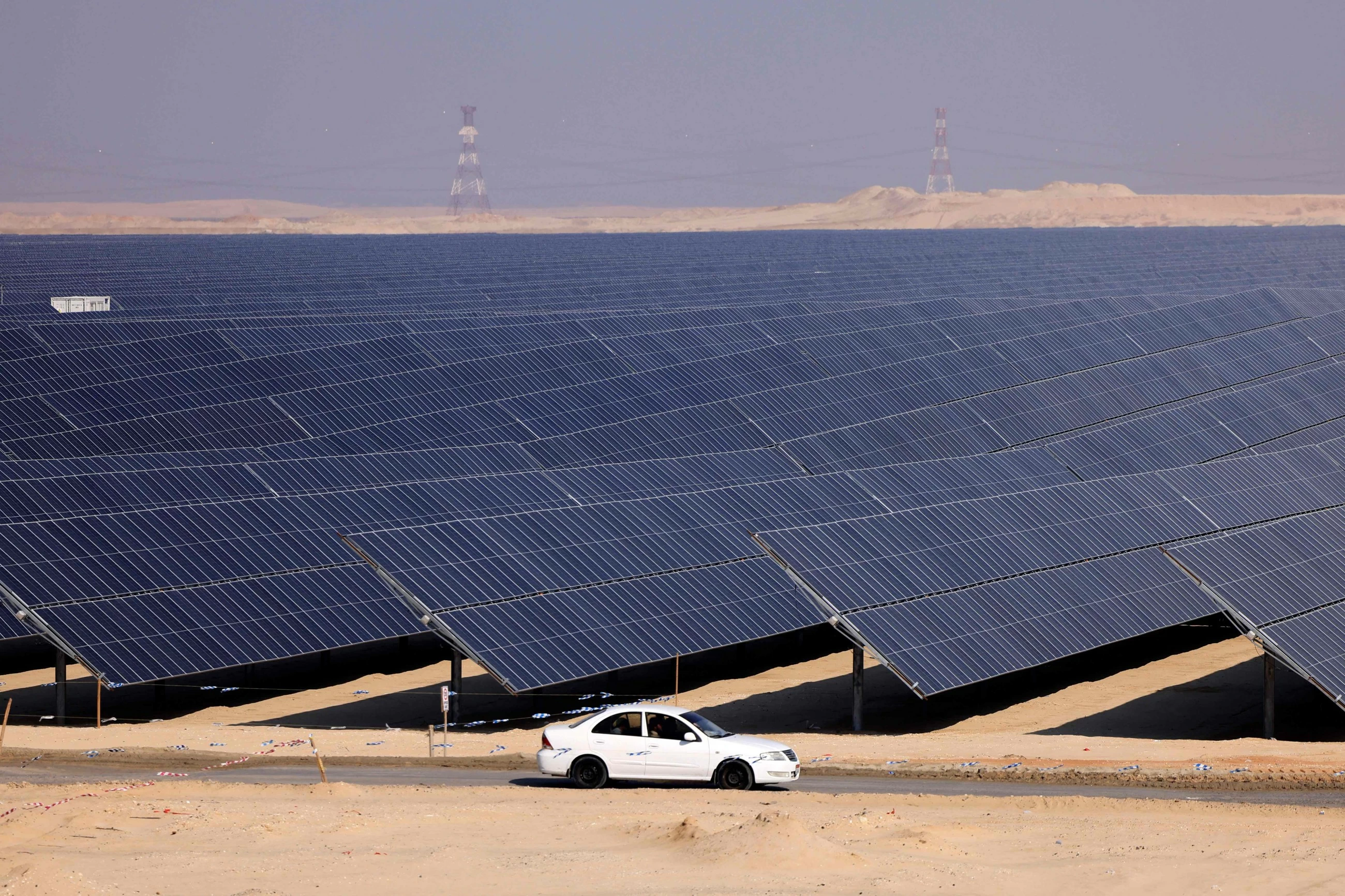
On-site solar integration in GCC can achieve significant cost savings
Summarized and contextualized by DistantNews.
At a glance
News
Official statement
Context piece
- Integrating solar energy into large urban developments in the Gulf Cooperation Council (GCC) can meet up to a third of electricity demand and cut costs similarly.
- Boston Consulting Group's report highlights significant economic, environmental, and operational benefits from on-site solar integration in new developments.
- The report challenges misconceptions about solar's complexity and cost, showing its viability for various building types and its role in future-proofing assets.
Gulf cities can significantly reduce electricity costs and meet a substantial portion of their energy needs by integrating solar power directly into the design of large-scale urban developments, according to a new report from Boston Consulting Group (BCG).
The report, "Mega-Projects Powered by Renewables: A Practical Playbook for Saudi Arabia," indicates that up to 35% of electricity demand can be met through on-site solar installations in high-irradiance Gulf markets. This integration can lead to comparable cost reductions, especially when developers utilize power purchase agreements or energy-as-a-service models that avoid upfront capital investment.
The region’s mega developments represent a generational opportunity to reshape how we think about urban energy infrastructure.
While the analysis focuses on Saudi Arabia, the findings are broadly applicable across GCC mega-developments. These regions share high solar irradiance, extensive master-planned areas, and evolving frameworks for energy self-consumption, creating similar opportunities. BCG emphasizes that incorporating renewables from the master planning stage is a generational chance to redefine urban energy infrastructure.
Developers in the region who integrate renewables from the master planning stage are not only reducing their operational costs but also future-proofing their assets against evolving carbon regulations and energy price volatility.
Developers who integrate renewables early not only lower operational expenses but also future-proof their assets against potential carbon regulations and energy price volatility. The economic case for solar integration is presented as stronger than ever. Even individual buildings can achieve notable self-sufficiency; a single villa might meet about 50% of its annual electricity needs through rooftop solar, while mid-rise buildings typically achieve around 15%, depending on design and orientation.
The report also debunks common myths suggesting solar is too space-intensive for dense urban areas, requires prohibitive upfront costs, or is too complex to implement. Practical examples of multi-megawatt solar installations across the GCC in residential, commercial, and industrial sectors demonstrate both the technical feasibility and commercial viability of these solutions.
The economic case has never been stronger.
DistantNews Editorial
Originally published by Gulf Today. Summarized and contextualized by our editorial team with added local perspective. Read our editorial standards.
More Stories


From Our Blog

What Gets Lost (and Found) When News Is Translated

The Critical Role of Diaspora Media in Global News

What Travellers Should Know About Countries with Restricted Press

A Digital Nomad's Guide to Following Local News

How the Same Story Looks Different in Different Countries
