


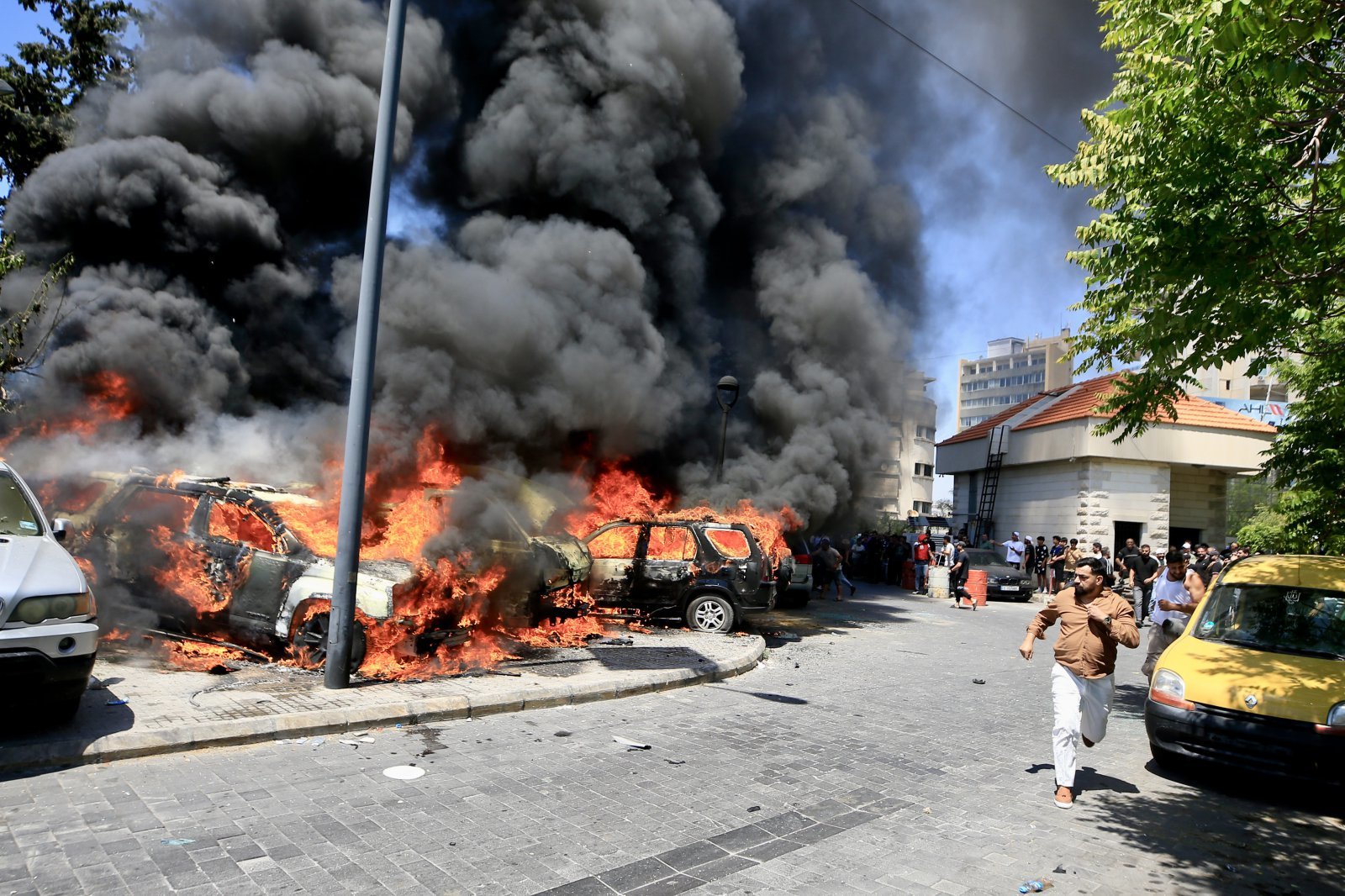
One day after ceasefire signing, Israel strikes southern Lebanon, killing at least 16
Translated from Korean, summarized and contextualized by DistantNews.
At a glance
News
Sources not specified
Context piece
- An Israeli airstrike on Nabatieh, Lebanon, killed at least 16 people and injured or left several others missing.
- The overnight attack, described as one of the most intense by Israel in the region, targeted multiple civilian homes.
- The strikes occurred just one day after the United States and Iran reportedly signed a ceasefire agreement.
An Israeli airstrike on the southern Lebanese city of Nabatieh resulted in the deaths of at least 16 people, with several others injured or missing, according to Lebanon's National News Agency (NNA). The overnight attack, which occurred after midnight, was reportedly one of the most powerful strikes Israel has carried out in the region.
Middle Eastern media outlet Al Jazeera reported that multiple civilian homes were targeted in the assault. The Israeli military (IDF) also shelled nearby villages, including Kfar Jouz, Kfar Remman, and Zebdine. Subsequent waves of airstrikes hit the highlands of Kfar Tibnit and Reyhan.
Casualties were reported across several locations. In Nabatieh and Harouf alone, eight people were killed. An attack on a house between Al-Sharqiyah and Dweir claimed four lives, while three people died in the village of Kfar Sir. Additionally, an Israeli drone targeted civilians on a motorcycle near a municipal building in Dweir, resulting in one death and one injury.
This significant escalation of violence comes just one day after reports emerged of a ceasefire agreement being signed between the United States and Iran. The timing of the strikes raises concerns about regional stability and the potential impact on ongoing diplomatic efforts.
DistantNews Editorial
Originally published by Dong-A Ilbo in Korean. Translated, summarized, and contextualized by our editorial team with added local perspective. Read our editorial standards.
More Stories



From Our Blog

What Gets Lost (and Found) When News Is Translated

The Critical Role of Diaspora Media in Global News

What Travellers Should Know About Countries with Restricted Press

A Digital Nomad's Guide to Following Local News

How the Same Story Looks Different in Different Countries
