


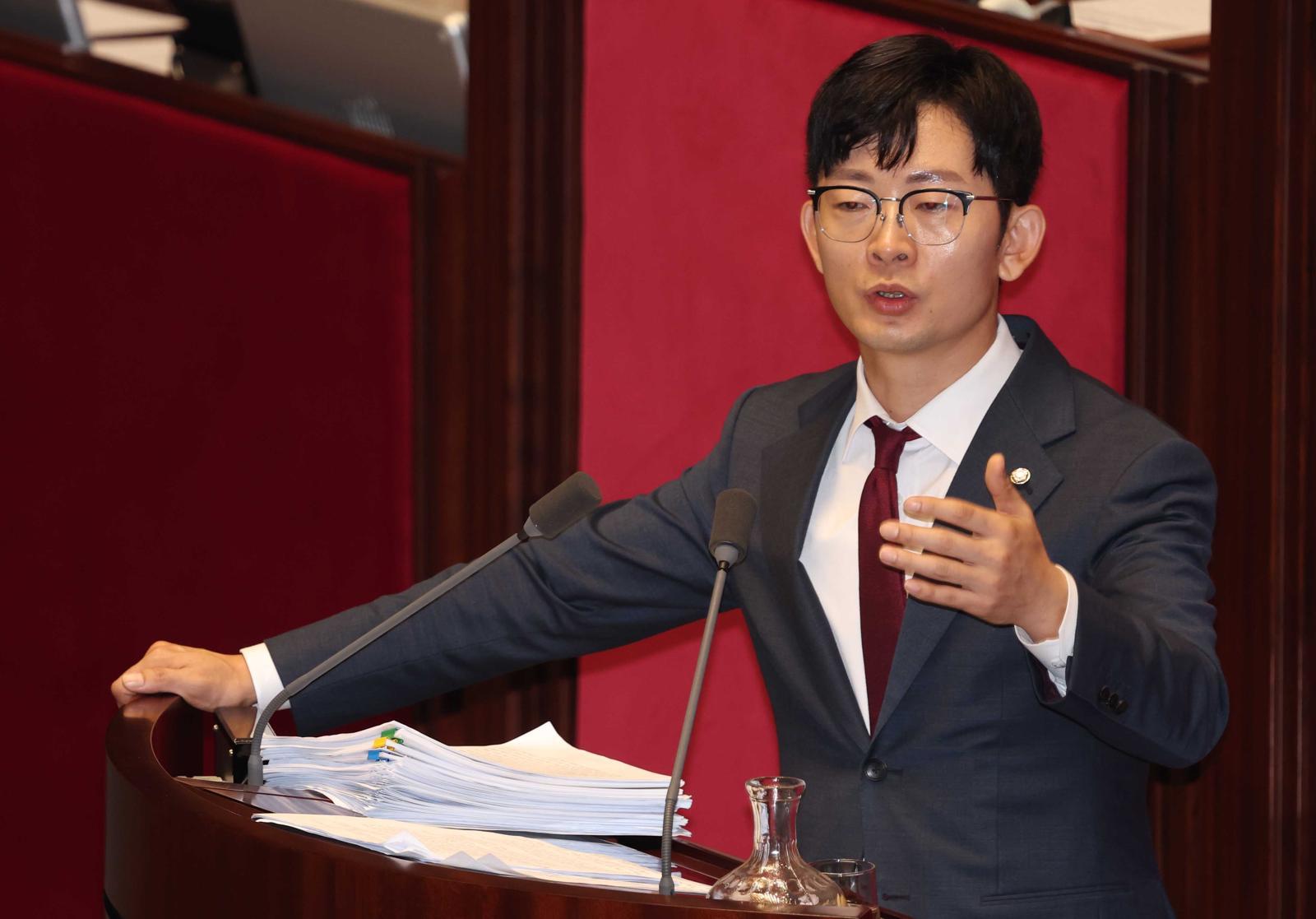
Opposition Slams Criminal Procedure Act Revision as 'Hell Gate for Weak'
Translated from Korean, summarized and contextualized by DistantNews.
At a glance
News
Named sources
Context piece
- South Korea's People Power Party criticizes the ruling party's amendment to the Criminal Procedure Act, calling it a
South Korea's main opposition party, the People Power Party, has strongly condemned the ruling Democratic Party's amendment to the Criminal Procedure Act. The party argues that the changes, which abolish the prosecutor's supplementary investigation rights, will create an "escape route for criminals and a hell gate for the weak."
Choi Soo-jin, the People Power Party's deputy floor leader, stated that the Democratic Party's promotion of the amendment as a "new history in 78 years" and a "much-improved Criminal Procedure Act" ignores the concerns raised by the opposition and legal circles. She emphasized that the prosecutor's supplementary investigation was a crucial safety net to correct flawed investigations and missing evidence. Under the new law, prosecutors can no longer conduct these investigations directly and must instead request them from the police.
It was an escape route for criminals and a hell gate for the weak.
Choi also pointed out the Democratic Party's failure to adequately address concerns about potential case backlogs and staffing shortages within the police force. Furthermore, she questioned the readiness of the yet-to-be-established Serious Crimes Investigation Unit to ensure professionalism. Regarding victim protection, Choi argued that overloading the public defender system would place the burden on citizens, and that expanding body cameras and recording systems does not automatically guarantee investigative fairness. She stressed that the core of the criminal justice system lies in inter-agency checks and balances, not just equipment.
The prosecutor's supplementary investigation was a crucial safety net to correct flawed investigations and missing evidence.
Park Chung-kwon, the People Power Party's chief spokesperson, echoed these sentiments, calling the abolition of supplementary investigation rights "judicial destruction" that benefits criminals while harming the vulnerable. He warned of potential side effects such as investigation delays, neglected flawed investigations, and weakened crime response capabilities. Park also expressed concern that unchecked police power could lead to the neutralization of investigations into corruption involving powerful individuals.
The People Power Party plans to review the investigative gaps and potential harm to citizens during the implementation of the amended law and is considering legislative and constitutional responses.
The core of the criminal justice system lies in inter-agency checks and balances, not just equipment.
DistantNews Editorial
Originally published by Dong-A Ilbo in Korean. Translated, summarized, and contextualized by our editorial team with added local perspective. Read our editorial standards.
More Stories



From Our Blog

What Gets Lost (and Found) When News Is Translated

The Critical Role of Diaspora Media in Global News

What Travellers Should Know About Countries with Restricted Press

A Digital Nomad's Guide to Following Local News

How the Same Story Looks Different in Different Countries
